The Sub-Projects

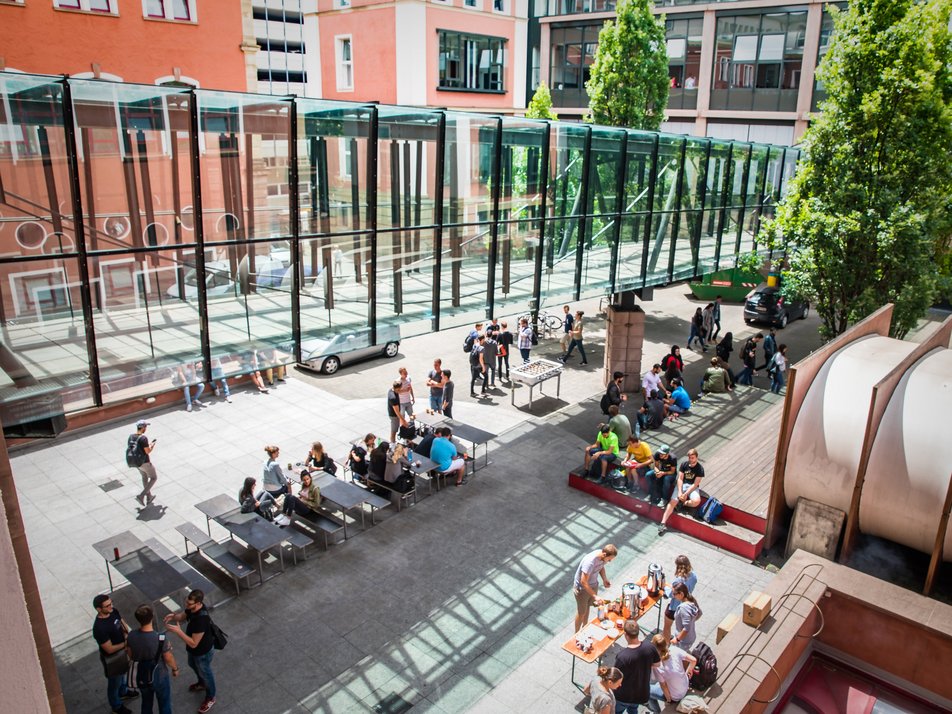
Luftbild mit Blick vom Stadtgarten über die Campusgebäude der HFT Stuttgart

Area

In the future, the campus will be spatially recognizable and visible as a whole, and its quality of stay will be enhanced.
More about Area
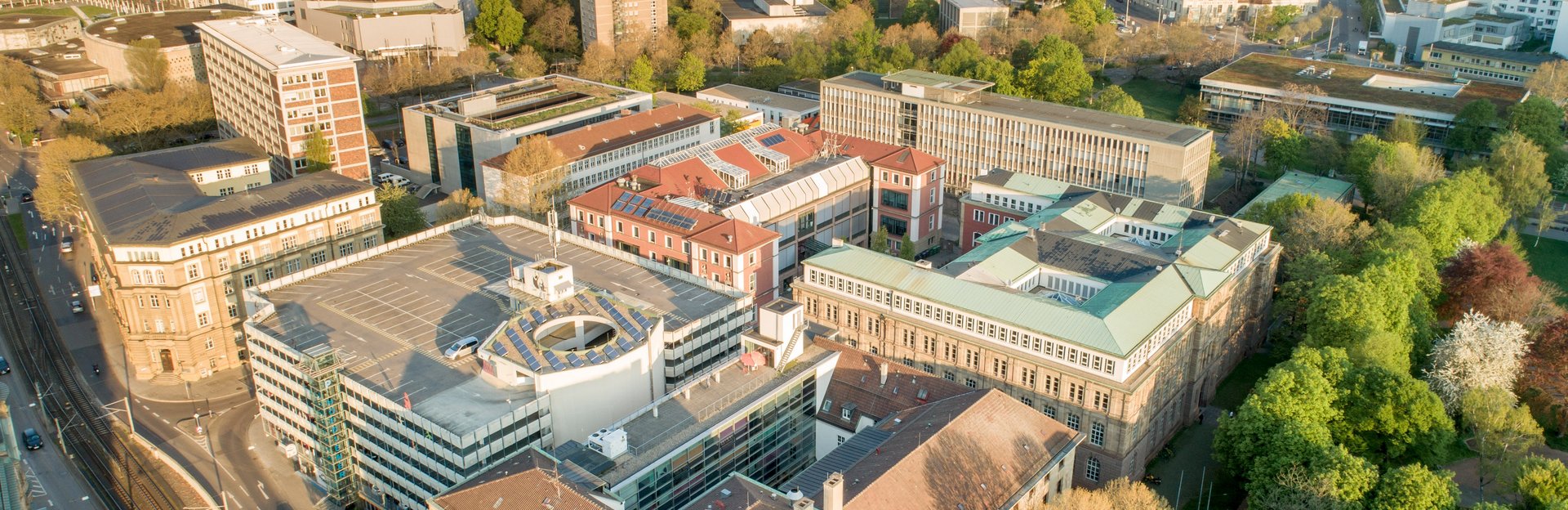
Luftbild als Dachaufsicht der Gebäude 1 und 3 der HFT Stuttgart, die einen Innenhof umschließen

Space

An experimental space will be created in the inner courtyard, where innovations in future-oriented planning and sustainable construction will be researched using prototypes.

More about Space
Drei Arkadenbögen eines Lichthofs im Erdgeschoss des Hauptgebäudes der HFT Stuttgart

Venue

The first floor of the landmarked main building will be given a contemporary, open, flexible, and variable useable spatial structure.

More about Venue

News

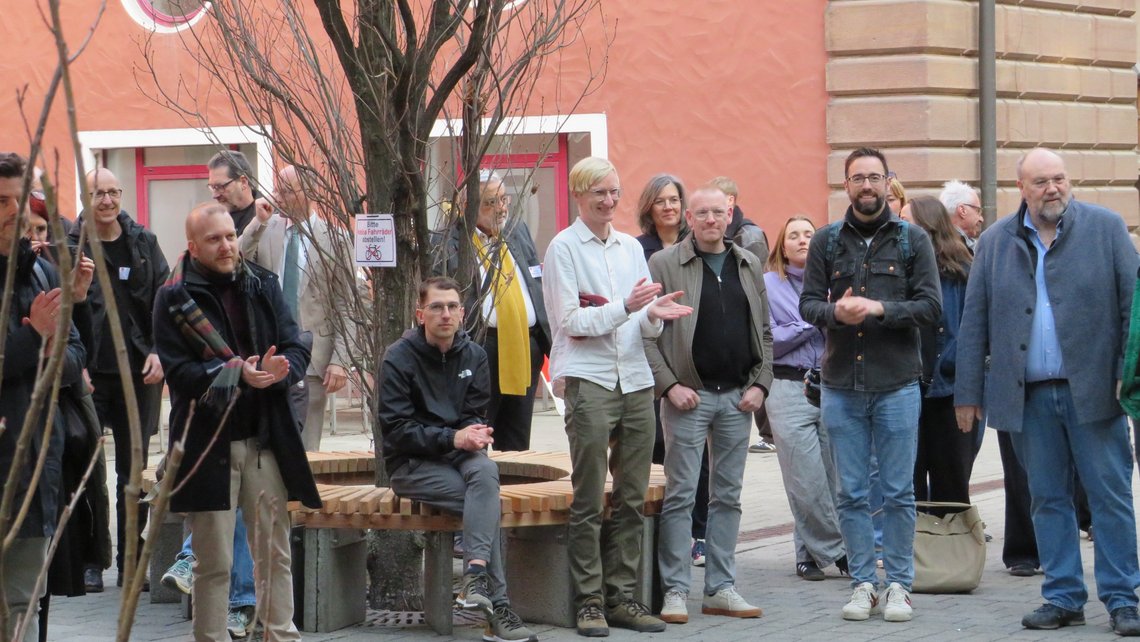
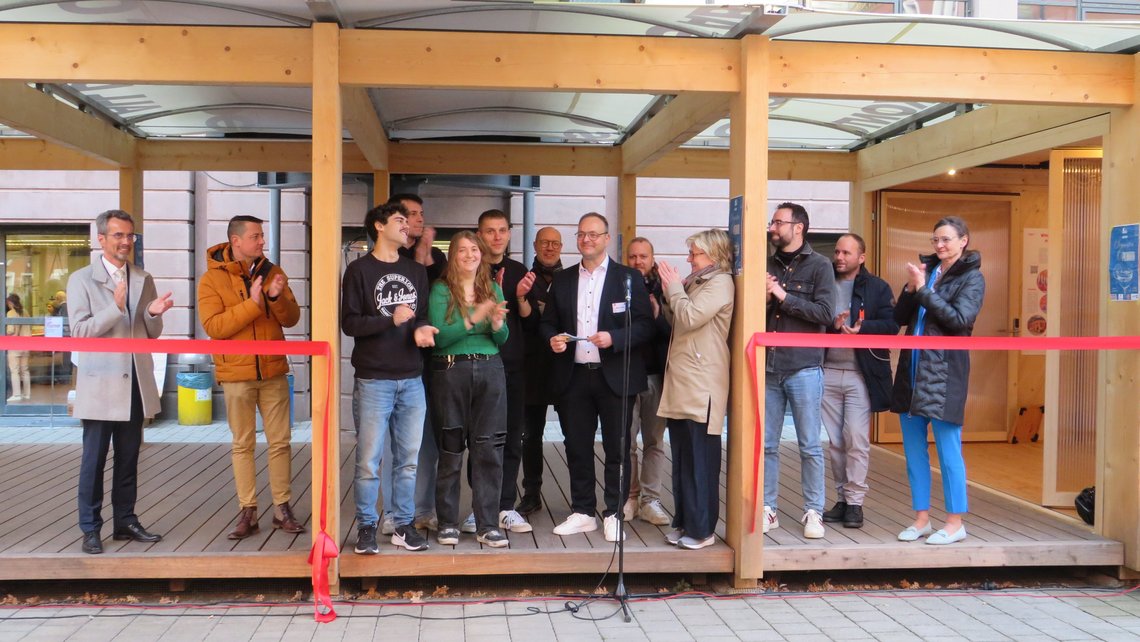
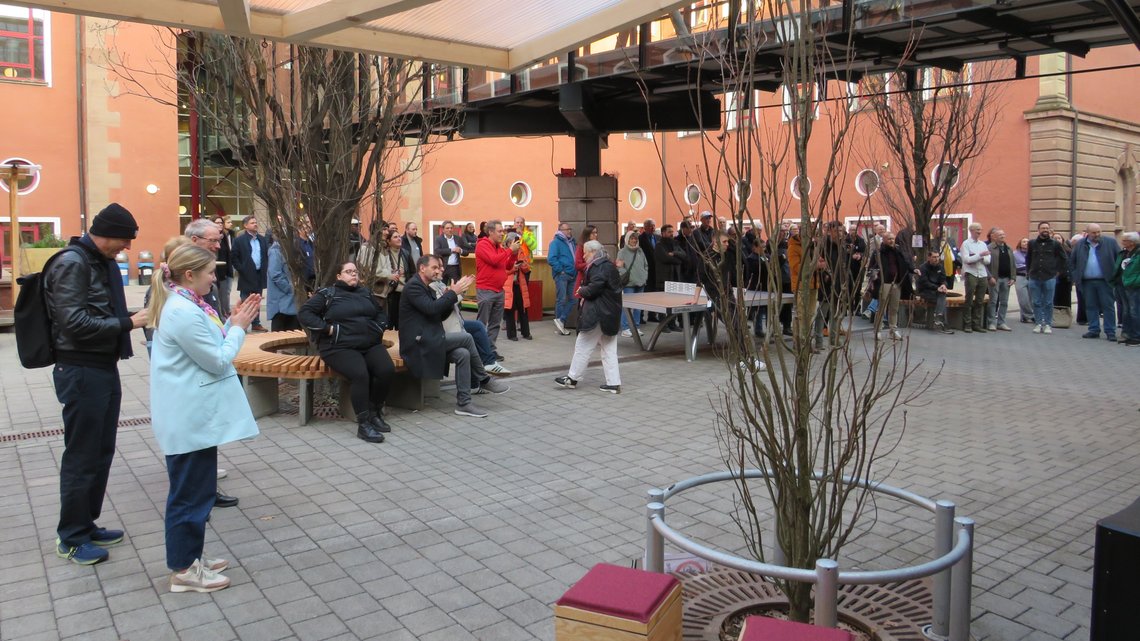
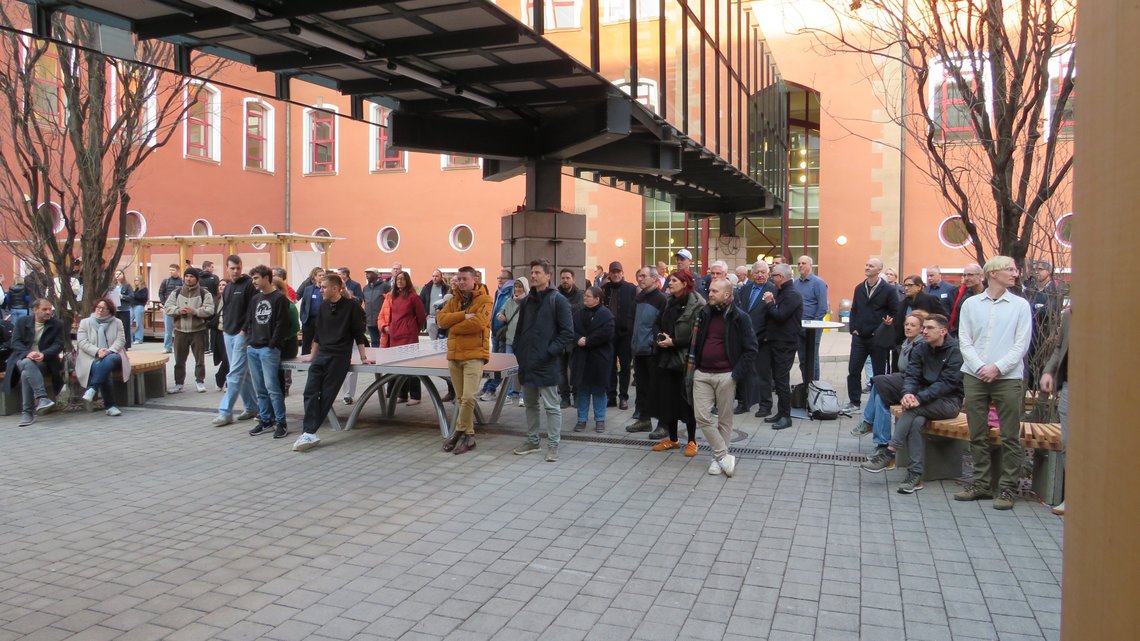
01.07.2026 Housewarming for a new Prototyp made of rammed earth and wood

Another experminemtal prototyp is celebrating its opening - and everyone is invited to come and join

Wednesday, 1 July 2026 from 4 pm to 6 pm

Refreshments will be provided by the Association of Friends of HFT Stuttgart.

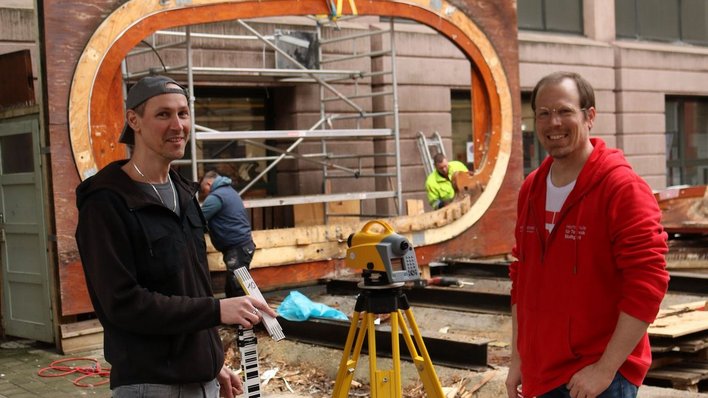
Over the past few weeks, the structural shell of a new, sustainable rammed-earth and timber pavillon has been built in the university courtyard as part of an interdisciplinary project involving HFT.Lab, NABI, and InDeckLe, in collaboration with the Interior Architecture and Civil Engeneering programs.

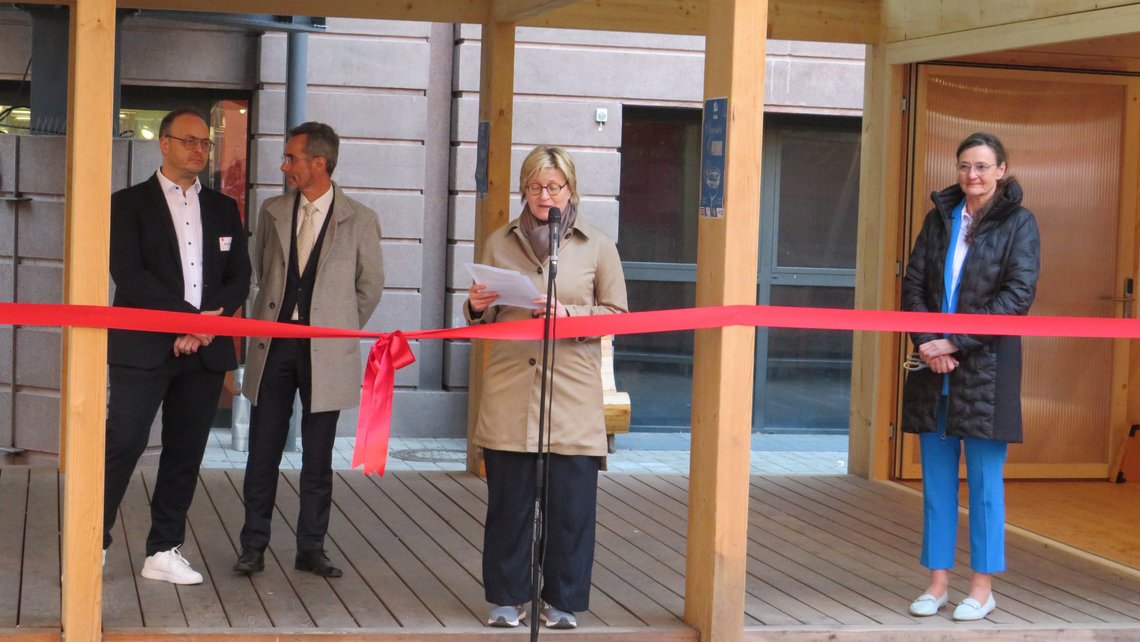
Following the official opening of the new “Block 4” on 18 March 26, the HFT.Space experimental site is set to welcome two further innovative prototypes this summer. Firstly, the jointly developed rammed earth and timber pavilion – a result of the HFT.Lab, InDeckLe and NABI funding projects – will be added as a further prototype of sustainable construction using natural, regional raw materials.

The externally funded InDeckLe project, in collaboration with partner university Biberach, is developing sustainable solutions for ceiling structures made from clay and other regional building materials. The new pavilion is now being used to test composite solutions combining rammed earth and timber that meet the mechanical and structural requirements for load-bearing components in construction. The composite clay ceilings are intended to serve as a substitute to help reduce the use of materials such as reinforced concrete. By increasing the use of renewable raw materials as building materials, CO₂ emissions and waste, amongst other things, can be reduced throughout the life cycle of future buildings. HFT Stuttgart has committed itself, through the NABI educational project, to promoting sustainable construction skills in engineering degree programmes, with the aim of fostering the transition to a resource-efficient circular economy and sustainable, affordable construction, thereby addressing the key societal challenges of climate change, resource scarcity and sustainable urban development.

In August, a third, experimental prototype made from highly compressed straw bricks will, for the time being, complete the experimental site. StrawBricks is a building material concept developed by the Bauhaus-Universität Weimar, which offers a viable alternative to conventional building materials and is being used for the first time in construction at the HFT Stuttgart. The pavilion, made from pressed, load-bearing straw bricks and based on the winning project of the European GROUNDBREAKERS Challenge, will showcase this newly developed, natural building material.

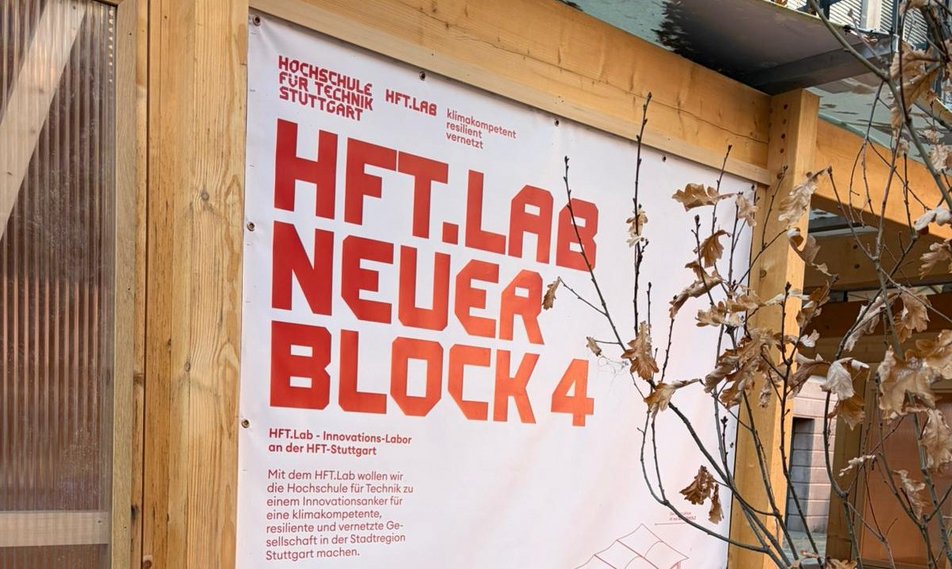
A detail of the façade of a wooden building, featuring a poster inscribed with "HFT.Lab Neuer Block 4."

18.03.26 Opening of "Block 4"

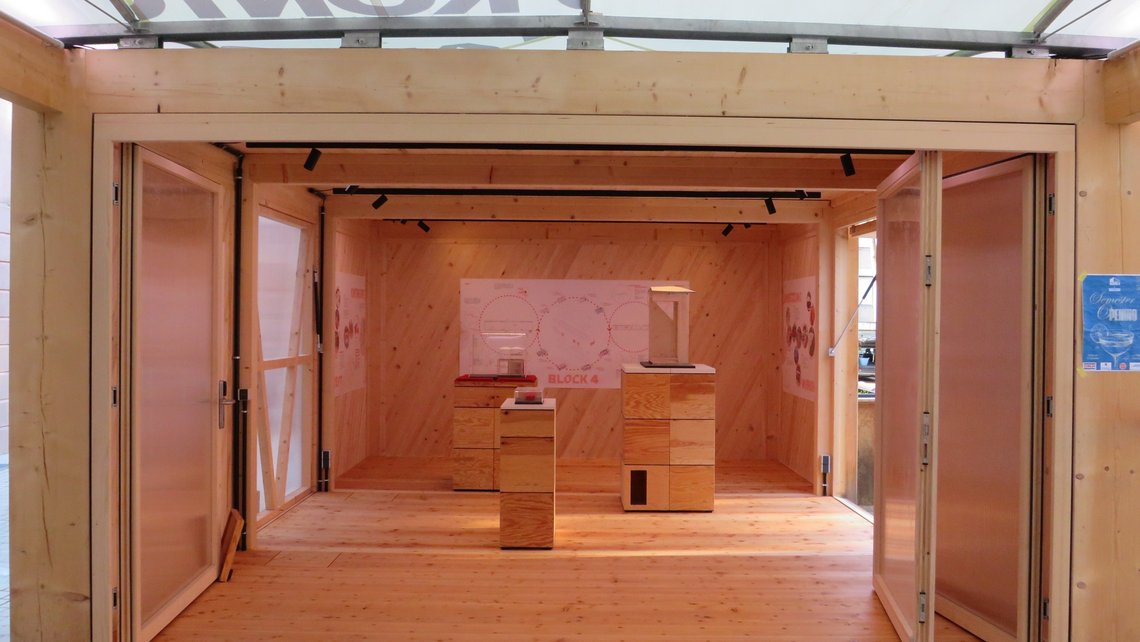
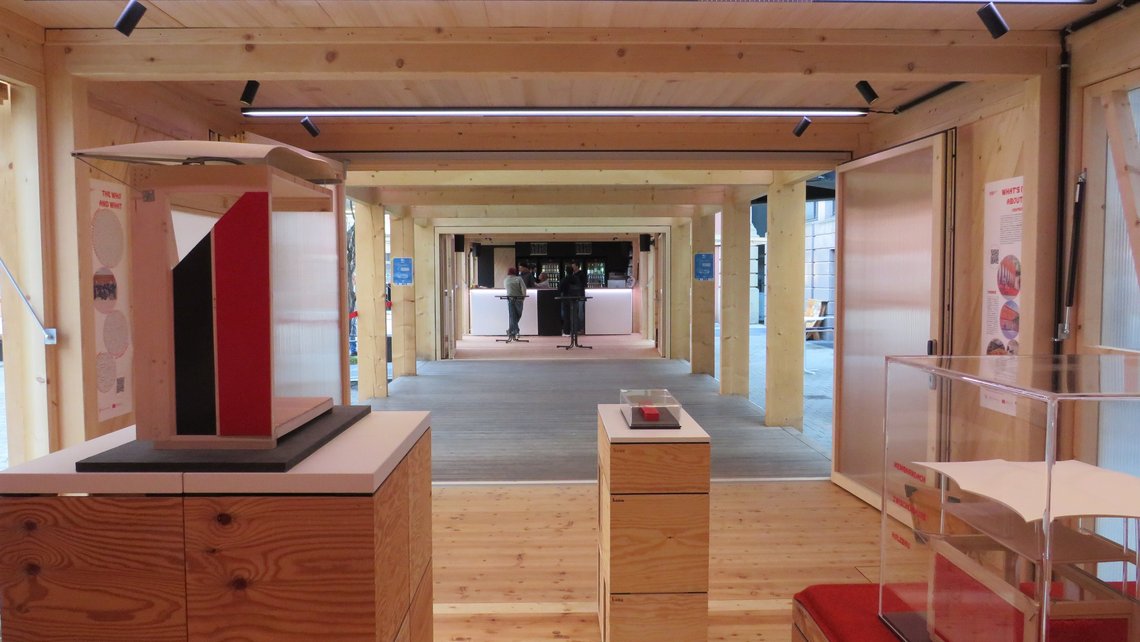
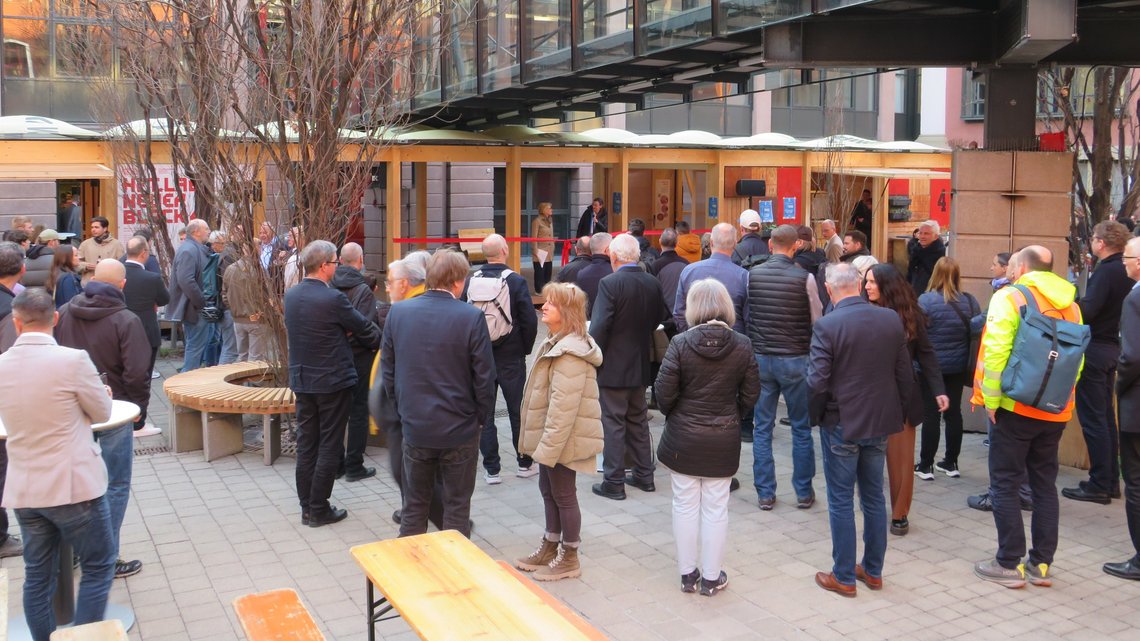
The time has come - the new Block 4 in the university's inner courtyard opens its doors for research, learning, exhibiting, relaxing, celebrating and much more on

Wednesday, 18 March 2026 from 5 pm.

And everyone is cordially invited!

View Article

New campus furniture installed

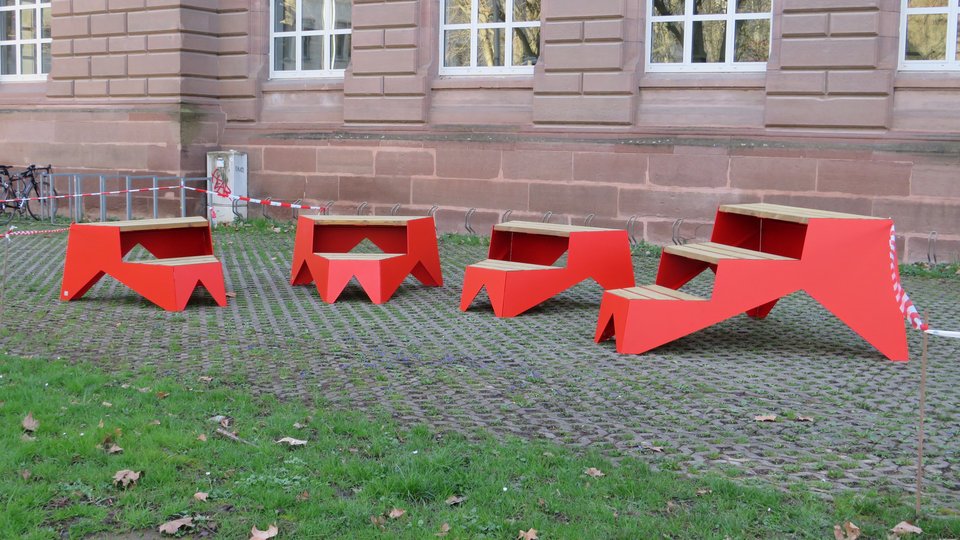
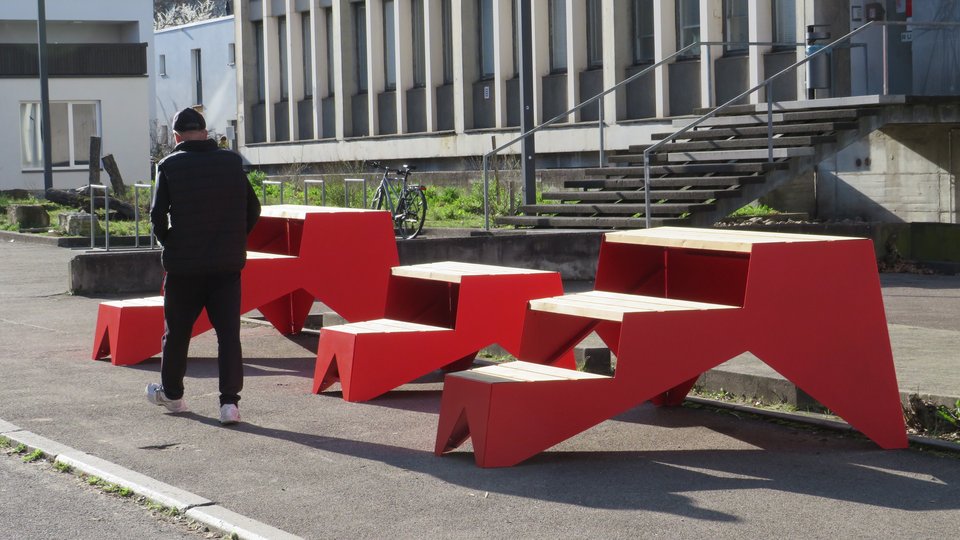
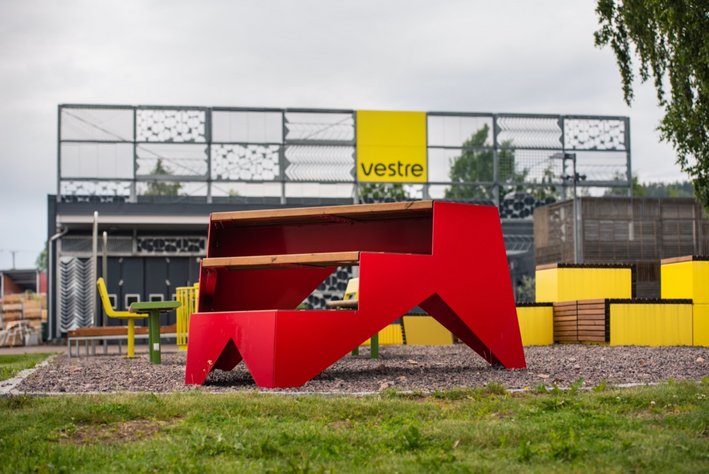
Red, three-tiered steel outdoor seating furniture by Vestre, situated outdoors on a gravel surface.

New campus furniture installed

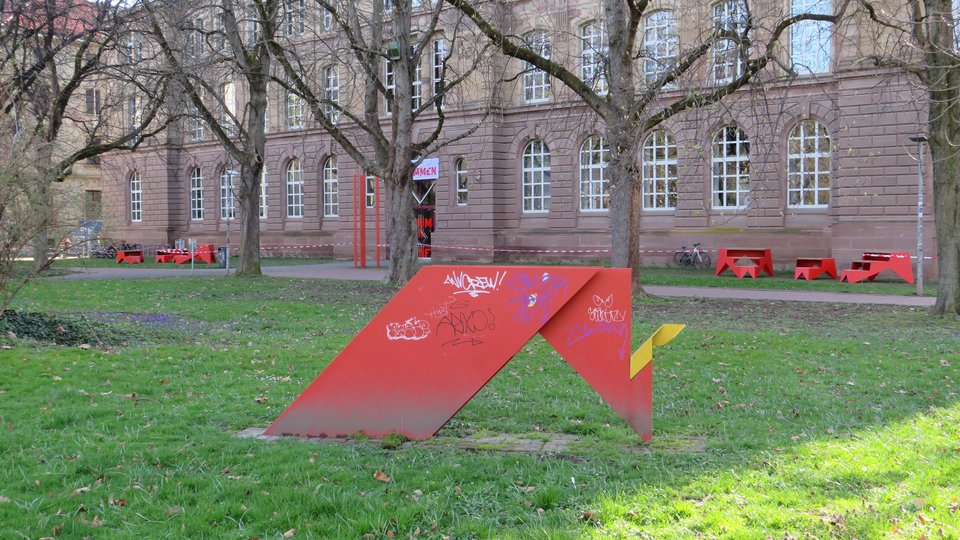
In a joint effort with students and staff from the Technical Department, the STOOP seating furniture from Vestre was freed from its storage boxes, assembled, and installed.

The ten STOOPlings in HFT-red and featuring the 45-degree angle of the HFT corporate design are located in front of the main building and on the sidewalk of the parking lot on Breitscheidstraße. Here they are waiting to be discovered as a meeting point for socialising, working, eating, relaxing and much more.
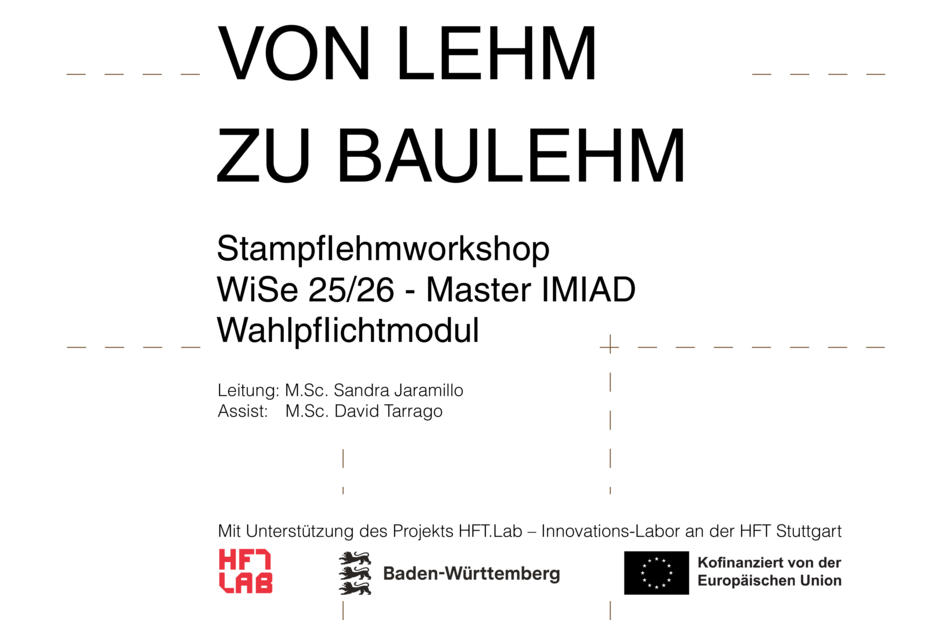
Poster for the exhibition "From Clay to Building Clay," presented by the Rammed Earth Workshop during the Winter Semester 2025/26.

Exhibition "From clay to building clay"

Your are cordially invited to the exhibition opening of the rammed earth workshop

As part of an elective block course of the IMIAD master's programme at the Faculty of Architecture and Design, students led by Sandra Jaramillo researched and experimented with the potential of clay as a sustainable building material and directly implemented it in a practical project. The result is innovative stools and valuable insights into the material properties and design possibilities of rammed earth.

The results will be on display from November 27, 2025, in the WoodJoints Reloaded Pavilion in the courtyard and can be seen until Christmas. A small opening ceremony will take place at 5 p.m.

Block 4 at the Structural Membranes Conference

Excerpt from the poster for the Structural Membranes conference from 8 to 10 October 2025 in Munich

Block 4 at the Structural Membranes Conference

Block 4 was also presented to the international audience of experts at the 12th International Conference on Textile Composites and Inflatable Structures, held in Munich from October 8 to 10, 2025, as part of the programme item "A second life for PVC/PES membrane material: Re-use-membrane roof for a modular timber structure pavilion".

The conference paper (PDF) by Jan Cremers, Yannik Zelenka, Sebastian Baier
 

Block 4 at the ARCHBUD conference

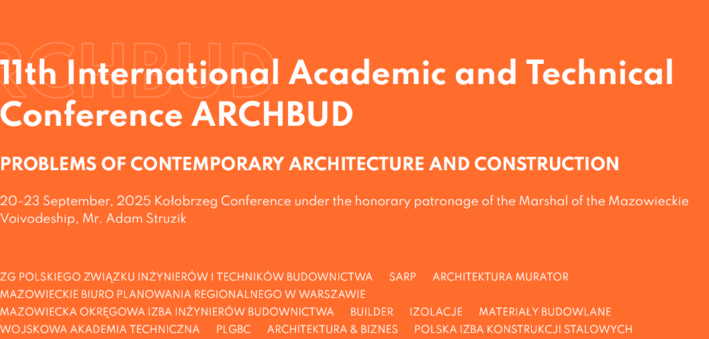
Screenshot of the website for the 11th ARCHBUD conference in Kolberg

Block 4 at the ARCHBUD conference

Entitled "Modular timber structure pavilion made of single-material joints with re-use-material membrane roof. An innovative research and teaching project", Block 4 was part of the programme at the three-day 11th International Academic and Technical Conference ARCHBUD from August 20 to 23, 2025, in Kolberg (Poland).

The conference paper (PDF) by Jan Cremers, Yannik Zelenka, Sebastian Baier
 

Block 4 is Futurepoint

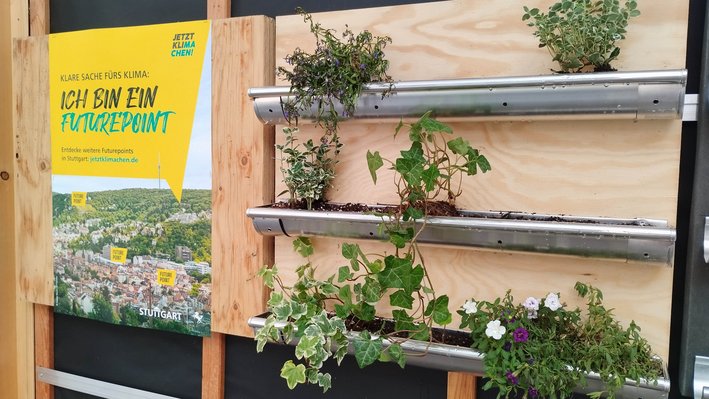
A planted wall element at Block 4 and a poster from the "Take Clima Action Now" campaign.

Block 4 is Futurepoint

From July 7 to 27 we will be participating in the City of Stuttgart's 2025 “jetztklimachen!” campaign with Block 4 as a so-called "Futurepoint".
Logo for the exhibition "Rethinking: experience Circular Economy," Summer 2025

Block 4 in the Pop-Up Space

From July to September, we will be presenting our innovative new Block 4 at "Rethinking - Experience the Circular Economy" in the Stuttgart Region Pop-Up Space.

Come by. Take a look. Experience innovations.

To the HFT.Lab project on the Re-Thinking website

Block 4 presents itself at the strategy check

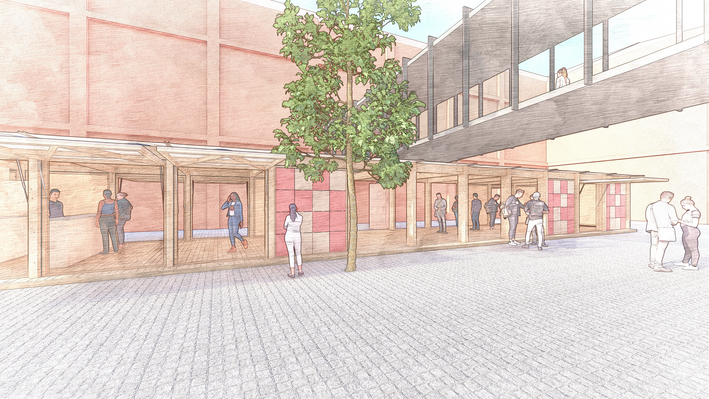
Computer visualization of the exterior view of Block 4 in the courtyard of HFT Stuttgart, featuring an overhead glass walkway and a tree positioned centrally in front of the timber structure.

Block 4 presents itself at the strategy check

On Wednesday, June 25, 2025, from 1:00 p.m. to 3:00 p.m., the HFT.Lab will be participating in the university's strategy check with Block 4.

Come by…
 

HFT Teaching Award 2025 for Sebastian Baier

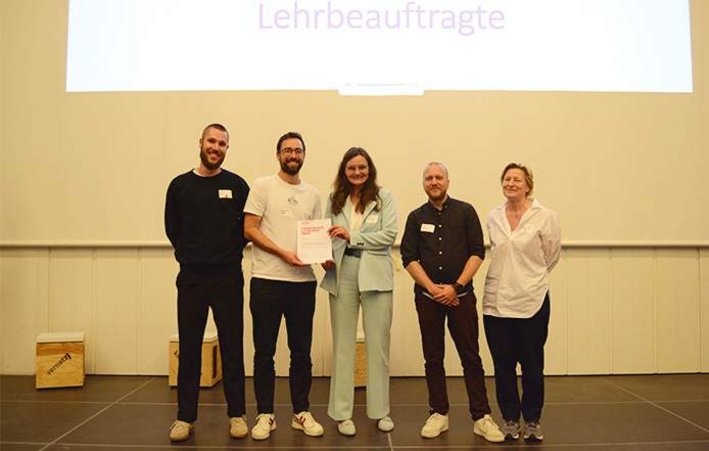
Five people on a podium at the HFT Teaching Award Ceremony, including the presentation of certificates.

HFT Teaching Award 2025 for Sebastian Baier

HFT Stuttgart honors outstanding commitment to teaching by awarding the university's own teaching prize. The aim is to recognise particularly motivated and committed teaching staff who inspire their students to study, design courses to promote learning, and run them successfully.

The evaluation committee selected HFT.Lab lecturer Sebastian Baier as the 2025 Teaching Award winner. Together with Yannik Zelenka (Project Planner HFT.Lab), he has so far conducted six teaching research courses for Block 4 since summer 2023.
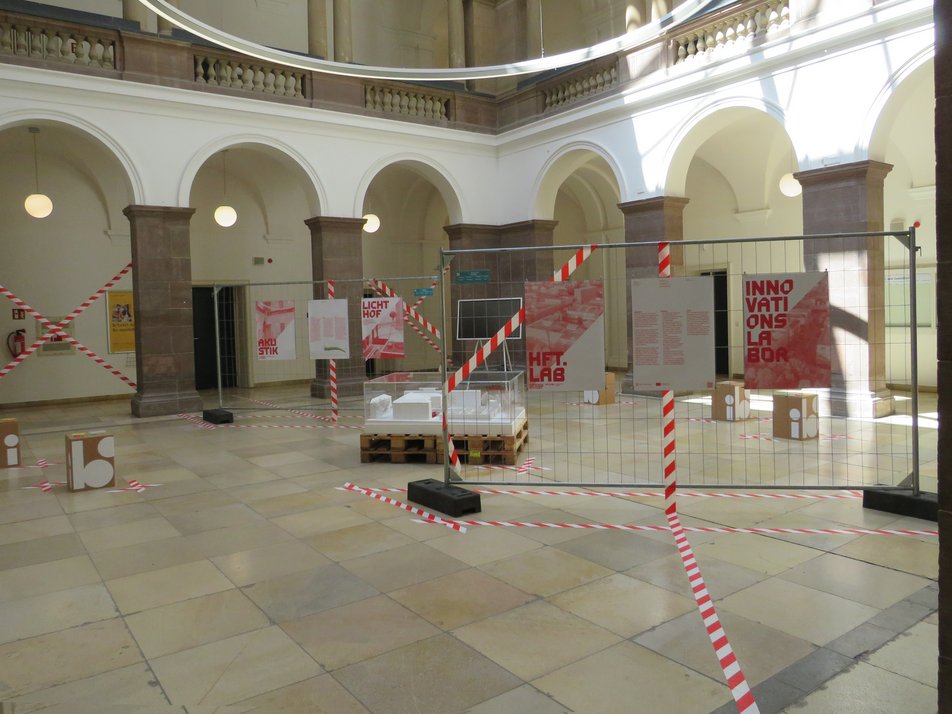
Exhibition installation featuring posters on construction fences and a model on wooden pallets in the courtyard of HFT Stuttgart, for the "HFT Campus Walk" exhibition in May 2025.
HFT Campus Walk

HFT.Lab x IBA'27

From May 12 to 16, 2025, HFT.Lab will present the entire university with its expertise and diversity at the IBA'27 Festival #2 with a Campus Walk from the Stadtgarten to the Liederhalle.

Go to event information

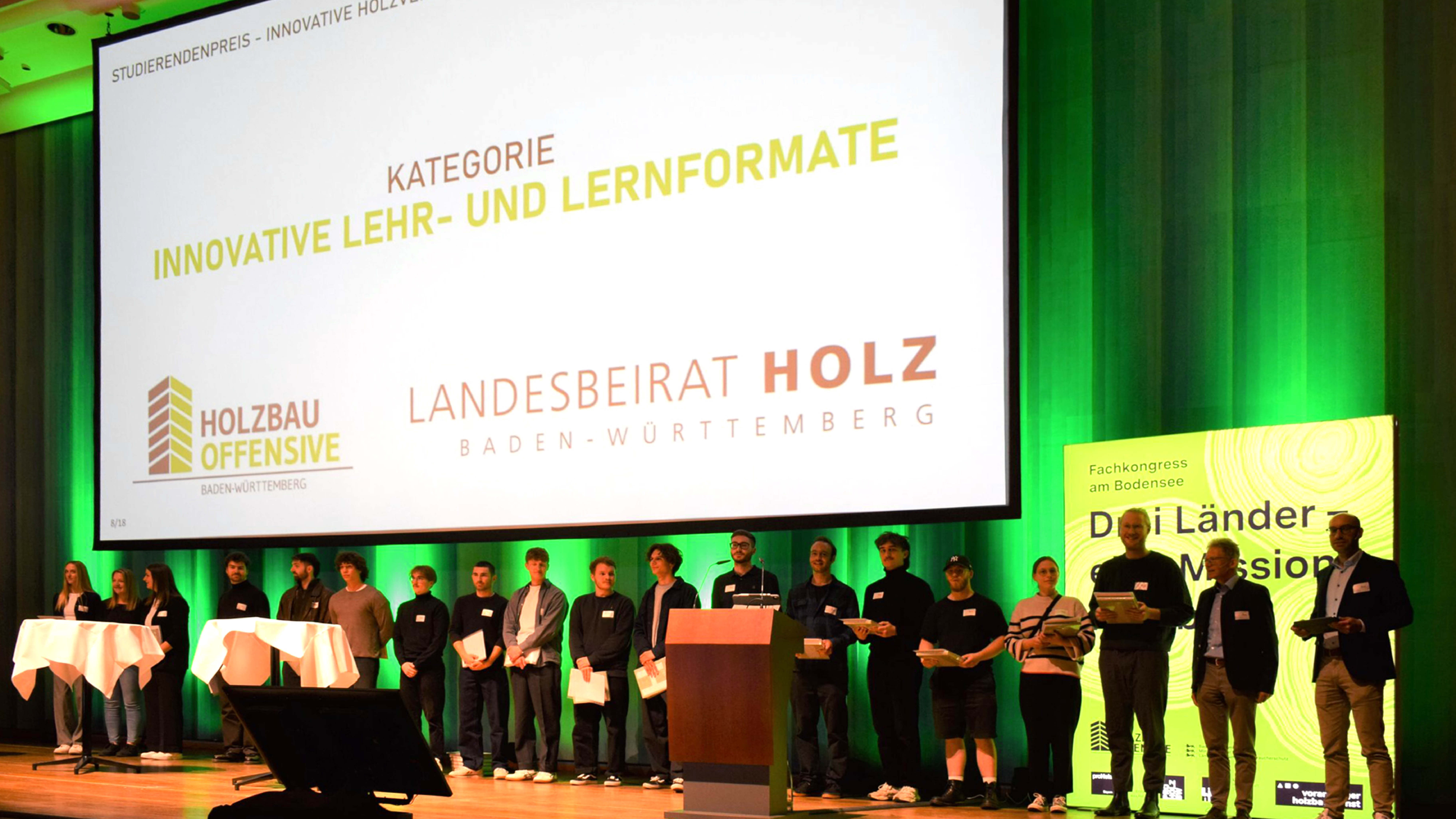
Awards at the Studierendenpreis Holzbau Baden-Württemberg 2025

Three HFT Stuttgart projects were honoured

View Article

On the way to the new Block 4 building

How will the new student centre get to the right place?

View Article
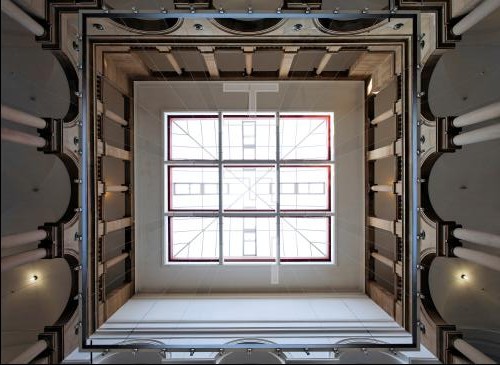
View towards the roof glazing of the atrium in the main building of HFT Stuttgart.
Master Thesis

Room acoustic optimisation of a listed atrium

Laura Dürholz: Room acoustic optimisation of a listed atrium. Measurement and simulation-based investigation for the development of acoustic measures.

Excerpts from the Master's Thesis (PDF in German)

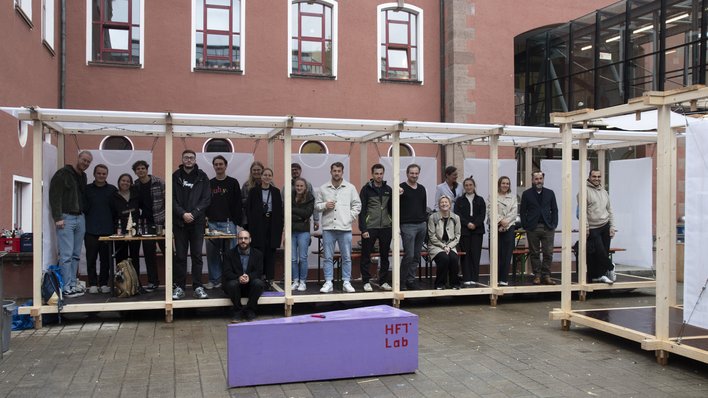
Group of students in a self-built wooden pavilion in the courtyard of the HFT Stuttgart.

Real Lab – WoodJoints Reloaded

View Article

A breath of fresh air at HFT Stuttgart - Minister of Science Petra Olschowski impressed by the university's new profile

climate-literate – resilient – connected

View Article
A view into the courtyard of HFT Stuttgart, with students during a lecture break.
IBA'27

HFT.Lab is included in the IBA'27 network

Our project is now part of the IBA'27 network family.

To the HFT.Lab projekt presentation on the IBA'27 website


Vision

Red HFT.Lab logo on a white background

By the end of 2027, the HFT.Lab will create a platform for innovation in the construction industry in Stuttgart’s city center, which will serve as a testing ground for prototypes as well as a forum for collaboration and exchange between science, industry, and the public. It will be a special venue for scientific dialog and knowledge transfer at a high level, with both internal and external partners. 

A participatory showcase, new creative spaces, and new forms of flexible research and learning will promote communication and direct dialogue with the urban community as well as with internal and external cooperation partners, students, employees, and professors. 

In order to enable new forms of participation and communicate the university's expertise to the city and region, structural and construction actions are planned in three sub-projects.

FAQs

In which programmes/tenders is HFT.Lab?

How long is the execution period?

How is the project financed?

What are the goals?