Start of application
- 15 July 2026
Deadline application DAAD scholarship + study course
- 15 October 2026
Deadline application study course
- 15 March 2027 (applicants from non-EU countries)
- 15 July 2027 (applicants from EU countries)
to the International Master's Programme Photogrammetry and Geoinformatics at the Hochschule für Technik Stuttgart (Stuttgart University of Applied Sciences).
As a young expert you will receive a scientific and practice-oriented education in the fields of photogrammetry, remote sensing and geoinformation science in addition to your professional background. An important objective is the transfer of up-to-date techniques into practice under different technological conditions. The course is designed in particular for future decision-makers and senior engineers of information and land management projects, national authorities for mapping, photogrammetry, land consolidation, forestry, agriculture, environment, rural or urban planning.
The programme is characterized by its international outlook - lectures are held in English - and gives you the chance to study with benefits in an intercultural environment.
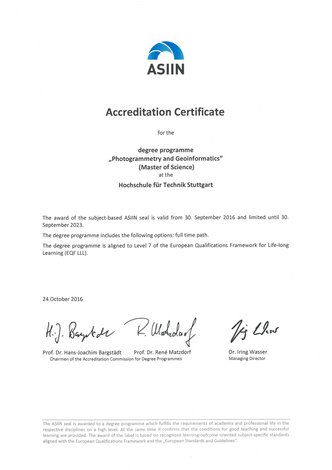
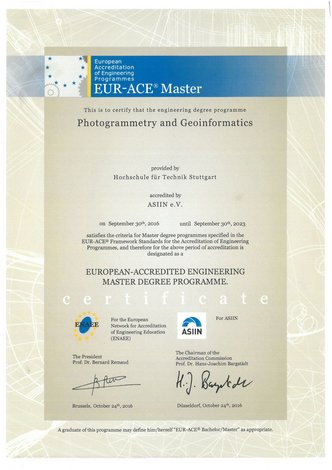
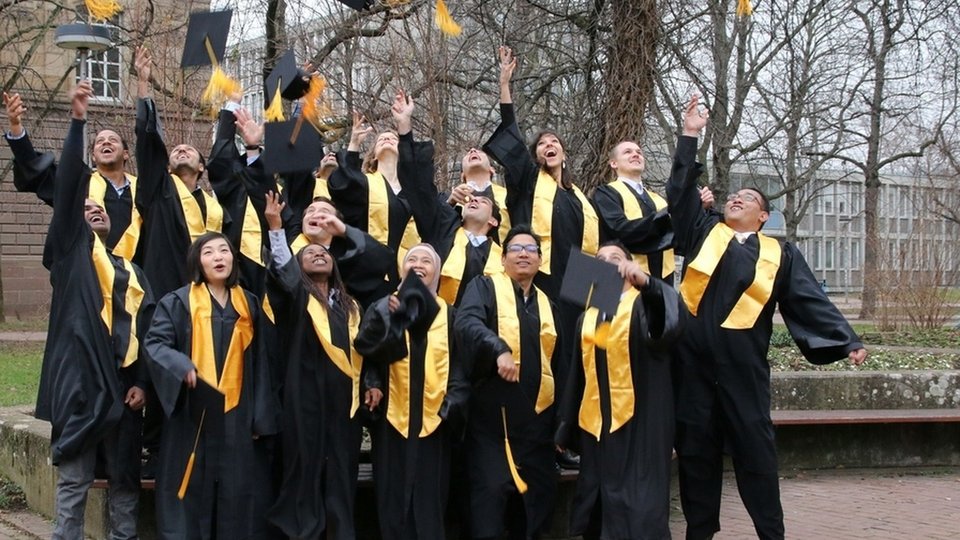
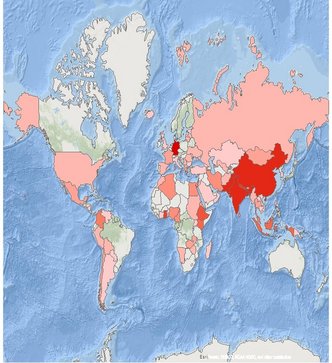
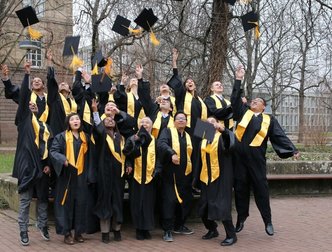
Since 1999 - more than 20 years experience in international education - the master programm Photogrammetry and Geoinformatics established a worldwide Alumni network of more than 500 successful graduates from 89 countries!
The Programme has also been supported by DAAD scholarships since the beginning and achieved excellent results in the DAAD evaluation!
Cooperation agreements with universities throughout the world are the basis of the internationalisation of education at the Stuttgart University of Applied Sciences. The Master Course curriculum is developed in cooperation with multinational companies, organisations and universities to meet the requirements of economy and science.
German companies in the fields of photogrammetry and geoinformatics contribute with their experience in international projects and seminars.
The working language for all lectures is English.
GIS (Geographical Information Systems): Databases and Spatial Databases, Coordinate Reference Systems and Spatial Referencing, Vector- and Raster GIS, Spatial Analysis, Thematic Mapping, GIS practice
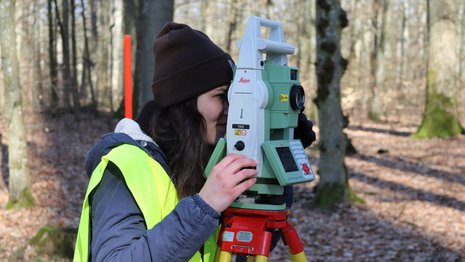
Photogrammetry and Remote Sensing: Sensors of Photogrammetry and Remote Sensing, Basic Photogrammetric Workflow, Basic Remote Sensing Workflow, Photogrammetric Practice
Geostatistics and Surface Modelling: Statistical Background, Surface Modelling, Interpolation and DTM, Geostatistics
Scientific Skills, Intercultural, Language and Media Competence: Scientific Skills and Media Competence, Language, Intercultural Training
Planning, Organisation and Management: Project Analysis, Management of Resources, Marketing
Advanced Topics in Photogrammetry and Remote Sensing: Digital Photogrammetry and Remote Sensing, Image Classification, LiDAR
Geodata - Capture, Sources and Standards: Data Capture and Geo-Referencing, GPS, GIS Formats and Interfaces, Data Retrieval and Infrastructures, Metadata
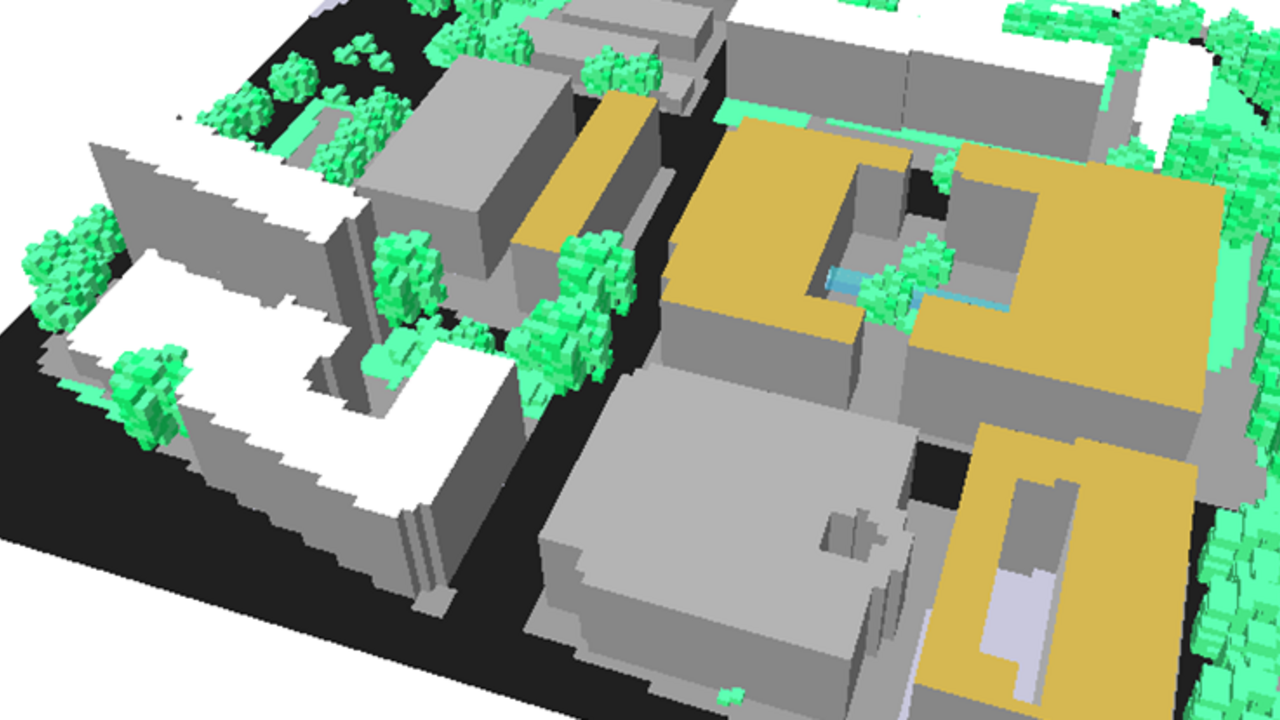
Customisation, Internet GIS, Visualisation: Internet GIS, Visualisation, 3D City Models
Elective Module: e.g. RADAR, Advanced Programming Techniques
The Master's Thesis project comprises the whole third semester. The project is divided into two phases. First, the students have to prepare a research proposal for their project; second, they have to work out their project according to the approved proposal. The project is accompanied by a research seminar.
Master Thesis: The purpose of the Master's Thesis is to demonstrate the ability to work independently on a topic within a limited time frame by applying scholarly and constructive methods. The master's thesis is supervised by a professor. The students are free to select a topic offered by a professor of the University or to do the Master's Thesis project externally at a partner University or company. The students are highly encouraged to work on a project from their home institution, if applicable.
Research Seminar
HFT, a well renowned university in Germany, is remarkable due to its cutting edge technology on Photogrammetry. It offers an inimitable master course in Photogrammetry and Geoinformatics for international students with a strategic vision. Further, it provides an excellent research infrastructure and supportive environment with highly qualified supervisors, having excellent research calibre and dedication. These factors motivated me to choose HFT as my postgraduate university.
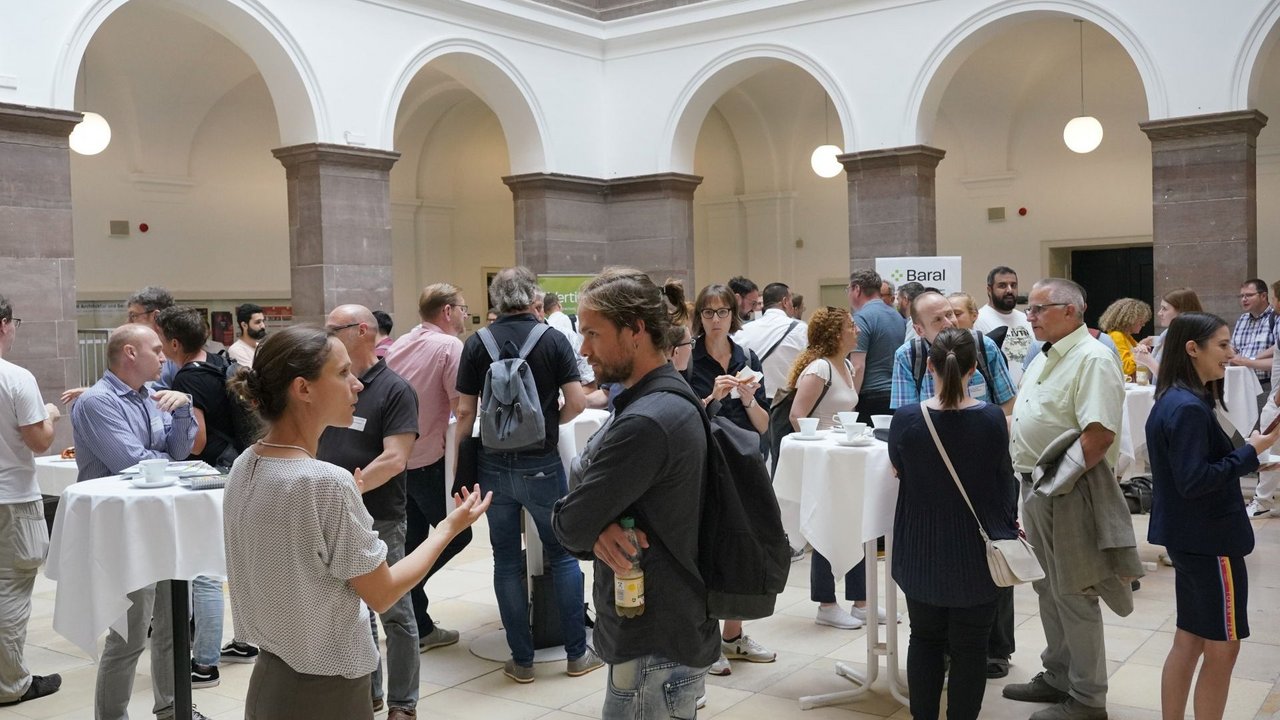
Regular intercultural workshops at the beginning of the course are offered and attended each year with great pleasure. This workshops (financially supported by DAAD and HFT) help to understand cultural diversity and is a optimal basis for amicable and higly motivated cooperation during the course of study.
The most exciting aspect was getting a multi-cultural experience and to be able to present the customs of my home country to the classmates and to the university administration and professors. Despite I have graduated ten years ago, I am still in touch with my friends whom I met in Stuttgart.
The enrolment fee amounts to EUR 196.50 for the first semester and EUR 184.50 for each following semester (as of September 2025).
Attention: The state government of Baden-Württemberg has introduced study fees of Euro 1500,- per semester for international students coming from non EU-Countries starting from winter semester 2017/18. According to an additional statutory regulation (Verordnung des Wissenschaftsministeriums über die Befreiung von Studiengebühren für Internationale Studierende) international students who are studying in a course funded by the German Academic Exchange Service (DAAD) in its program of Development-related master's degree courses (EPOS), like the course Photogrammetry and Geoinformatics, are exempted from the study fees if they
Students from abroad may apply for fellowships via German organisations for developing countries or via international organisations in case of current projects in the countries. The German Academic Exchange Service (DAAD) supports this Master Course by granting scholarships since 20 years! Information on possible scholarships is listed below.
In general, additionally it is advisable to contact the German embassy in your home country. There should be all information available about postgraduate courses, scholarships in Germany, application forms etc.
Studying geoinformation or photogrammetry and remote sensing science will place our graduates into a top position of the international job market: the fields of geoinformation, photogrammetry and remote sensing are considered worldwide as part of the key markets. There is a big demand of well trained personal in industrial countries as well as emerging markets.
The following list gives some rough ideas about possible fields of occupation and career paths. The list is of course in no way complete! :
After graduation, the new experts easily find a job in the private market or at consultancies. Here, in particular, the employers appreciate the international and intercultural experience of our students. Those who have been sent by an institution for further education, usually will be promoted to a higher position after return. Some of them even started their own private business.
Many of our graduates continue their academic career with a PhD study at a german or international university or joining a university as teacher in their home country.
![[Image: Studienbereich Vermessung]](/fileadmin/Dateien/Vermessung/_processed_/8/e/csm_vermessung-geoinformatik-totalstation_c4f12d5c66.jpg)
![[Image: Studienbereich Vermessung]](/fileadmin/Dateien/Vermessung/_processed_/0/0/csm_geoinformatik-analyse_netzwerk-gruenflaeche_2cab417e72.jpg)
![[Image: Studienbereich Vermessung]](/fileadmin/Dateien/Vermessung/_processed_/e/8/csm_vermessung-geoinformatik-digitale_baustelle4_1a48f9e41c.jpg)
![[Image: Florian Hammerich]](/fileadmin/Dateien/Vermessung/_processed_/0/f/csm_photogrammetry-geoinformatics-lectures-photogrammetry1_8dda5989fb.jpg)
![[Image: HFT Stuttgart]](/fileadmin/Dateien/Vermessung/_processed_/5/9/csm_Studenten-Informationslogistik-3D-Drucker_885103cbe1.jpg)
![[Image: HFT Stuttgart]](/fileadmin/Dateien/Vermessung/_processed_/0/1/csm_Schlauer-Klaus-I4.0-Labor-Informationslogistik_62356ac122.jpg)
The German Association of Postgraduate Programmes with special Relevance to Developing Countries (AGEP) is an informal work group comprising various postgraduate study programmes oriented to developing and threshold countries as well as countries with economies in transition.
The common denominator of the study courses is the funding through the DAAD. Together with the DAAD the now over 40 members are striving to advance the study experience in Germany by joint activities and joint courses.
Please find more information on the AGEP website: https://agep-info.de/