From Mall to Meaning
Hybrid transformation strategies for inner-city shopping centres: the case of the Rössle in Villingen-Schwenningen
Master's Thesis | Dilara Türetken | 4th Semester | Summer Semester 2026
The master’s thesis on vacant inner-city shopping centres explores the spatial, functional and social potential of vacant shopping centres. This thesis investigates how this formerly monofunctional retail building can be transformed into an open, mixed-use and identity-forming building block through interior architectural and architectural interventions.
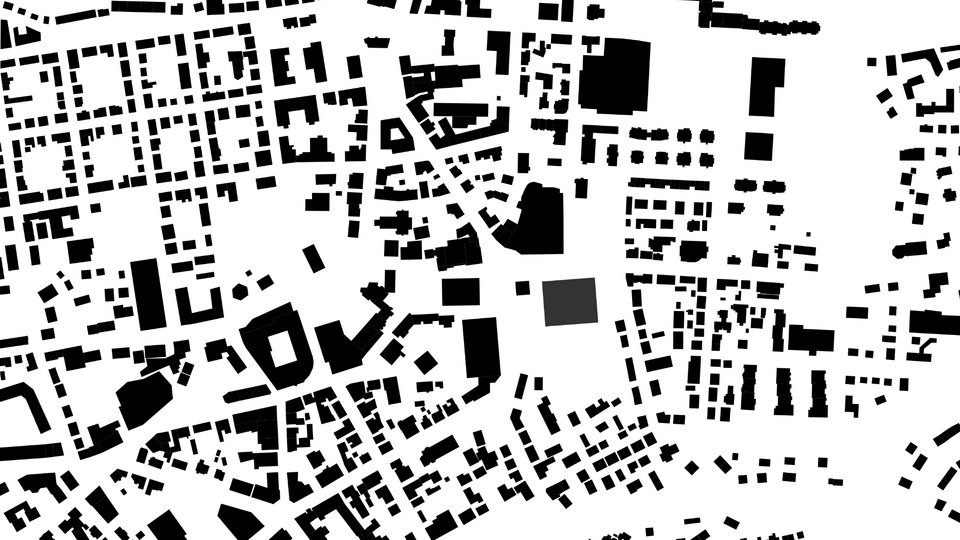
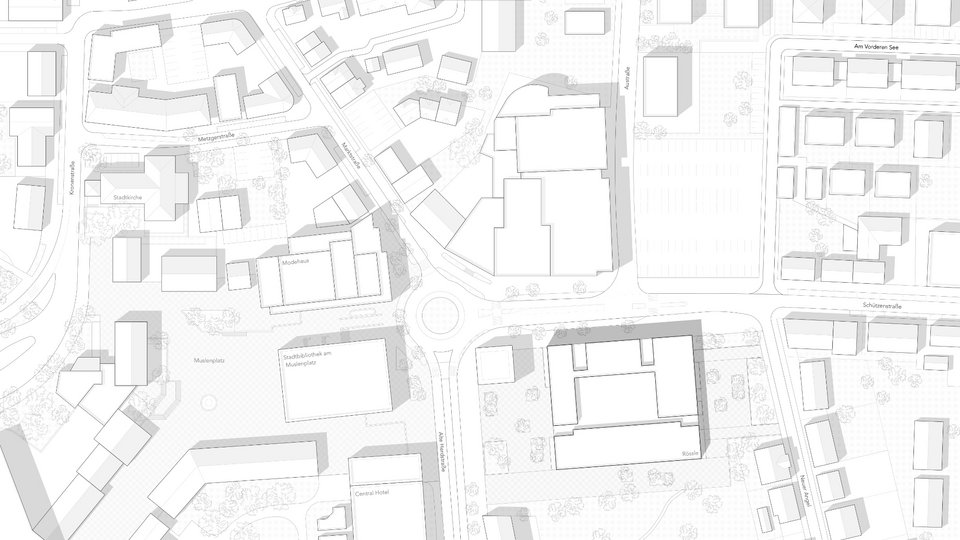
The starting point of the thesis is the former Rössle shopping centre in Villingen-Schwenningen. It is located in the centre of the city at Muslenplatz and is surrounded by many public and educational facilities, including the town hall, a public library, university institutions and the railway station. Despite its favourable location, the shopping centre was not able to serve as a long-term impulse for the city centre. Its introverted spatial structure, strong focus on retail use and lack of transparency towards the urban setting led to functional and atmospheric gaps.
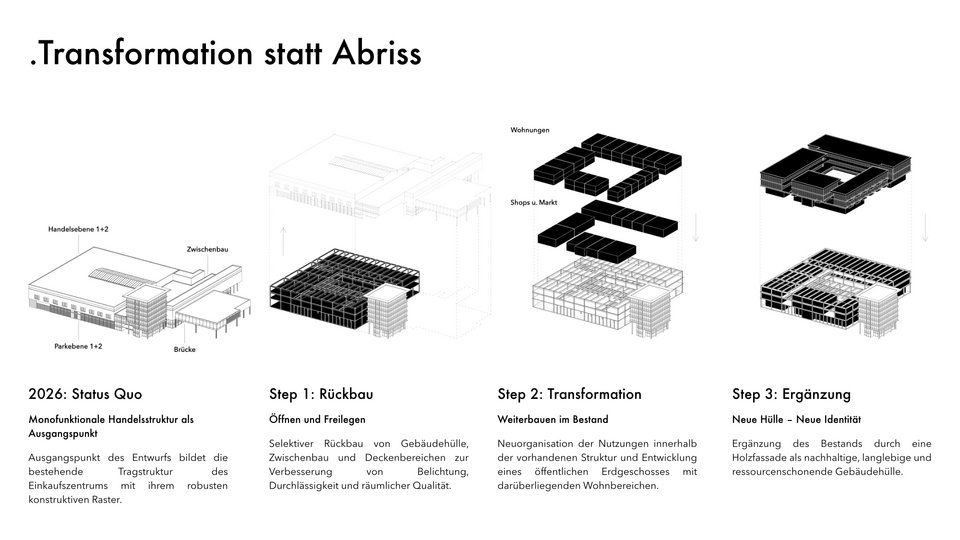
The thesis understands the Rössle not as a failing building type, but as a spatial and productive resource. In an age of changing retail buildings, increasing vacancy and the need for more sustainable approaches to the use of existing buildings, this thesis examines how large-scale retail architecture can be physically, functionally and atmospherically repurposed.
The theoretical part discusses the transformation of inner-city shopping centres, hybrid use as a spatial organisational principle, and reference projects that demonstrate different approaches to opening up, activating and reusing former retail buildings.
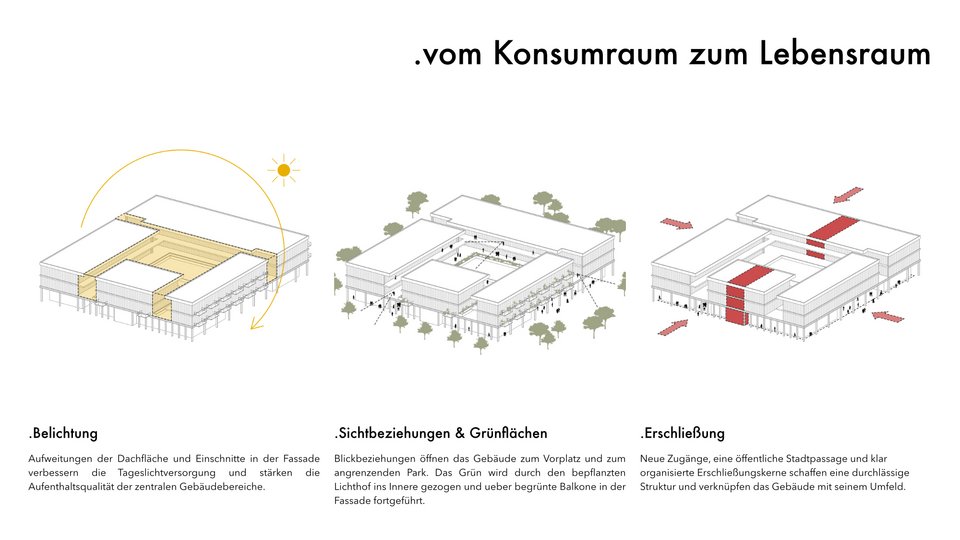
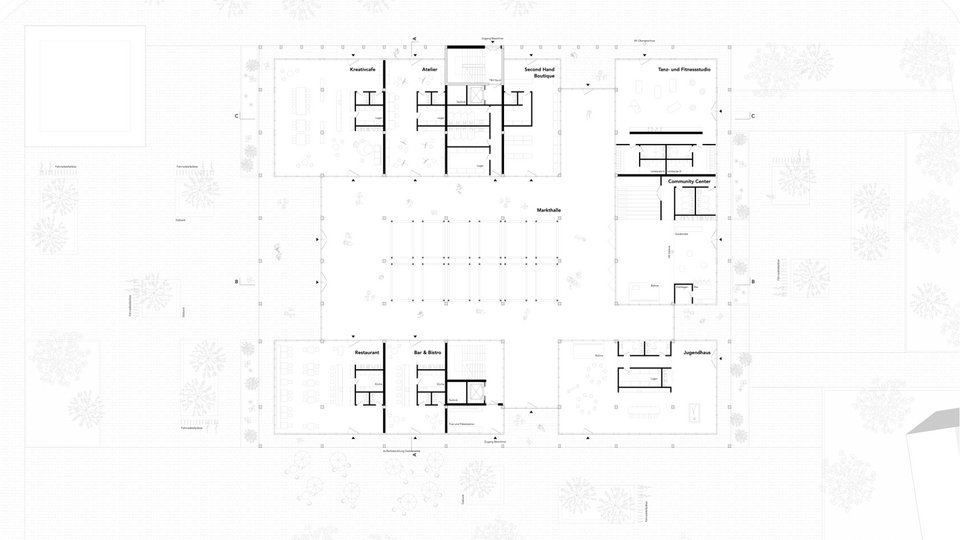
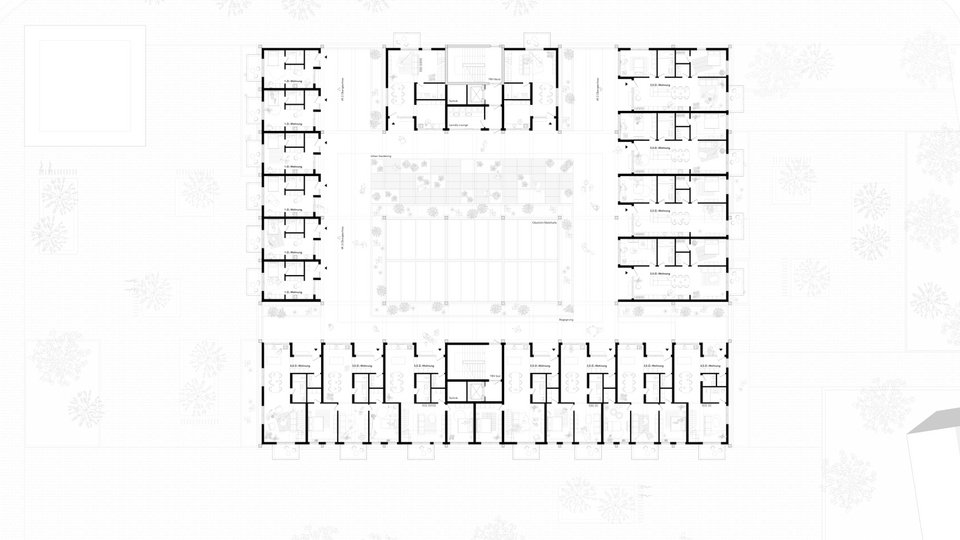
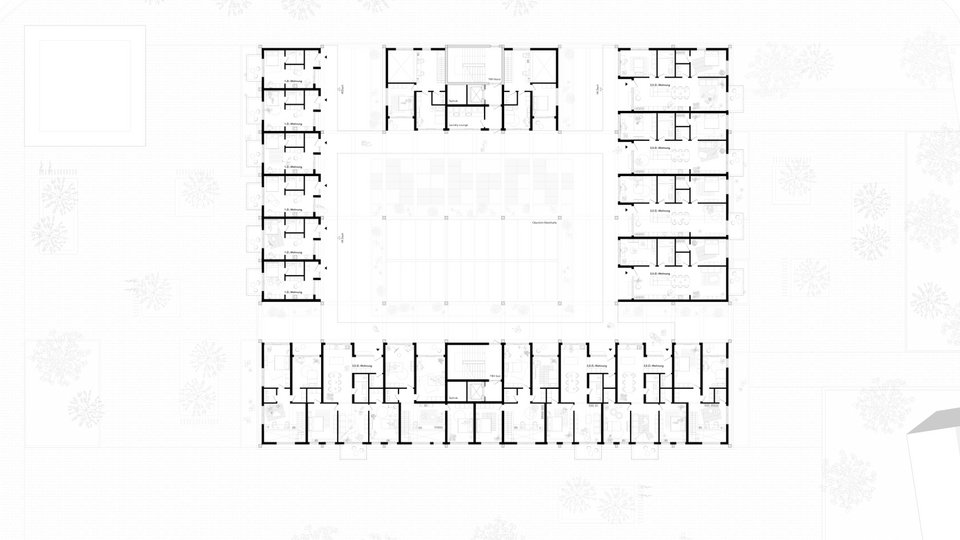
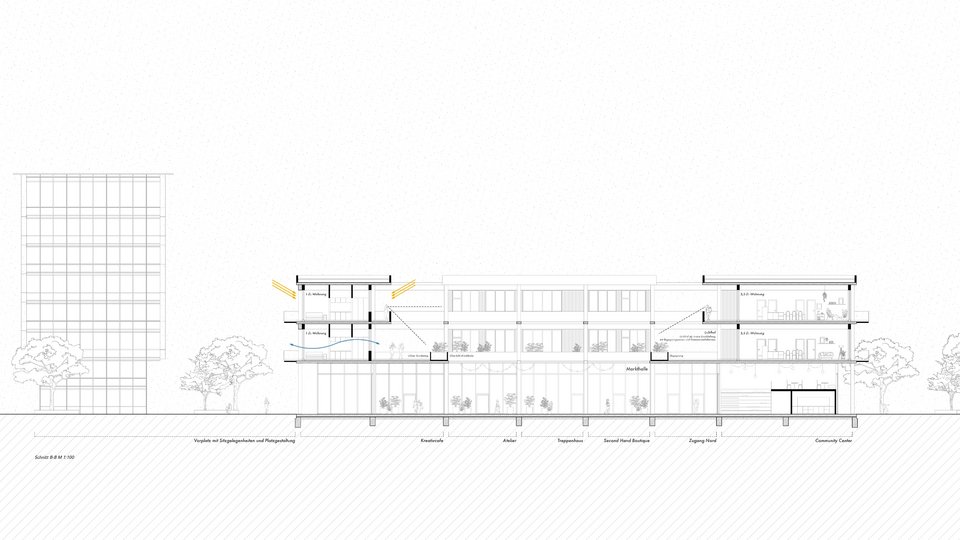
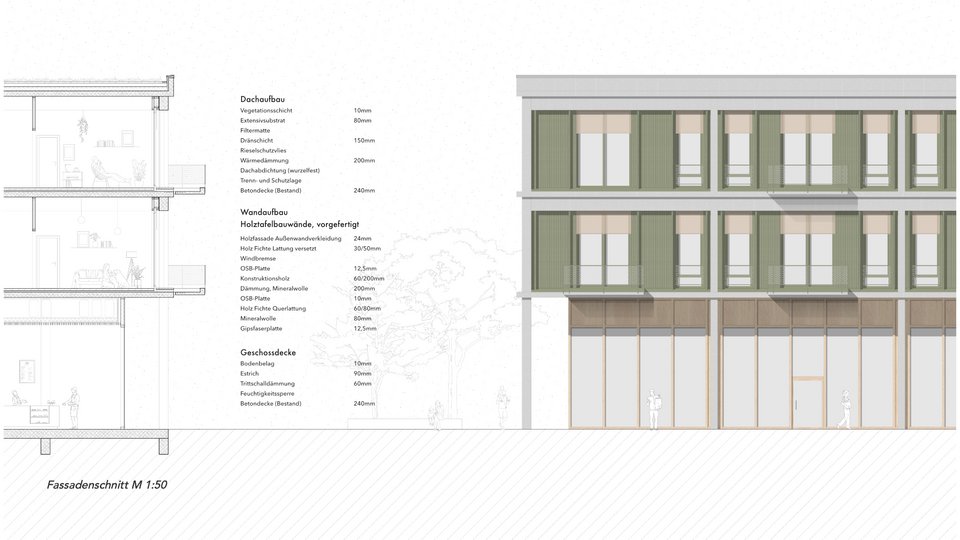
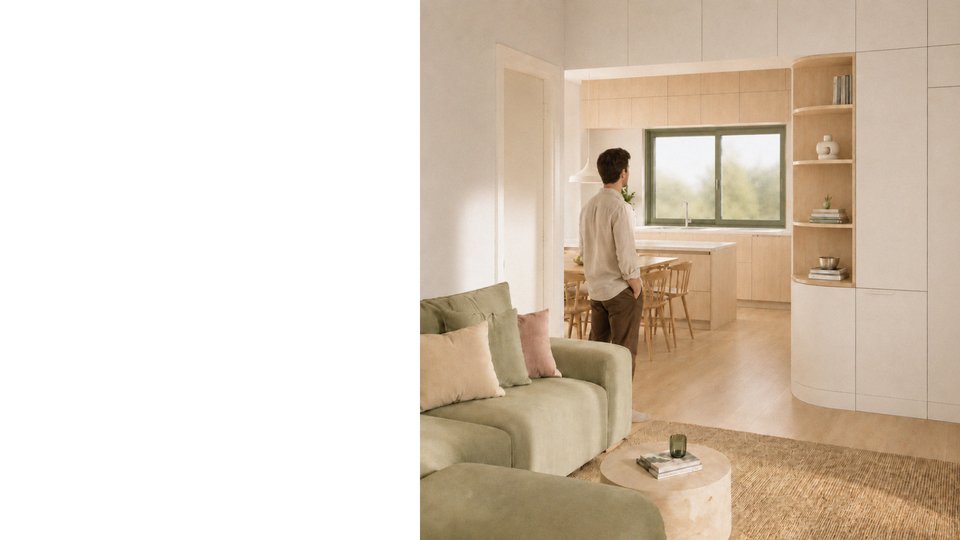
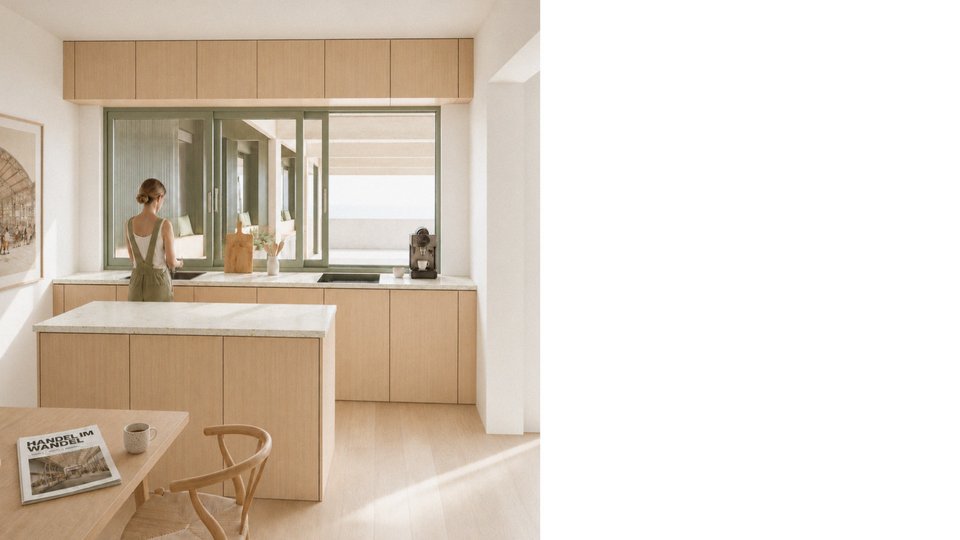
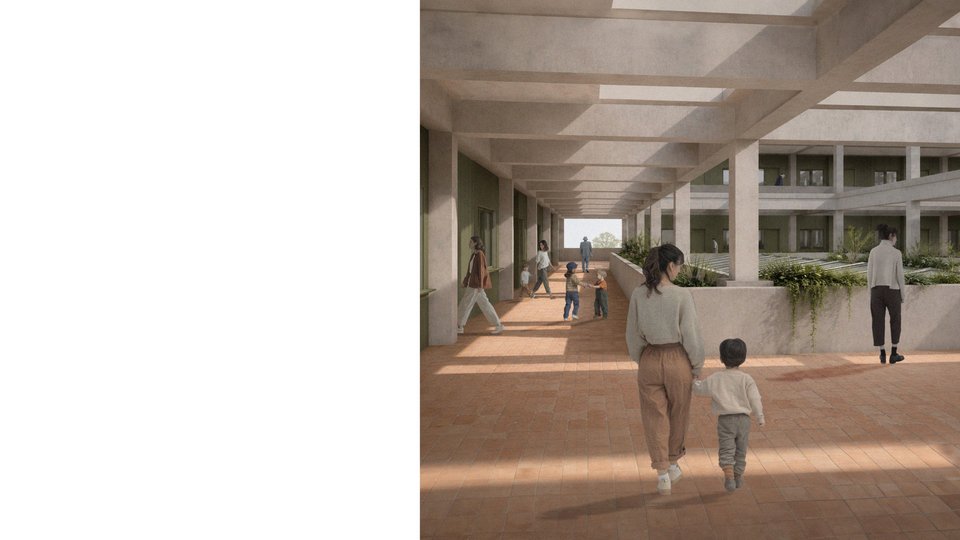
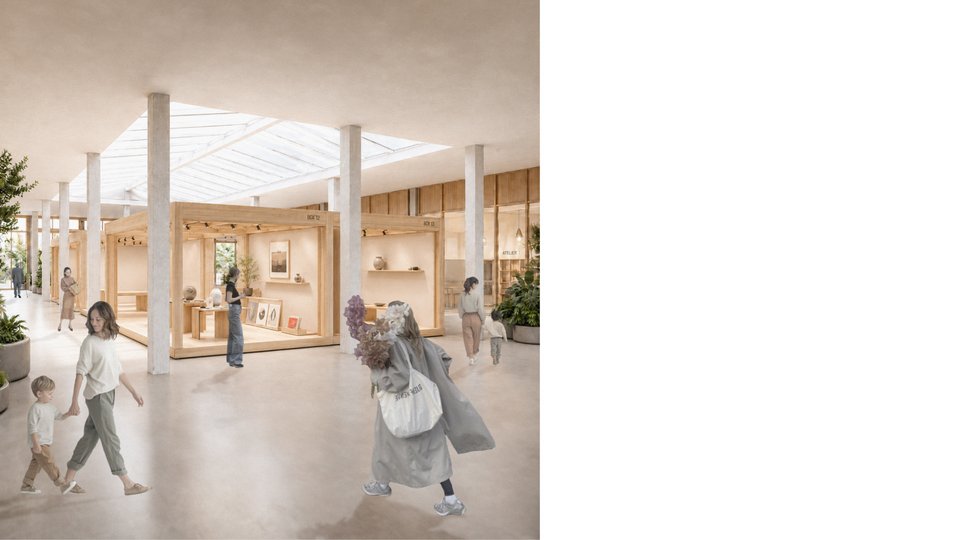
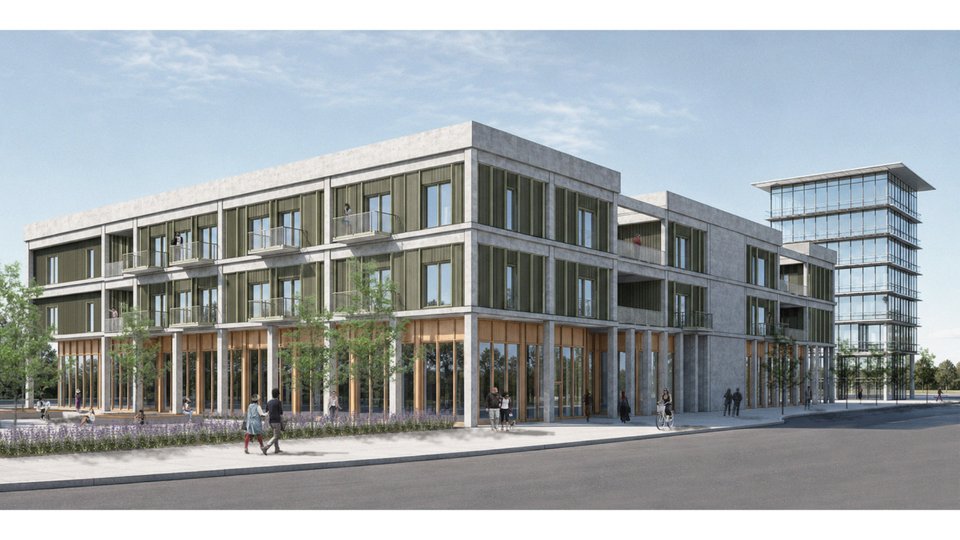
Based on this analysis, the design approach is to reconceptualise the former mall location as an open inner-urban structure. The permeable ground-floor zone is proposed as a public urban layer that creates new spatial connections between the building and its local environment. The upper floors are intended exclusively for residential use, allowing for the long-term activation of the site beyond the commercial opening hours of the building.
This vertical integration of public, communal and private spaces aims to transform the Rössle into a future-oriented and active part of the city centre. The thesis combines theoretical and design research and demonstrates how vacant shopping centres can be understood not as obsolete structures or declining assets, but as models for new forms of urbanity, community and sustainable reuse.
Master's thesis supervised by professor Monika Joos-Keller