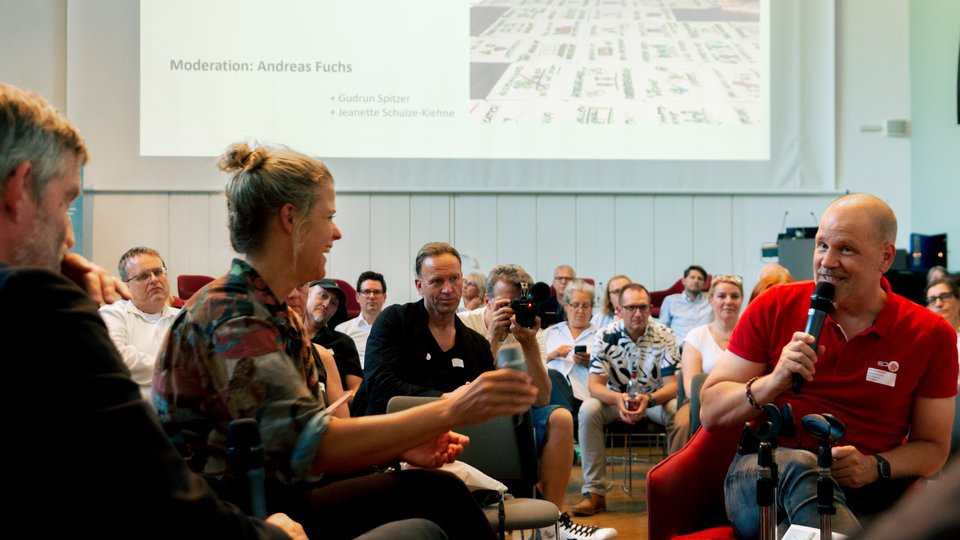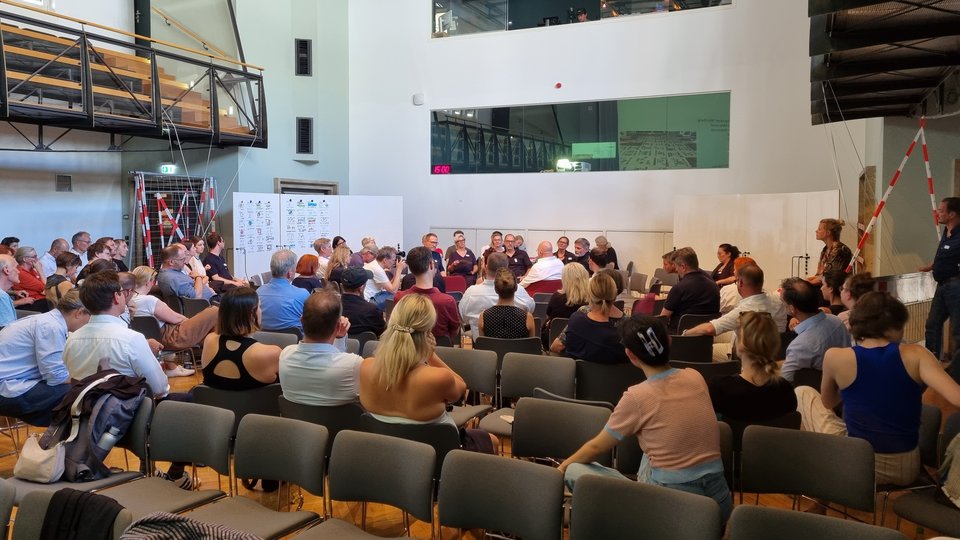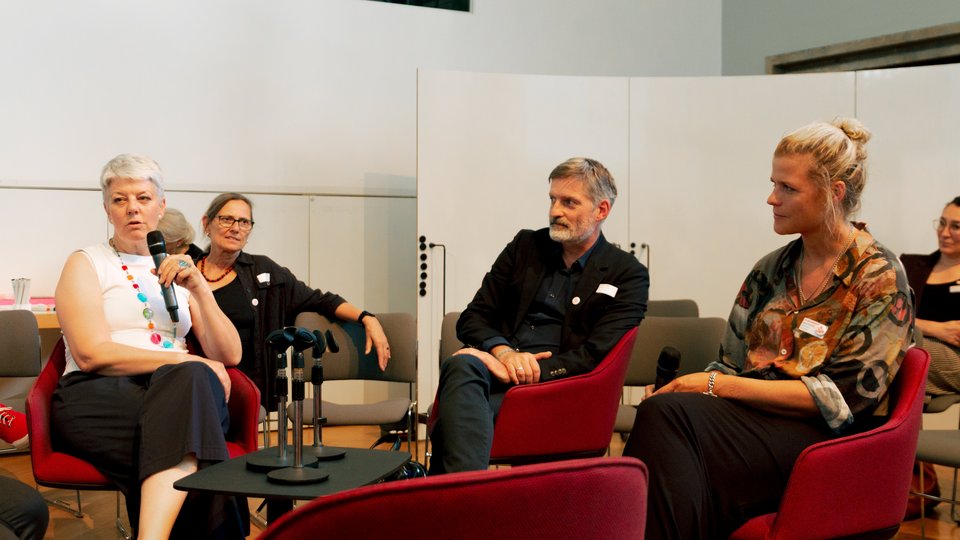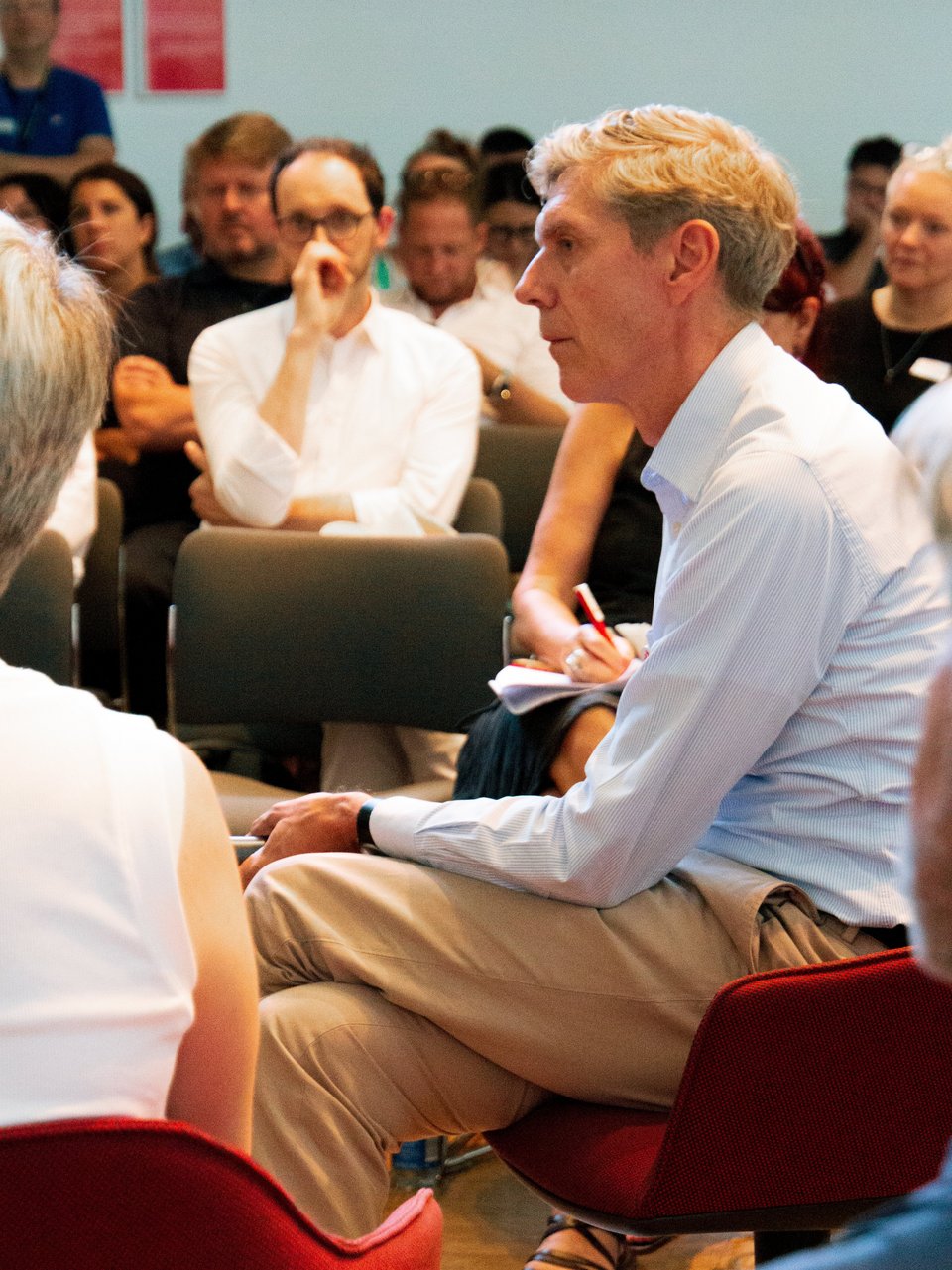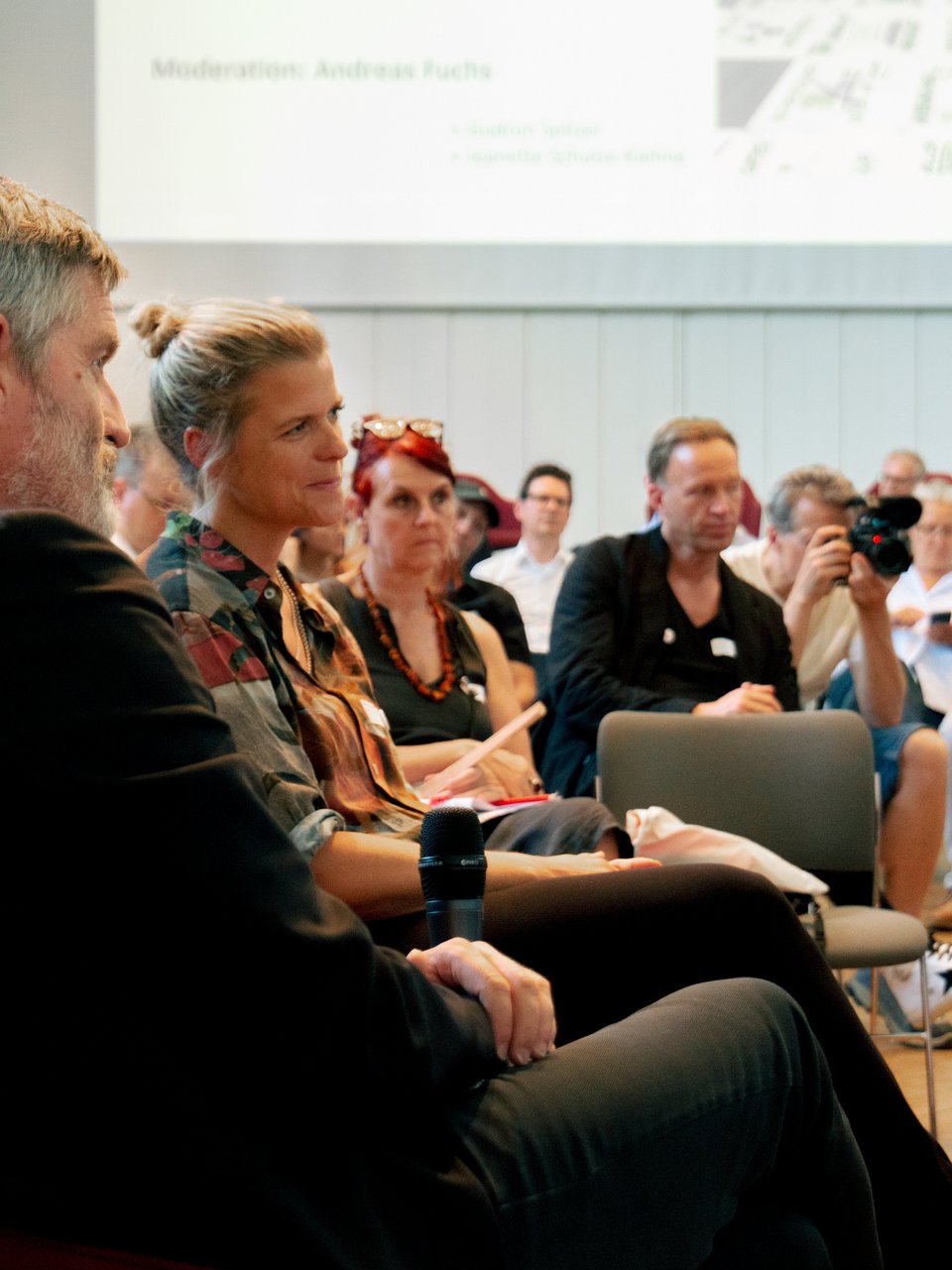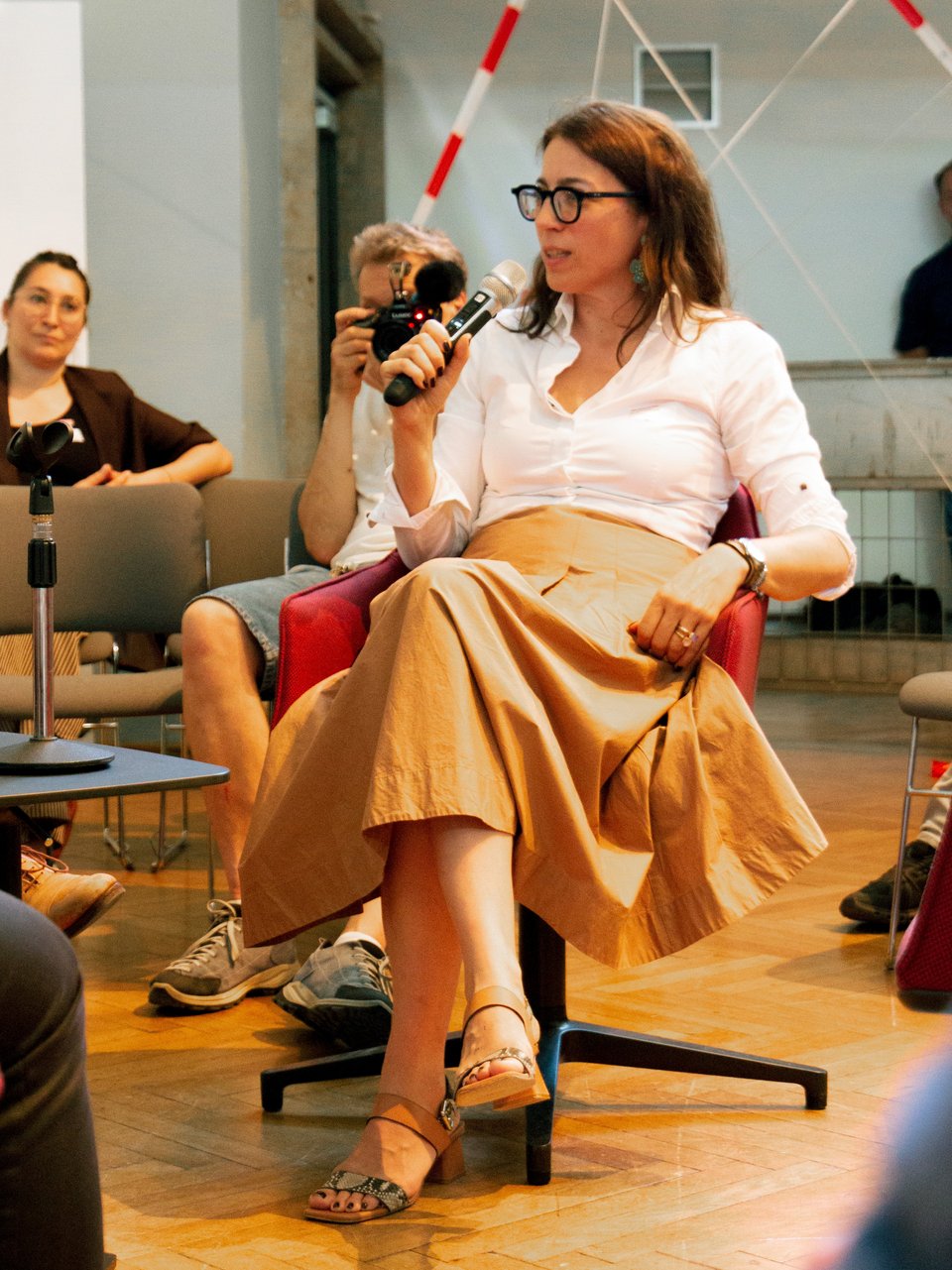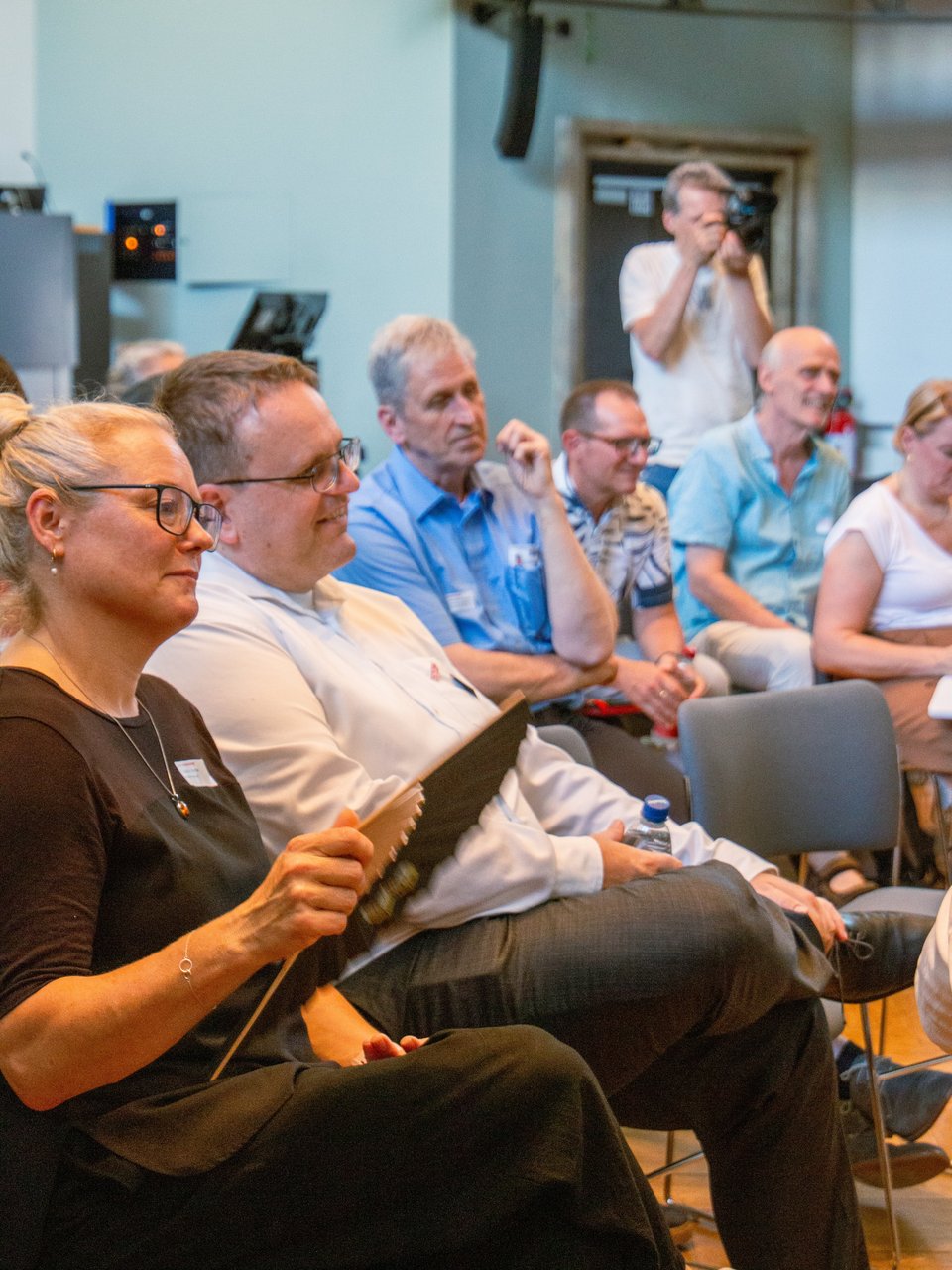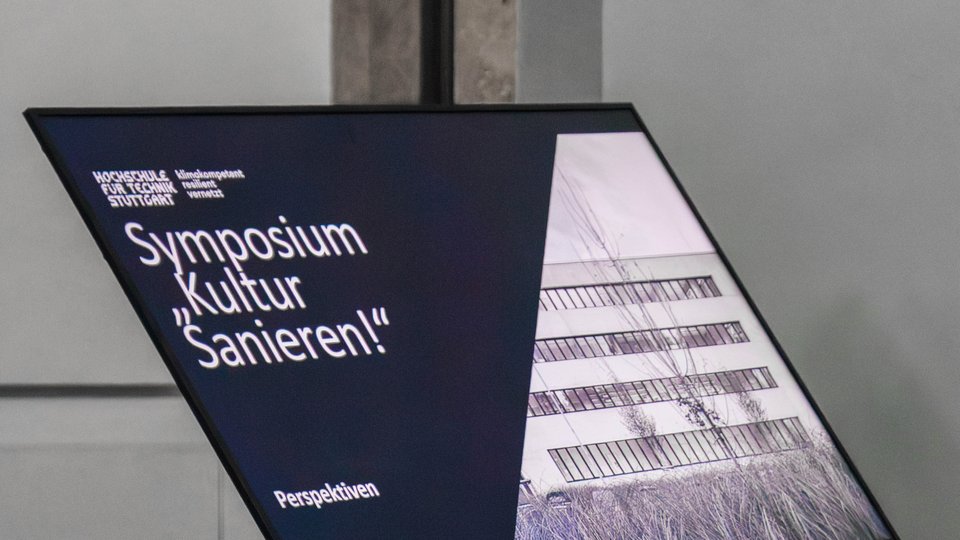
Around 120 guests from the construction and cultural management sectors, as well as numerous representatives from various state theatres and, last but not least, members of the academic community, had travelled to Stuttgart for the symposium “Revitalizing Culture!“.
The invitation was issued by Prof. Dr.-Ing. Max Haug on behalf of the Faculty of Architecture and Design, with the active support of Prof. Jürgen-Marc Volm (Construction Project Management) and Max Wagner (Cultural Management), as well as the students and staff of the International Project Management degree programme.
“A full day featuring a high-calibre line-up of experts from project management, architecture, the construction industry, law and communications, organised into four panels with different discussion formats, including a fishbowl and three traditional panels, complemented by very lively audience participation.”
Natalie Hamhaber-Wild
“A fascinating event at which, as a panellist, I had the opportunity to encourage participants to give careful thought to the client organisation and the procurement strategy right from the start of the project. Thank you for allowing me to take part. I’d love to come back!”
Dr Laurence Westen (panel guest)
Following an opening address by the Dean of the Faculty of Architecture and Design, Prof. Dr Jan Cremers, the host, Prof. Dr Max Haug, set the scene for the subsequent panel discussions with his keynote speech on project culture and trust; these were structured in the style of a medical care process: Medical History – Diagnosis – Treatment – Prognosis.
The interdisciplinary symposium addressed the questions of where planning and implementation often run into difficulties today, and what structures can help ensure that cultural construction projects are completed on budget and on schedule. Its aim was to bring together representatives from planning, construction, project management, cultural institutions and client representatives to exchange perspectives, strategies and proposed solutions, and to learn from one another.
Download link:
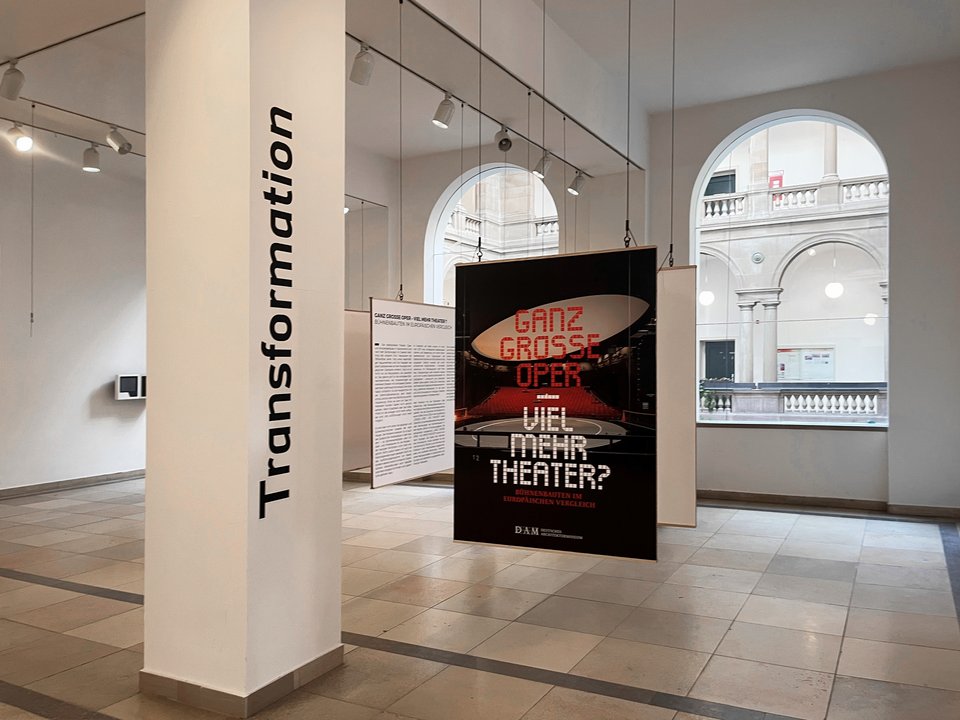
Moderator Max Wagner opened the first panel discussion (Exposition), featuring a distinguished line-up, with an overview based on projects from across Germany. Andrea Jürges, representing the German Architecture Museum in Frankfurt and curator of the exhibition ‘Ganze große Oper – viel mehr Theater’, provided a general overview. The audience gained insights and a political context, particularly regarding the projects of Bühnen Köln (Markus Greitemann), the Nuremberg State Theatre (Alexander Leupold) and the Stuttgart State Theatre (Marc-Oliver Hendriks), who, in their project-specific roles, explained the respective background and basic framework of each project.
In the case of highly complex specialised buildings, such as theatres, opera houses and concert halls, the factors of a holistic communication culture and the reduction of complexity play decisive roles, as in most cases not only are the building fabric and technical systems outdated, but work and operational processes also need to be rethought and redesigned to meet modern working conditions (keywords: health and safety, fire safety). To complicate matters further, these buildings have often been in constant use for many decades without any significant refurbishment or technological innovation. Yet cultural buildings shape entire cityscapes, preserve history and create places with which people identify. The refurbishment of cultural buildings is therefore a highly demanding task, usually caught between the conflicting demands of heritage conservation, fire safety, sustainable building services and sophisticated design. It has become clear that public budgets are under increasing pressure. Unrealistic planning timelines and cost overruns are therefore less acceptable than ever, both in new-build and refurbishment projects. Stuttgart is just one of many examples across Germany. In Ingolstadt, for instance, the theatre was closed due to the dilapidated state of the building, whilst in Düsseldorf, the entire renovation project in its planned form was scrapped just a few days before the symposium.
Following the political overview provided in the first part, the participants in the second panel discussion delved into very specific project details. A striking time-lapse video by WellConcept, represented by Björn Most, served as an introduction to the project for the temporary building of the Kassel State Theatre on a former barracks site. Katja Pütter from LRO-Architekten complemented this with insights from Nuremberg, where an extension is being created within the challenging context of Nuremberg’s Nazi architecture. Despite the very different circumstances, both projects are being or have been implemented under the ‘Design and Build’ contract model; that is, design and construction are awarded as a single package with just one contractual interface with the client. Moderated by Mona-Patricia Hartmann and Rainer Nübel, the subsequent discussion also examined the Stuttgart approach to the interim solution, in which traditional competition and procurement models were applied. The perspective of Otto Schweitzer, who was involved on behalf of the construction company Nüssli in the cultural buildings at Munich’s Gasteig HP8, as well as the container building from Kassel that was presented, enriched the in-depth discussion on the sustainability and recyclability of the buildings.
A staged artistic interlude brought the second panel discussion to an abrupt end when a pair of dancers, disguised as construction workers, took over the stage. Their performance impressively illustrated both the precarious state of many a construction project and the importance of mutual trust within project teams. With the words “not our building site”, the audience was sent off into the lunch break.
Download link:
Nuremberg (LRO)
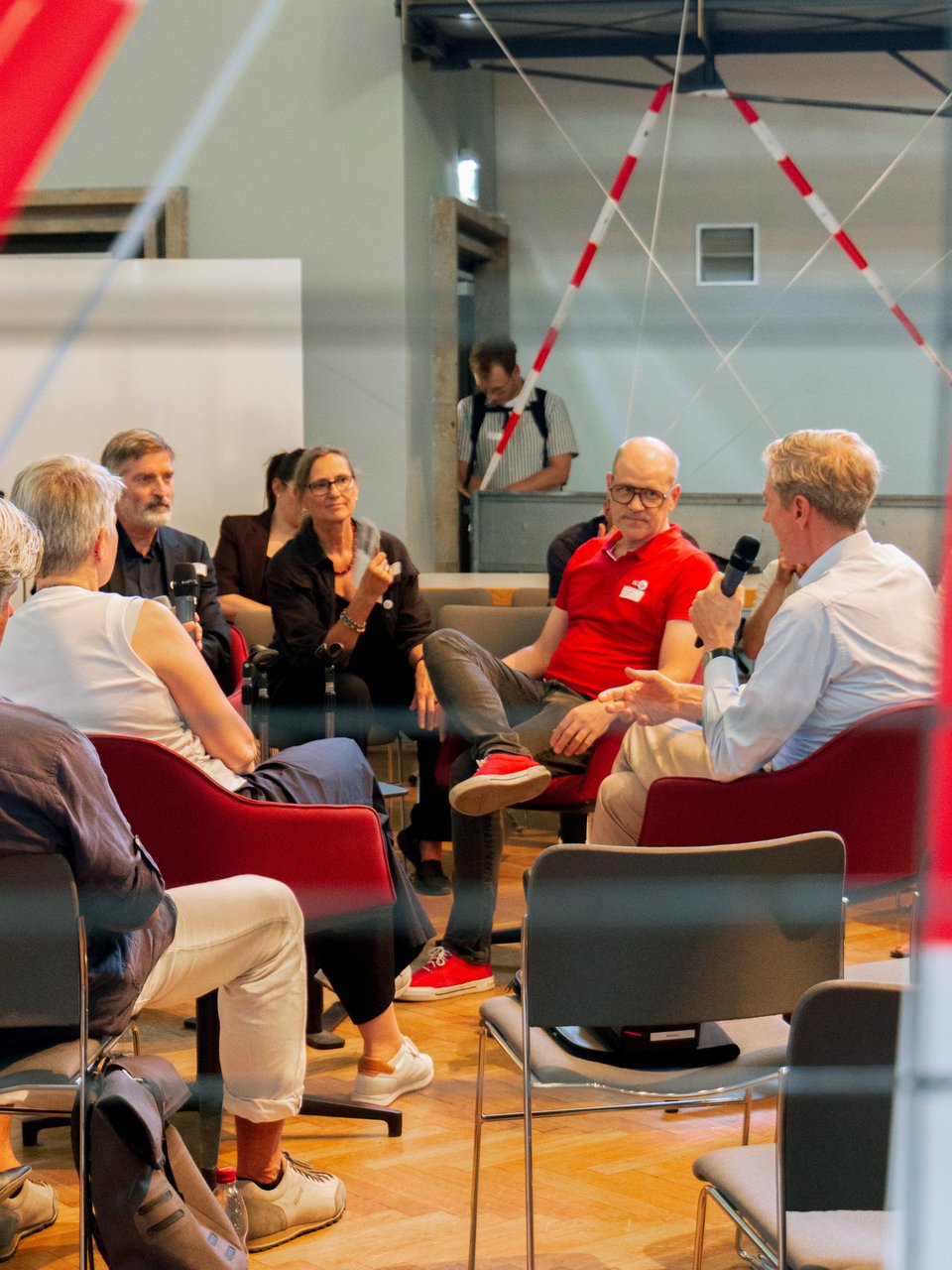
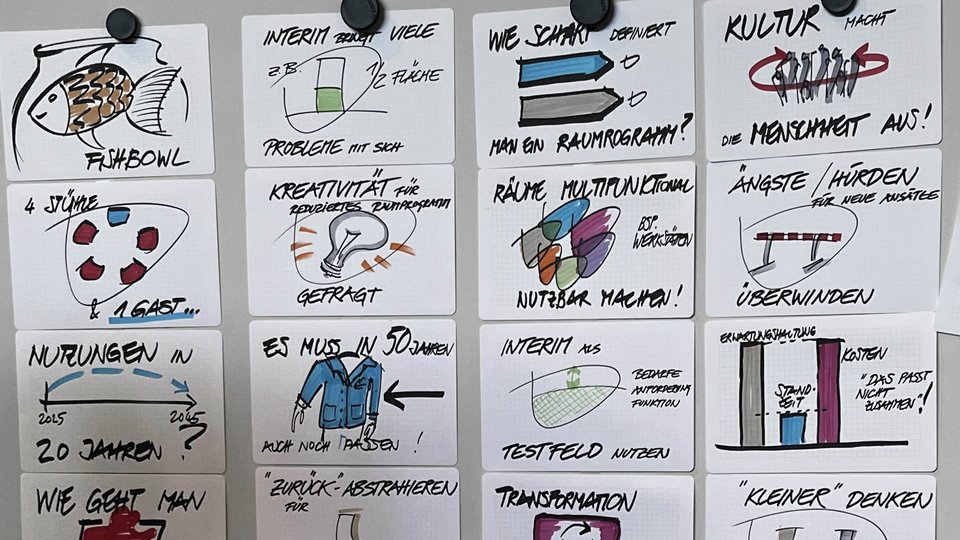
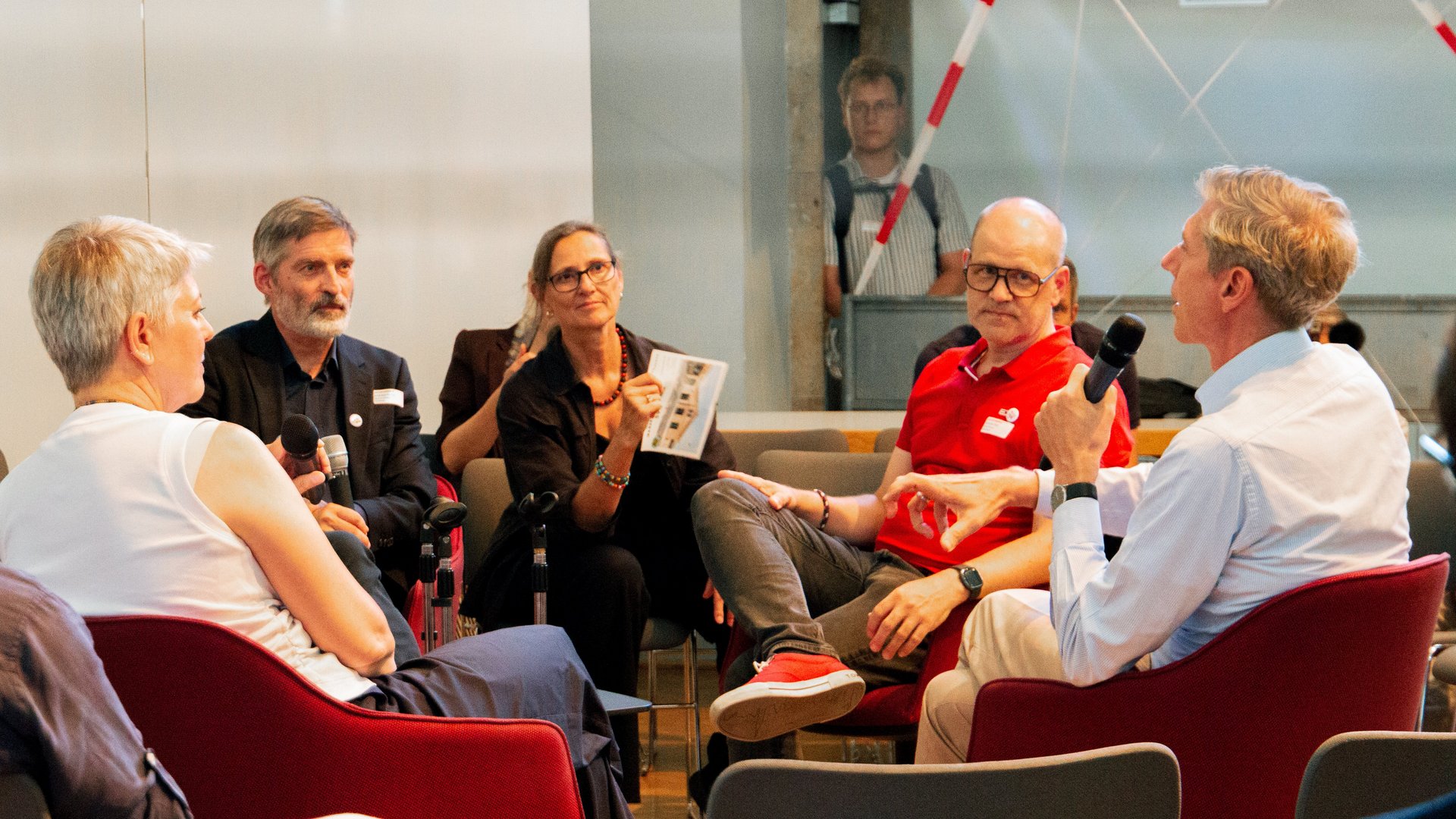
As well as providing an opportunity for refreshments and networking, the lunch break was also used to rearrange the auditorium, as the ‘fishbowl’ format was to take place not on stage but at eye level with the audience, who were to be actively involved. Under the guidance of Andreas Fuchs, specialist planners, users and culture-loving members of the public were specifically invited to reflect on what they had heard in Panels 1 and 2 and to contribute new perspectives to the discussion.
The first topic discussed was the requirements for temporary venues, which often represent a risk. Katharina Müller, a user representative from the Nuremberg State Theatre, immediately added that new working conditions could offer a glimpse into the future and might even increase the frequency of performances. Sabine Netter from theapro GmbH noted that it is often a challenge to prepare people for the theatre’s impending transformation and to get them on board, and that this is one of the most exciting and crucial tasks. Temporary venues can offer an opportunity to rethink theatre. In some cases, spatial and technical constraints lead to simplification and greater focus, which fosters new creative forms of art. Similarly, a new location can help attract new audience groups. Key to this are then low-threshold offerings and interim theatres as so-called ‘third places’.
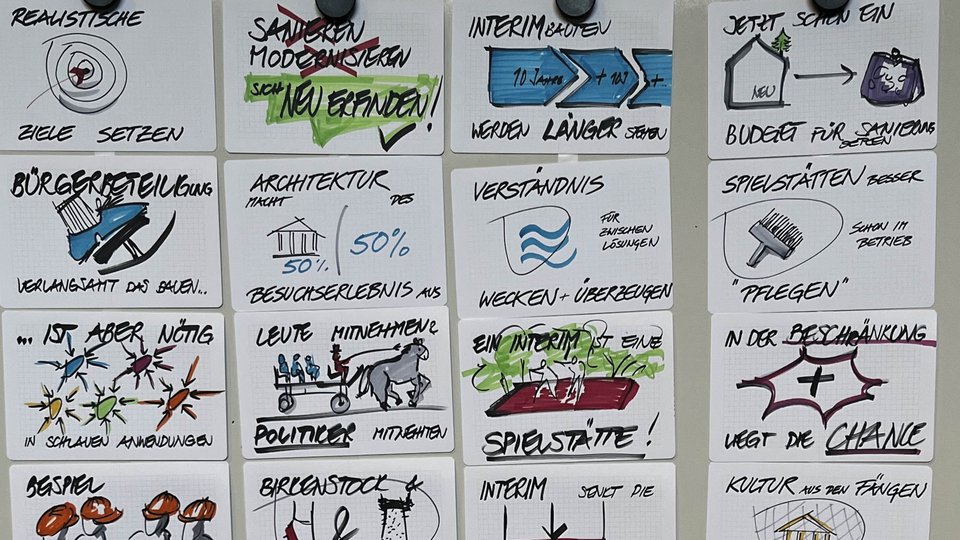
Birgit Schneider-Bönninger from the Bonner Bühnen emphasised the importance of collaboration with the independent theatre scene when developing the Bonner Bühnen’ future agenda. This resulted in various planning options, some of which took the Kasel model into consideration. Opposition to the ‘adventure opera’ concept would come, of all places, from the theatres’ own conservative audience. Convincing people is therefore the major task, not only with regard to the regular audience but also in relation to a fearful political establishment. The ‘theatre transformation’ is urgently needed, as the theatres are currently operating only under a ‘tolerance regime’. Added to this is the fact that the resulting renovation crisis would coincide with a financial collapse of the city. Theapro expert Thomas Lüdicke confirmed that new approaches must be taken. This is because even the high expectations on the part of users are no longer compatible with the long construction times and the financial situation of the federal states and local authorities. Where can money be saved? On the timetable, according to Otto Schweizer from the construction firm Nüssli. We need to speed things up, as otherwise it will also become difficult for political decision-makers to push through agreed targets – as seen in Ingolstadt, Düsseldorf or Stuttgart.
It is difficult to catch up on the public participation process involving the independent arts scene, local neighbourhoods and political decision-makers. However, Birgit Schneider-Bönninger does not see this as the basis for planning, but rather as an important parallel process. In addition, Anna Kleeblatt (Munich) highlighted the underestimated importance of marketing, sales and PR. She argued that these are all insufficiently integrated into the processes. When discussing the needs of the future, this means not just refurbishment but modernisation, as the buildings must, in part, reinvent themselves. Visitor surveys show that, alongside architecture, service and the visitor experience are also highly valued.
From a technical perspective (Thomas Lüdicke), technological innovation is advancing so rapidly that changes during the lengthy planning and construction processes are inevitable. It is therefore important to avoid creating ‘technological behemoths’, as these become complex to operate and expensive to maintain: “Think smaller.” The aim remains to delight the public, rather than to chase after the latest technical innovations. He therefore recommends setting the budget first and then seeing what is feasible, rather than setting requirements and chasing after the costs.
Stuttgart
Turning his attention to Stuttgart, Dominik Daß, the project manager in charge of construction for Wenzel + Wenzel at the Badisches Staatstheater Karlsruhe, notes that many deadlines have already been missed in Stuttgart and recommends that work must finally get under way. There are also ongoing changes to the Karlsruhe project, which are being permitted as new concerns and trends inevitably arise in the theatre world. This involves a pragmatic and open approach to changes, brought about jointly by planners, users, contractors and clients. Sara Dahme , a resident of Stuttgart with an interest in culture, took the floor.She said the debate over the Stuttgart Opera House is highly political. She observed and regretted that it is less about culture and too much about prestige. This has long been a vexing issue in Nuremberg as well, as here too, legislative terms have derailed the project (Katharina Müller, Nuremberg).
Future
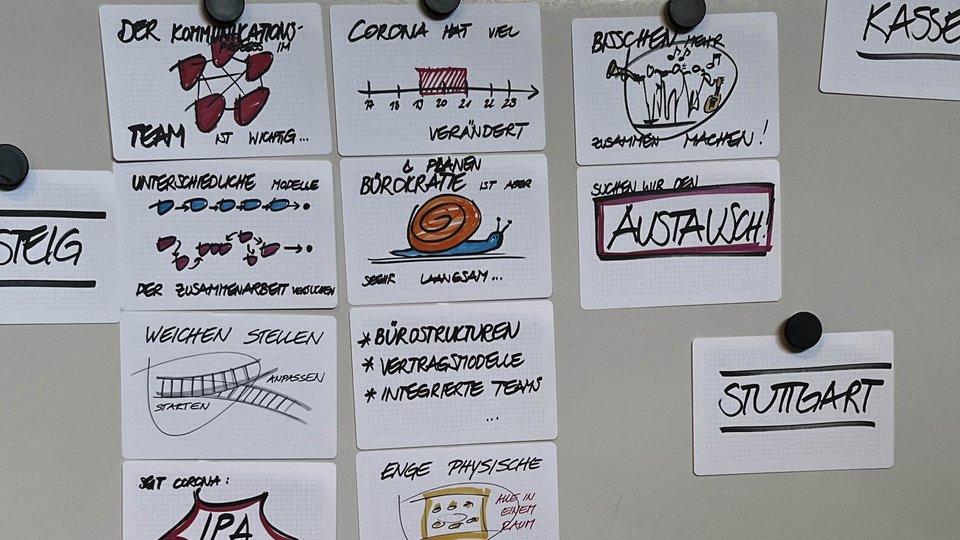
Stronger lobbying is therefore necessary, according to Anna Kleeblatt (Munich), and relationships must be cultivated and strengthened much earlier, as new MPs are often completely unaware of the projects. Another suggestion was to develop dedicated budgets for cultural buildings (Sabine Netter). Max Wagner was keen to emphasise the importance of creating transparency – including through site visits and fostering a sense of community from day one – as well as involving young people. There was a shared understanding that communication is essential; this applies to the flow of information within a project, the ongoing dialogue with users throughout the planning and construction phases, as well as external communication with the public and political decision-makers.
A key part of the discussion, moderated by Angelika Keller, between Kay Zetzsche (Wolff Group), Wolfgang Müller (Reisch), Dr Laurence Westen (HKLW) and Professor Jürgen Marc Volm (Vellows) was the question of whether new project delivery models, such as ‘design and build’ from a single source by a main contractor, or new approaches such as Integrated Project Delivery (IPA), could offer better paths to success in the construction of cultural projects.
When timetables go off track and budgets spiral out of control, the cause is usually not of a technical nature. Prof. Volm emphasised that, rather, clear decision-making processes, effective project organisation and the collaboration of all those involved are key. Many renovation projects involving cultural buildings – particularly in the public sector – fail because they are set up incorrectly from the outset. In addition to the right organisational structure, with clearly defined responsibilities and processes designed to be efficient and transparent, the project culture is crucial. Kay Zetzsche went on to explain that, contrary to the commonly held view, the public sector is indeed capable of successfully managing cultural projects as the client under the traditional model; there are numerous impressive examples to prove this. However, the public sector could learn a few lessons from the typical main contractor approach and other alternative delivery models.
There was a consensus that, even when projects are under significant time pressure, thorough preparation is crucial to their success. The negotiation phases often already took place at a level of planning detail corresponding to Service Phase 2 under the HOAI. This effectively prevents subsequent changes to the project and ensures a very high degree of certainty even before the contract is awarded. Involving construction companies right from the early stages leads to significantly fewer cost overruns during the process. Wolfgang Müller added that a major side effect is that the project teams are, for the most part, already familiar with one another and have previously worked together on other construction projects. Instead of awarding planning contracts to planning participants who are strangers to one another – and who first have to find their feet and define their respective roles – such procedures involve awarding contracts to tried-and-tested teams.
Success arises where people are willing to work together as partners. Alongside the traditional factors such as deadlines, costs and quality, leadership, communication and the motivation of those involved are key. Public sector clients can also manage all these success factors within the standard ‘traditional’ implementation model; however, the opposite has all too often been proven to be the case.
Download link:
The refurbishment of cultural buildings is one of the most challenging tasks in planning and construction. Conflicting interests, the ongoing development of theatre operations, complex requirements, limited budgets and long project timelines must be reconciled at an early stage. Major cultural buildings are not created solely through good architecture or clever contractual models. They come about where people take responsibility, work together in effective teams and create an organisation that facilitates good collaboration. Topics discussed included tender, contract and implementation models, the importance of effective communication, and the opportunities presented by temporary accommodation.
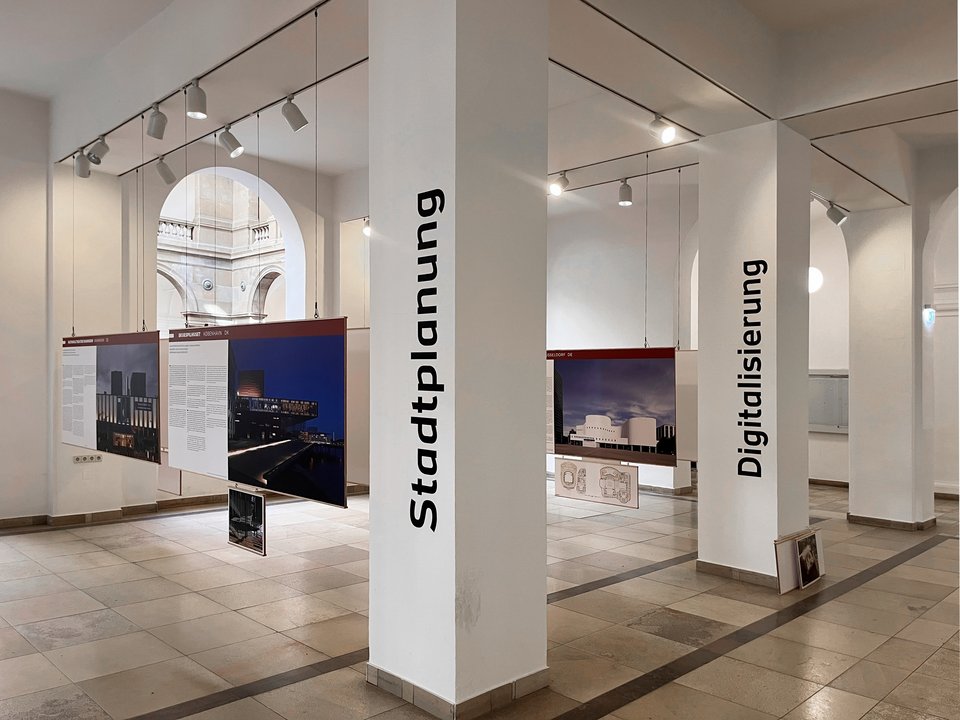
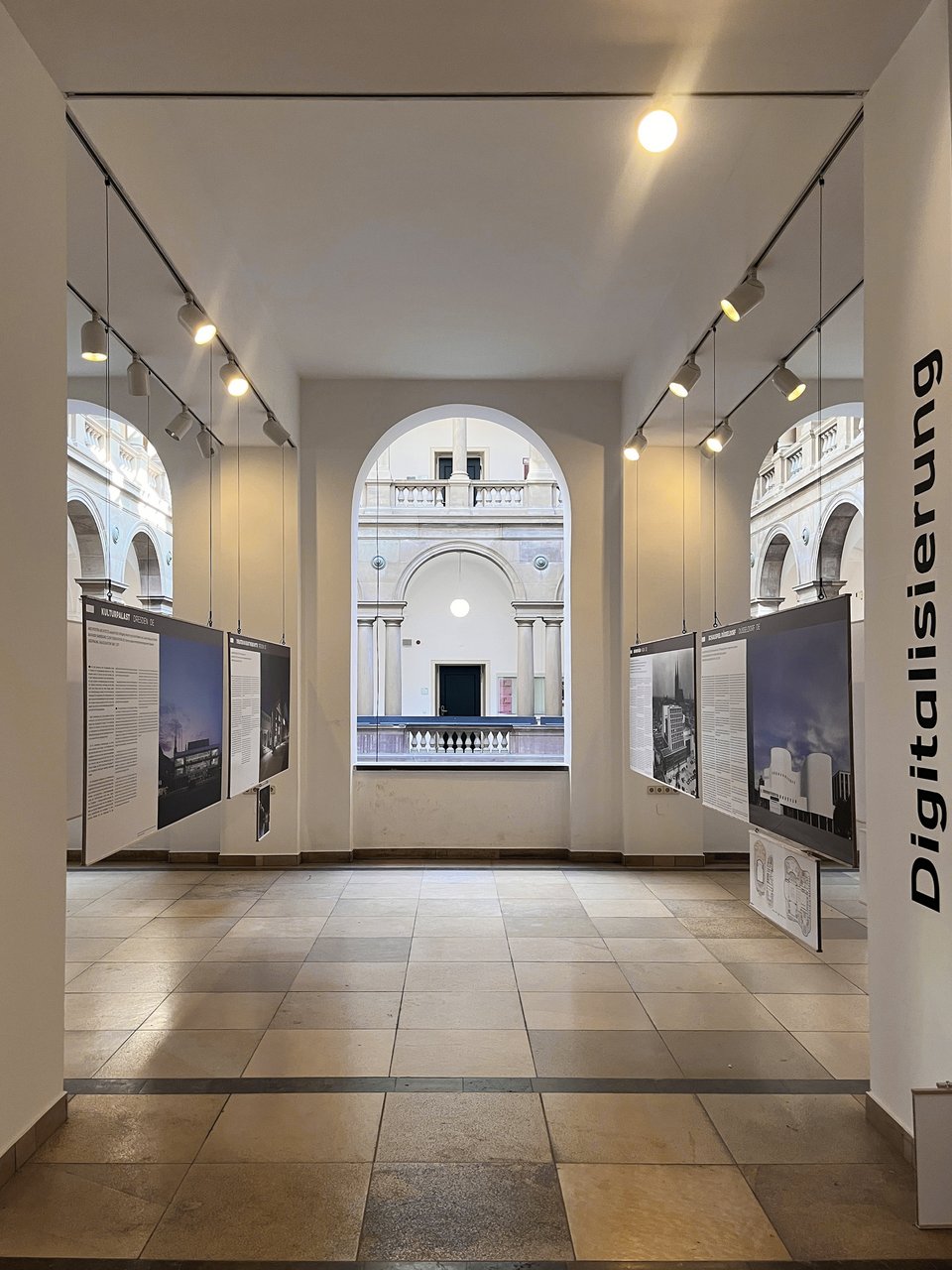
A whole day was devoted to information-sharing and discussion. Concerns and wishes were voiced, views on the role of the construction industry in cultural building projects were expressed and, last but not least, the opportunity was taken to network: the symposium proved to be a vibrant forum that confirmed just how important an open exchange between different stakeholders is. The interplay of the various panel formats with the artistic performance, complemented by the exhibition ‘Ganz große Oper – viel mehr Theater’, created a thoroughly varied day, which would not have been possible without the financial support of the Knödler-Decker Foundation and HFT Friends.
“The refurbishment and further development of cultural buildings is one of the most challenging tasks in planning and construction. Diverging interests, complex requirements, limited budgets and long project timelines must be reconciled at an early stage. At the ‘Kultur sanieren!’ symposium at the HFT Stuttgart, a range of perspectives, project examples and possible implementation strategies were therefore discussed.”
Theapro
“Inspiring discussions, new perspectives and plenty of exciting ideas: at the ‘Kultur sanieren!’ symposium held at Stuttgart University of Applied Sciences, (…) stakeholders from the fields of planning, construction, culture and academia came together to discuss the future of cultural buildings.”
Wenzel+Wenzel
“This valuable initiative brought together representatives from, amongst others, the fields of planning, construction, project management and cultural institutions to exchange perspectives, strategies and proposed solutions, and to learn from one another. (…) One aspect that has particularly resonated with us as consulting engineers and specialist planners is the importance of the culture embodied within the project.”
Mark Müller-Giebeler
“… once again, it became clear that dialogue between different disciplines – from all perspectives – is truly enriching!! Many thanks to Prof. Max Haug for the excellent ideas, for making this symposium possible and for organising it with top-class experts from various projects and cities: Cologne, Munich, Karlsruhe, Darmstadt, Frankfurt, Kassel, Nuremberg and Stuttgart. Architects, planners, construction companies, project managers, users, artists and developers.”
Heike Rittler