Overview
What does Stuttgart smell, sound, feel, and taste like? And how does the city change when our sensory perception is consciously integrated into planning and design processes? These are the questions addressed by the elective course NEWTOPIA Sensory Lab Stuttgart, offered by Faculty A at the Stuttgart University of Applied Sciences (HFT Stuttgart).
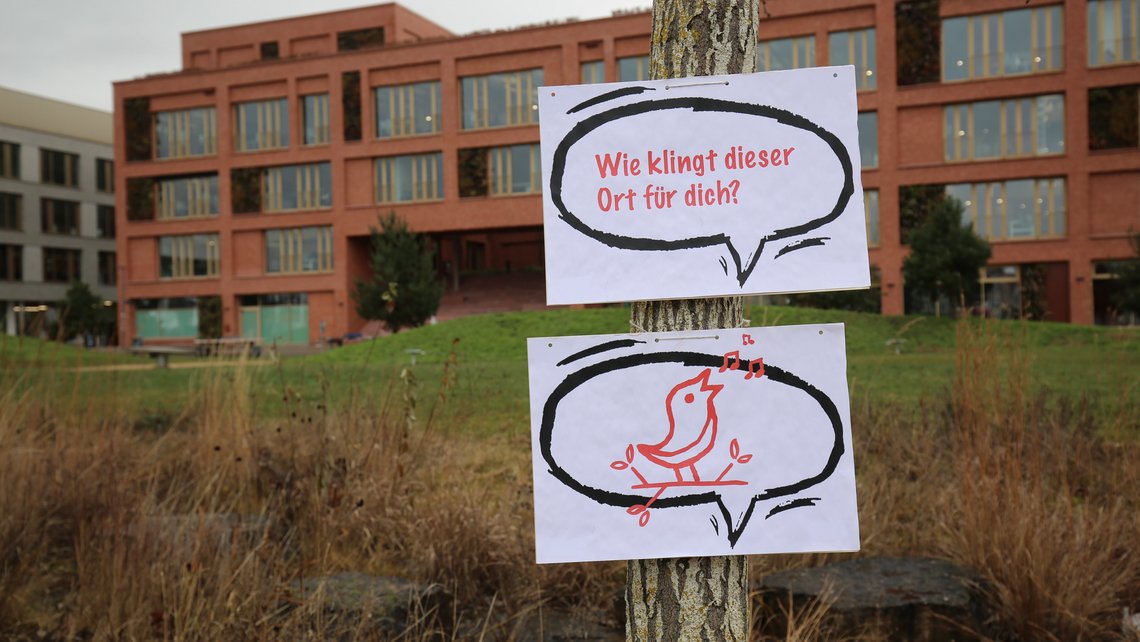
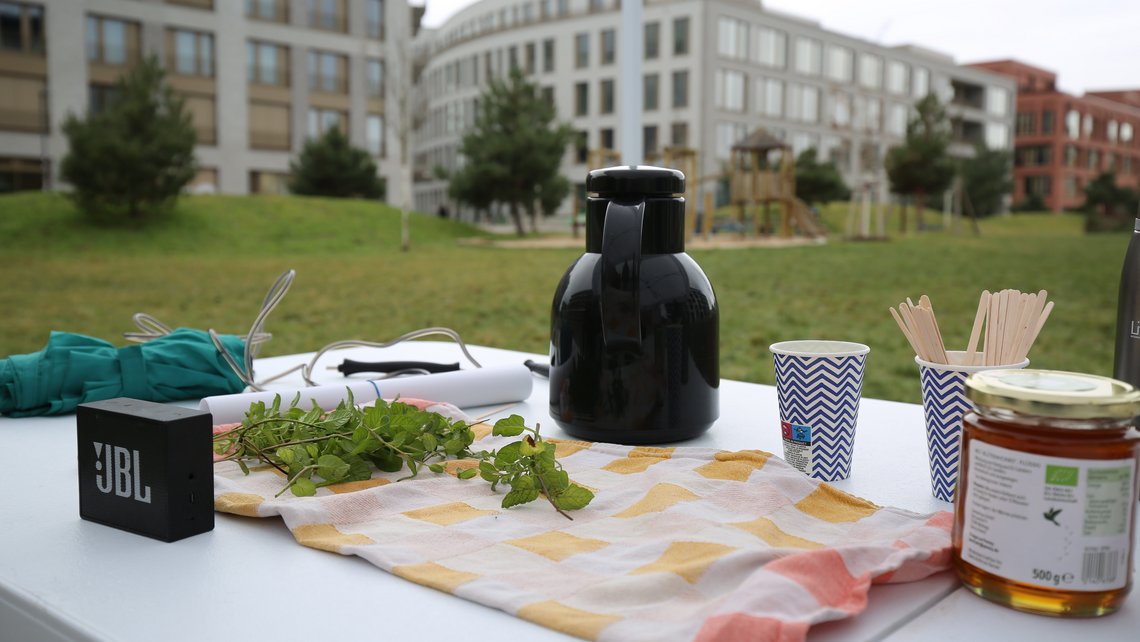
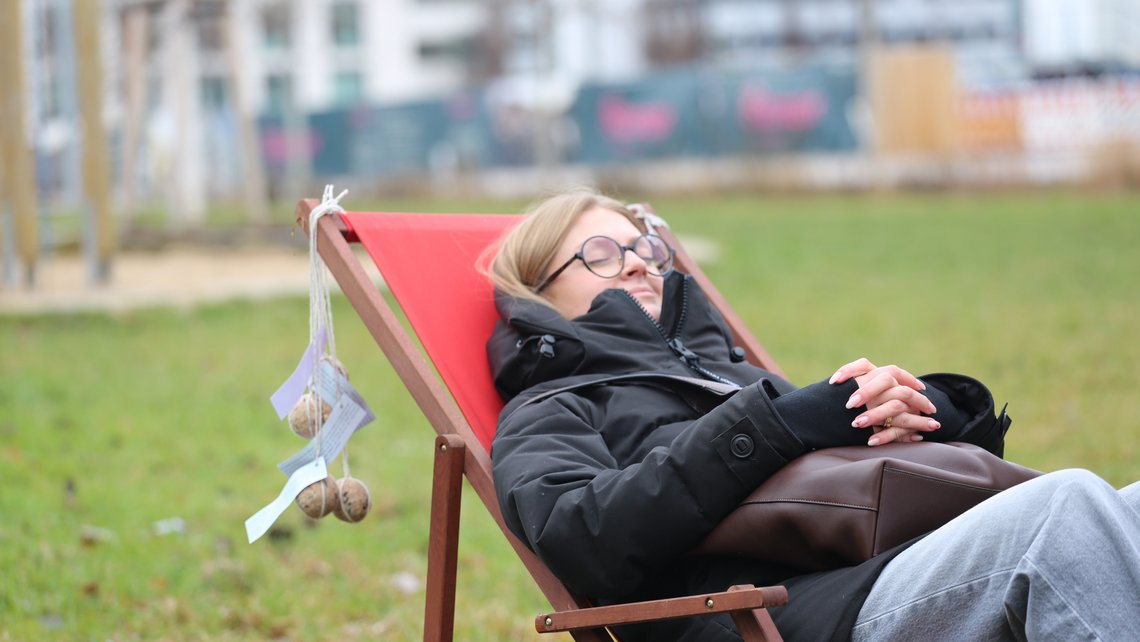
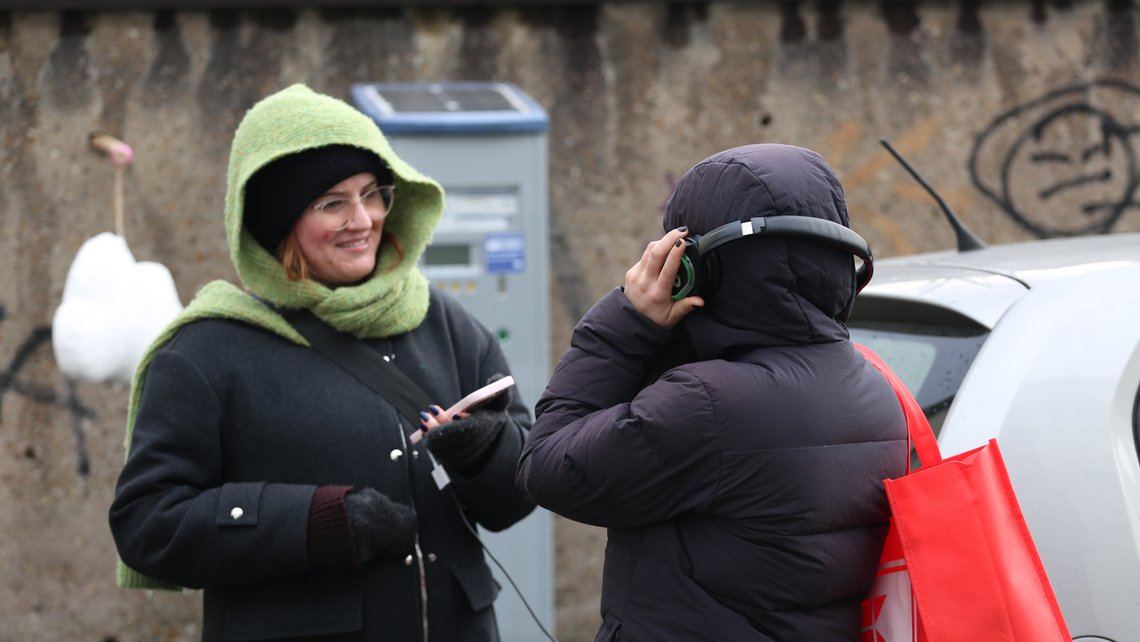
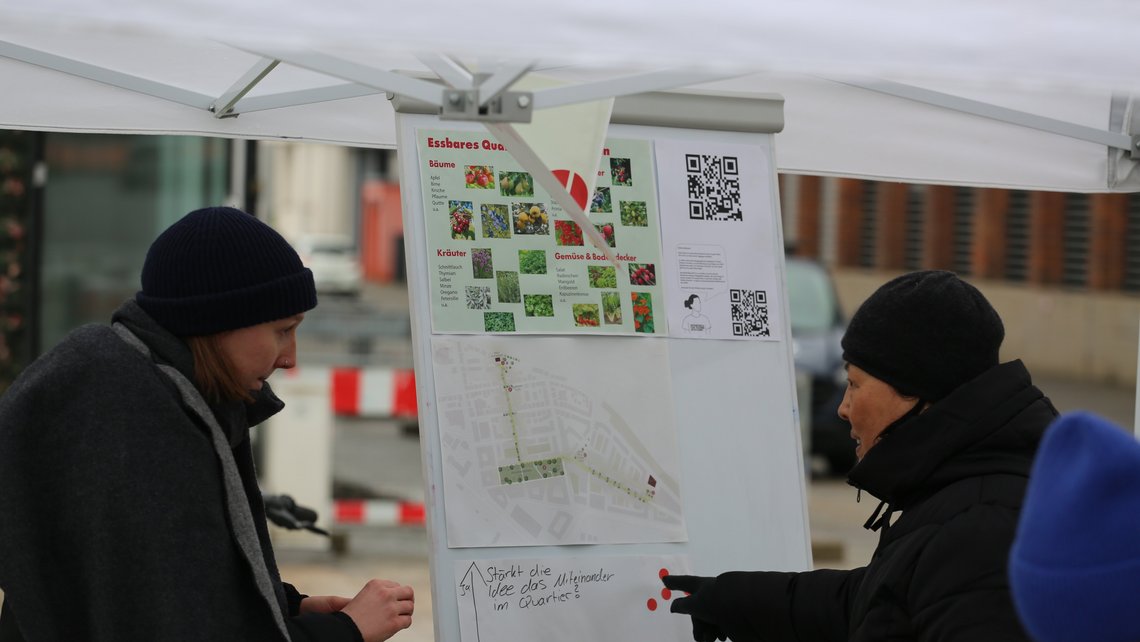
While conventional planning processes are often primarily visual in nature, the Sensory Lab places all senses at the forefront: hearing, seeing, smelling, feeling, and tasting—as well as, in broader contexts, atmospheric and emotional perceptions. In this way, the Stuttgart urban area is viewed as an urban testing ground for a new, multisensory approach to urban planning and development. Through sensory mapping, perception exercises, ongoing dialogue with city residents, and experimental design approaches, the sensory qualities of various urban spaces in Stuttgart are brought to light.
The goal is to view the city not merely in functional or visual terms, but as a complex space of experience shaped by multisensory impressions. Stuttgart serves as a living laboratory where new methods of urban perception, participation, and design are developed and tested.
The Sensory Lab Stuttgart also seeks to foster new partnerships that promote a broader understanding of the city and its defining characteristics, often entering into unconventional relationships and collaborations to achieve this. We particularly value working with our friends at Kulturinsel Stuttgart, St. Maria als…/salon populaire, the Merz Akademie (Anja Weber, Maria Mohr, Joost Bottema), IBA’27, the Nürtingen-Geislingen University (HfWU), the Freie Kunstakademie Nürtingen (FKN), and many others.
Questions
The seminar focuses on fundamental questions regarding the sensory perception of the city:
- How is Stuttgart perceived through all the senses?
- What sensory qualities characterize different urban spaces?
- How do perceptions differ depending on the individual, the time of day, or the way a space is used?
- Which sensory qualities contribute to a place's identity and atmosphere?
- Which sensory aspects are missing or could be improved?
- How can multisensory insights be integrated into urban planning and design?
Previous analysis has shown that cities are not experienced solely through the visual sense. Sounds, smells, and tastes – as well as materials, temperatures, and atmospheric moods – significantly shape how people perceive, use, and evaluate urban spaces. These sensory qualities influence the quality of the experience, the sense of identification, and overall well-being; they are therefore a crucial component of forward-looking urban planning and development aimed at creating spaces and places for people.
Approach
The Sensory Lab operates as an experimental urban laboratory, combining scientific, artistic/design-oriented, and participatory methods. Each semester, students explore specific locations in Stuttgart with a focus on a particular sense, analyzing them through multisensory approaches. Methods include, among others:
- Playful approaches to spatial exploration
- Sensory perception exercises in the urban environment
- Mapping of sound, scent, and atmospheric qualities
- Conversations and exchanges with residents and users
- Documentation via sketches, photographs, audio recordings, and texts
- Experimental interventions and design-based approaches
- Development of maps, multisensory urban explorations, and soundwalks
Through this process, students learn to consciously sharpen their perception and understand sensory qualities as a resource for planning. At the same time, new forms of urban analysis emerge that go beyond conventional urban design and planning methods.
Expected Results
The Sensory Lab aims to establish sensory perception as an integral component of urban planning and design, serving as a complement to the engineering sciences. Its objectives include:
- fostering an expanded understanding of the city as a multisensory space of experience
- conducting sensory mapping and analyses of various locations in Stuttgart
- developing and applying new methods for multisensory urban planning and development
- creating innovative approaches to the climate-conscious transformation of urban space in Stuttgart by systematically integrating sensory and aesthetic qualities into urban planning and development
- realizing experimental designs and interventions within the urban realm
- increasing resident participation in processes of perception and design
- generating ideas for a more livable, climate-resilient city with a diverse atmosphere
- implementing (temporary) open-space interventions that foster both urban resilience and quality of life
In the long term, the Sensory Lab thus contributes to aligning urban planning more closely with human experience and sensation. The conscious integration of all senses makes it possible to design urban spaces that are not only functionally and visually compelling but also atmospherically, socially, and emotionally coherent.


| Name & Position | E-Mail & Telephone | |
|---|---|---|
| +49 711 8926 2365 | 4/304 |
