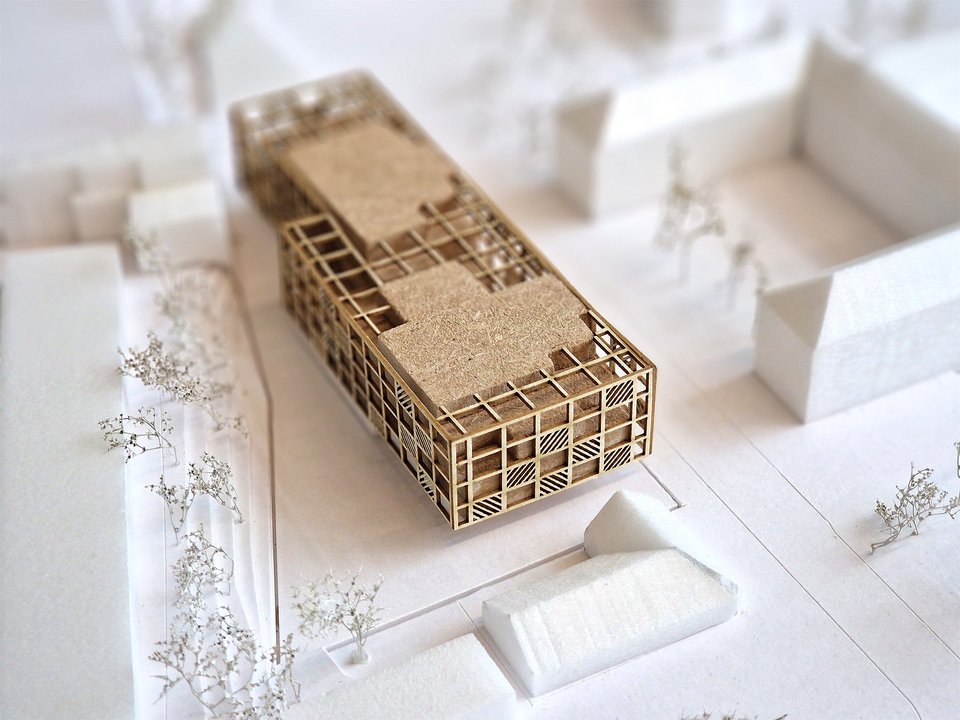
Wohnen am Tempelhof
Sonny Kwiatkowski
Tempelhof Development Network
The planned building in the new Tempelhof housing estate marks the entrance to Tempelhofer Feld and combines a supermarket with car parks and storage areas on the ground floor. The upper floors offer flexible residential units for a housing co-operative, which promote a vibrant neighbourhood through spacious communal areas and a variety of flat types. With a terraced design and an innovative car park concept, the design creates space for social interaction and sustainability, whilst integrating maximum flexibility and quality of life into the urban environment.
Design City WiSe 24/25
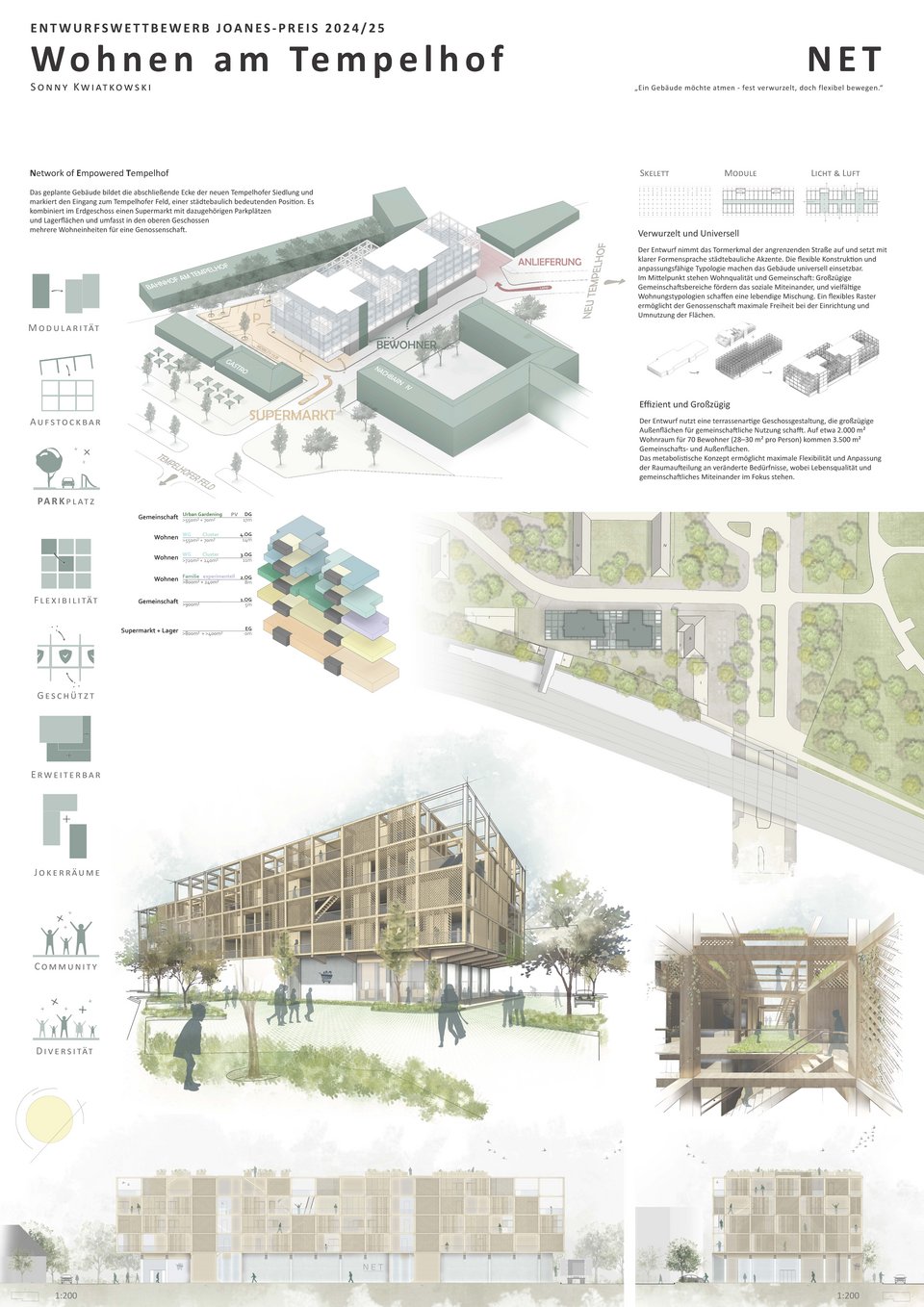
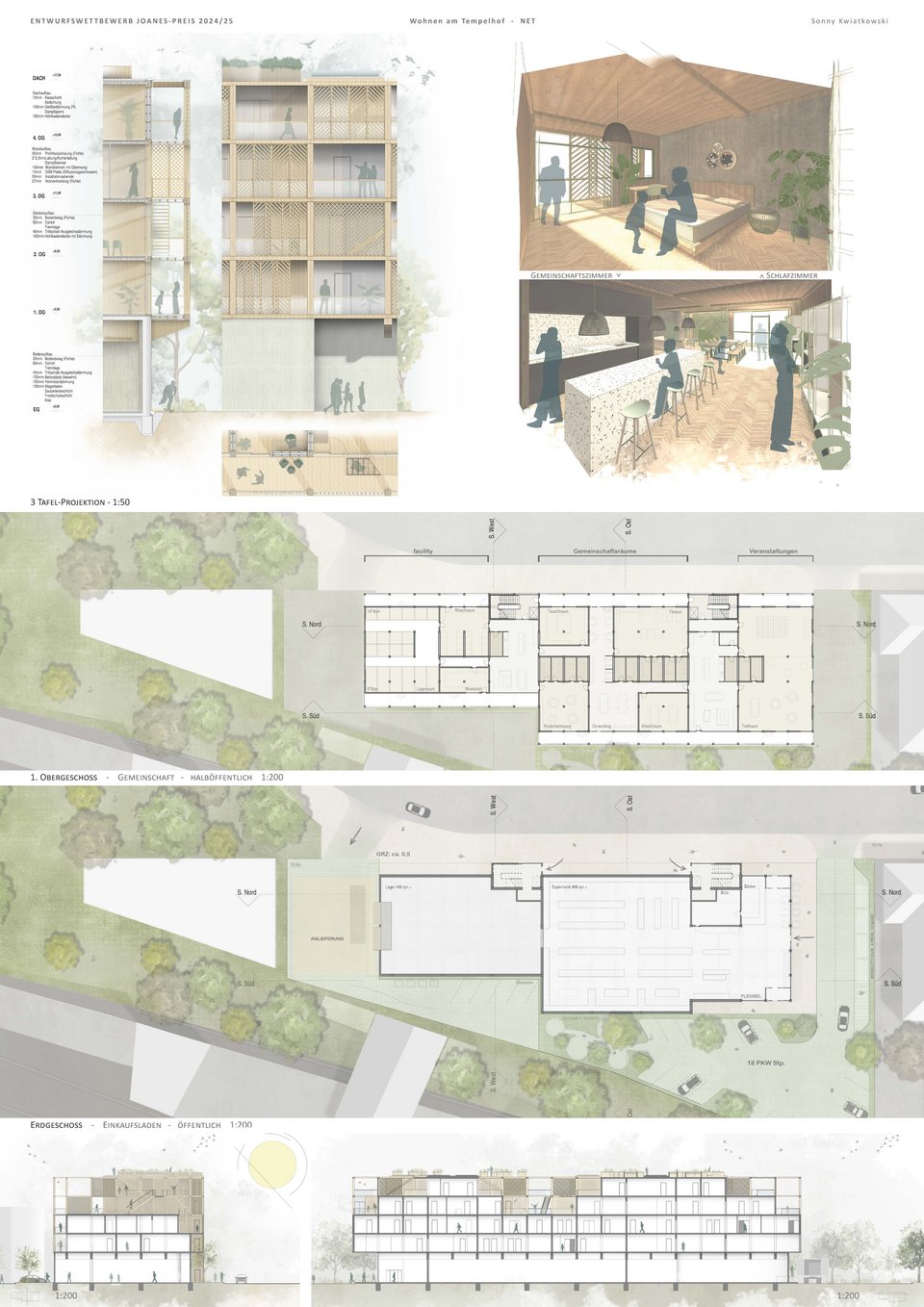
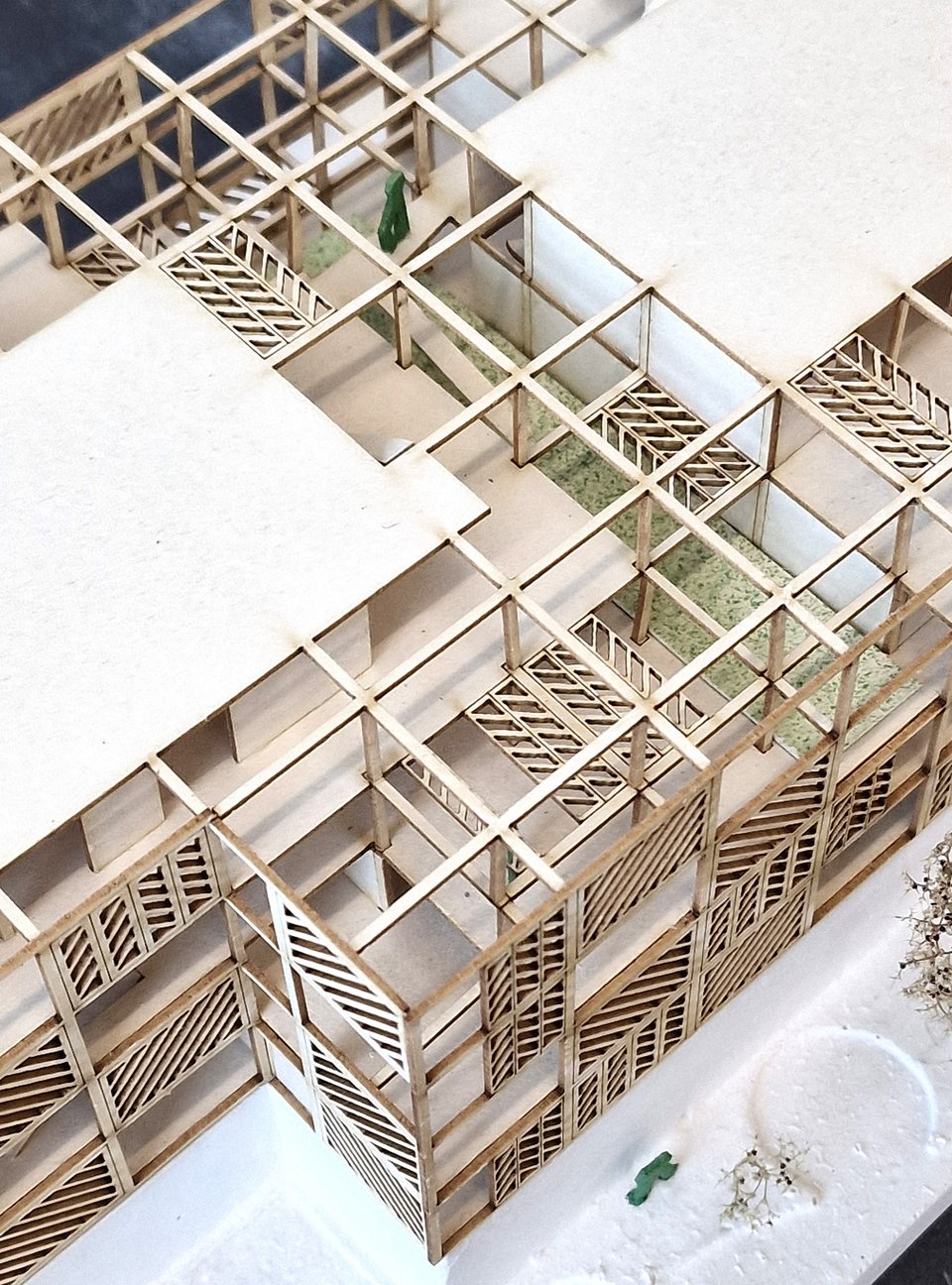
The plot in the new Tempelhof estate not only forms the corner at the end of the development but also serves as the inviting entrance to Tempelhofer Feld – an urban planning highlight that is now being enhanced by an innovative building. A bustling supermarket is being created on the ground floor, complemented by ample parking spaces and storage areas, whilst the upper floors offer a variety of residential units for a housing cooperative.
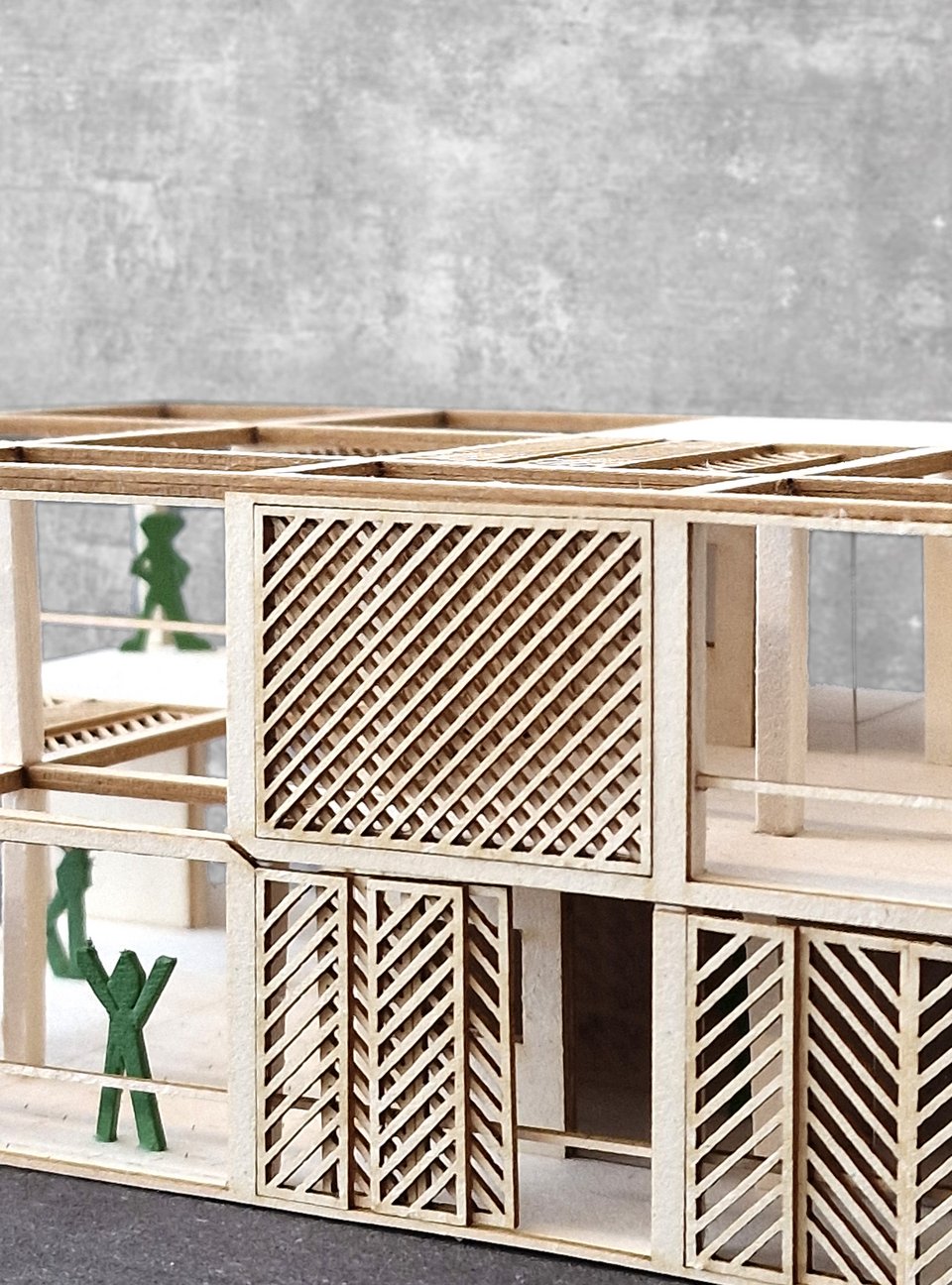
The design takes its cue from the gateway feature of the adjacent street and, with its clean lines, creates striking accents along the visual axis. A flexible construction method and adaptable typologies maximise the potential for modification, lending the building a remarkable degree of independence – it can be designed and built in a wide variety of locations.
With a focus on a high quality of living and spacious communal areas, the building fosters social interaction. The car park has been reimagined and designed as a multi-purpose space, opening up various possibilities for use. The flats feature varied floor plans and respond flexibly to the needs of different community groups, creating a colourful and vibrant neighbourhood.
The terraced layout not only creates spacious outdoor areas for communal activities, but also ensures a harmonious connection between living spaces and nature. In total, the bedrooms and living areas offer around 2,000 m² of space for approximately 70 residents, which equates to an average living space of 28 to 30 m² per person. This is complemented by an impressive 3,500 m² of communal and outdoor spaces. Thanks to the mentalist approach, these spaces can be flexibly adapted to the changing needs of the residents, making the project a forward-looking example of urban living.