TRANSFORMING EARTH TO A CONSTRUCTION MATERIAL
Elective Course | Winter Semester 2025/26
How can excavation material be transformed into a load-bearing earth building material?
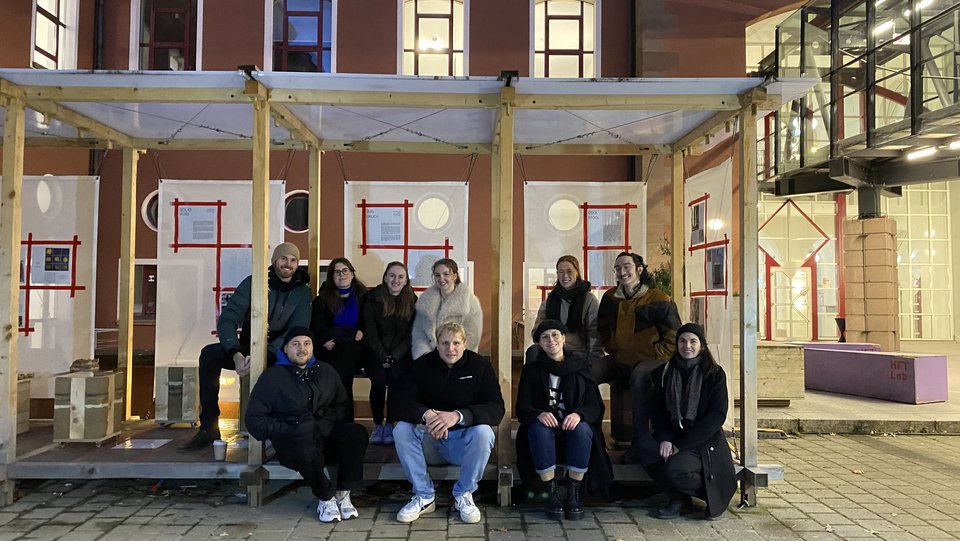
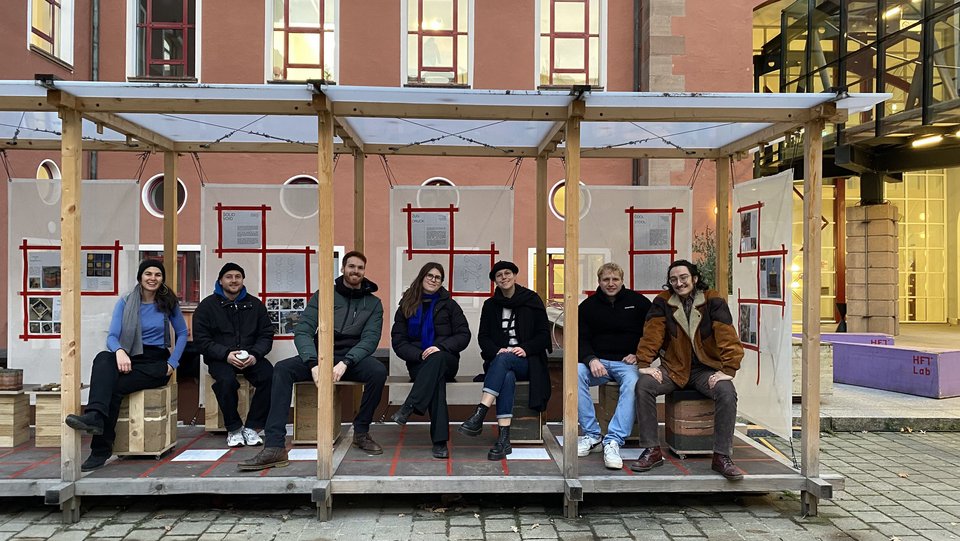
During the winter semester 2025/26, an elective course supported by the HFT.Lab investigated how soil excavated from construction sites can be processed into load-bearing earthen building materials. Students produced various earth mixtures and analyzed their influence on strength, cohesion, and aesthetics, while also developing constructive and design solutions.
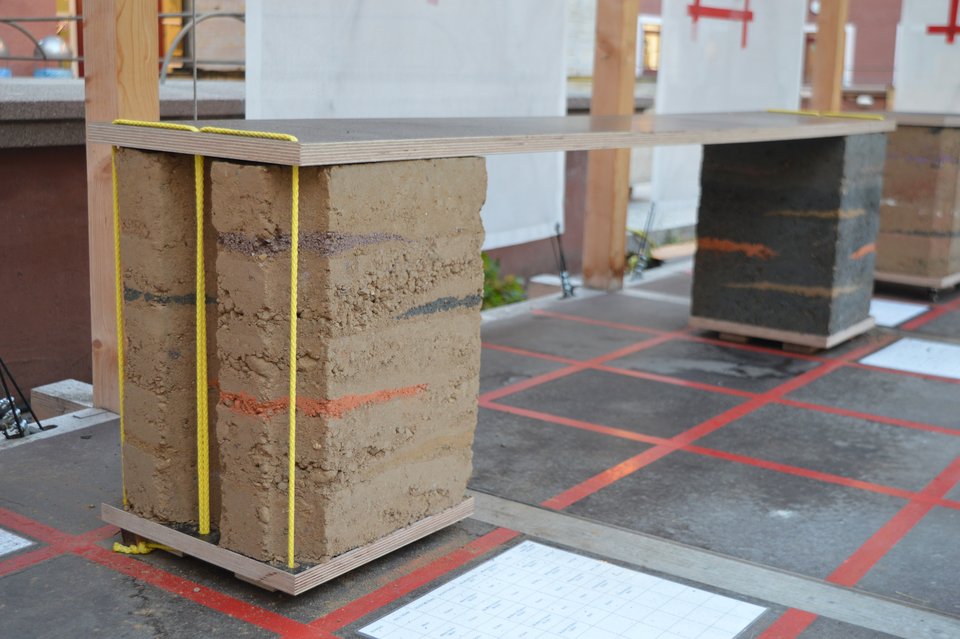
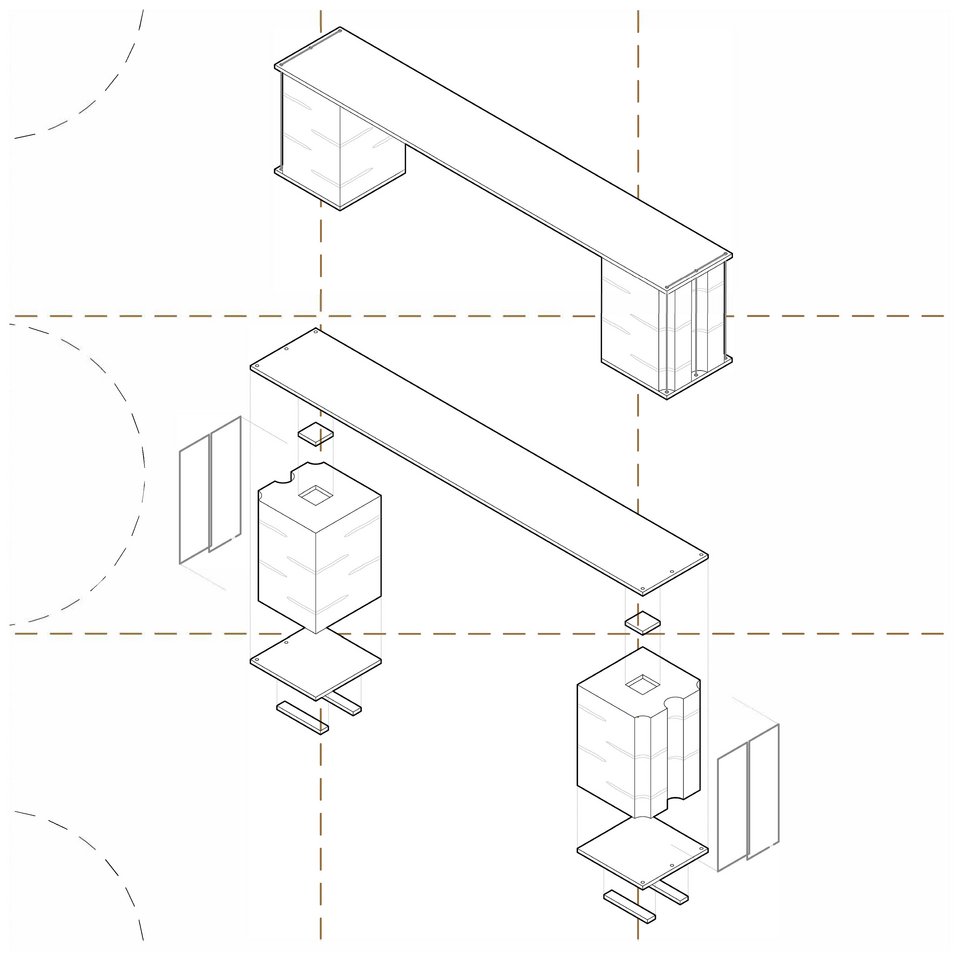
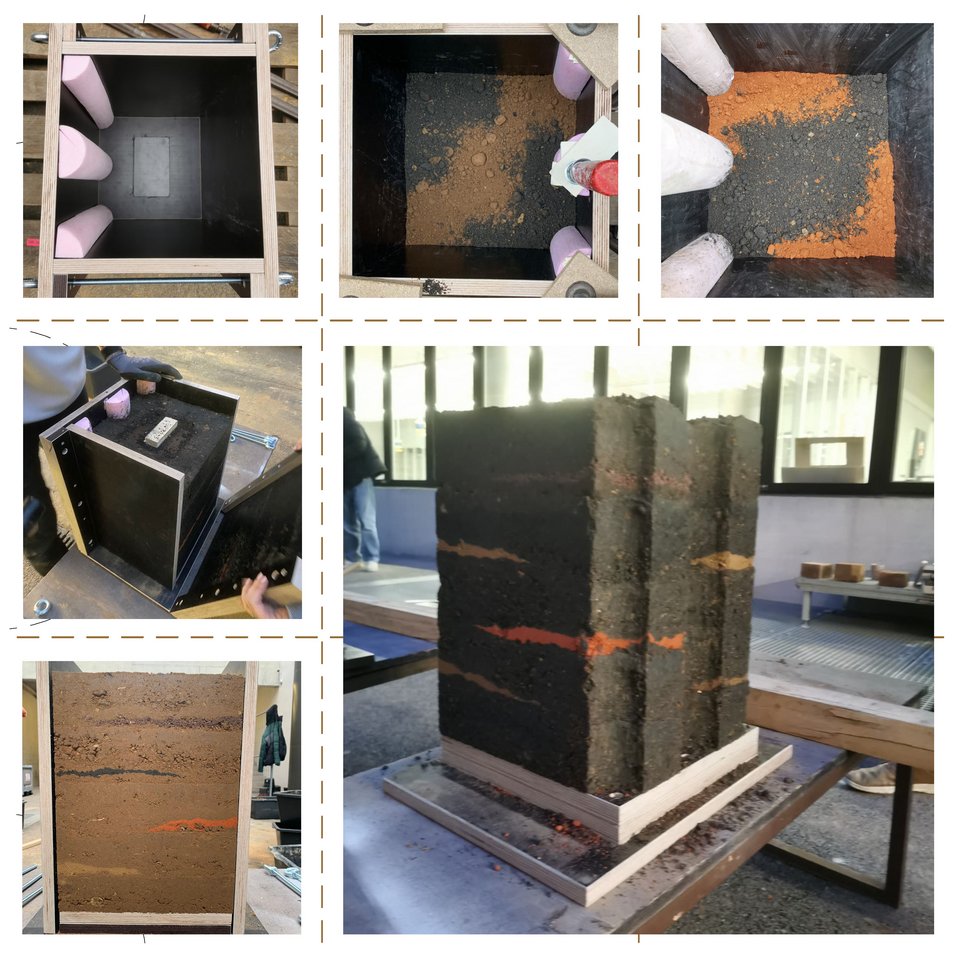
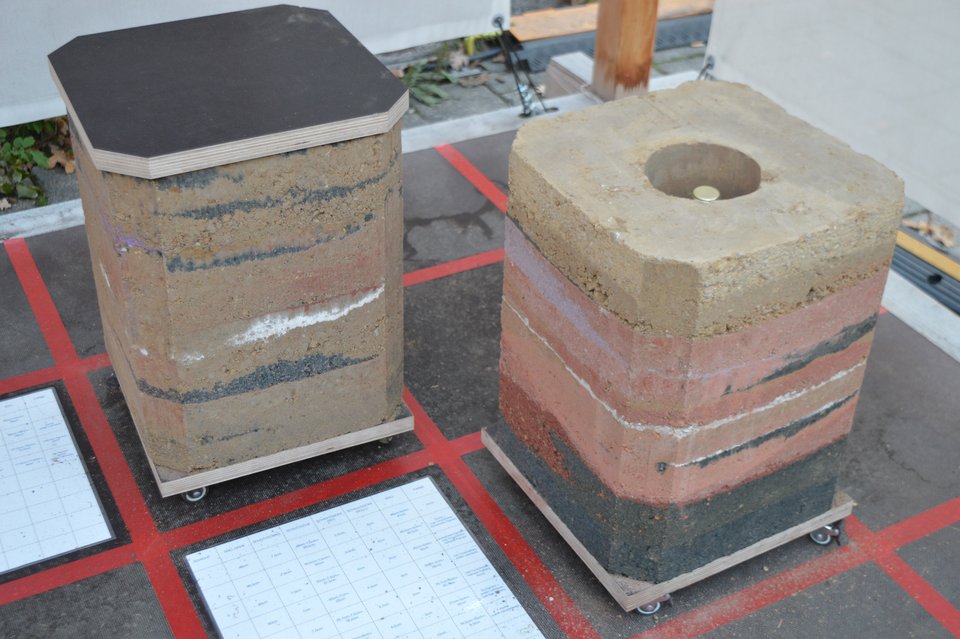
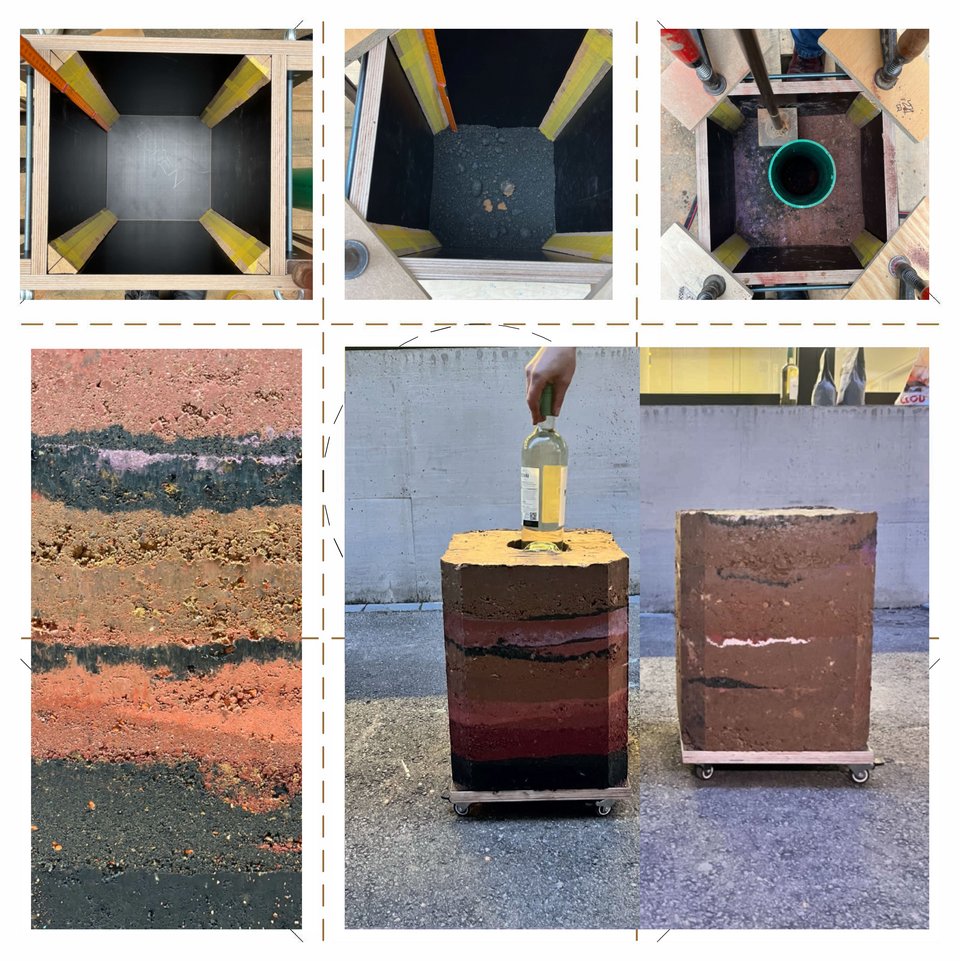
Under the guidance of Sandra Jaramillo – in collaboration with David Tarrago – IMIAD students experienced this transformation firsthand through a hands-on project. The results are creative stools made of rammed earth, providing valuable insights into the design potential of earthen materials.
The seminar results were exhibited in November 2025 at the HFT.Lab SPACE.
Principles of Earth Construction: Didactic Learning
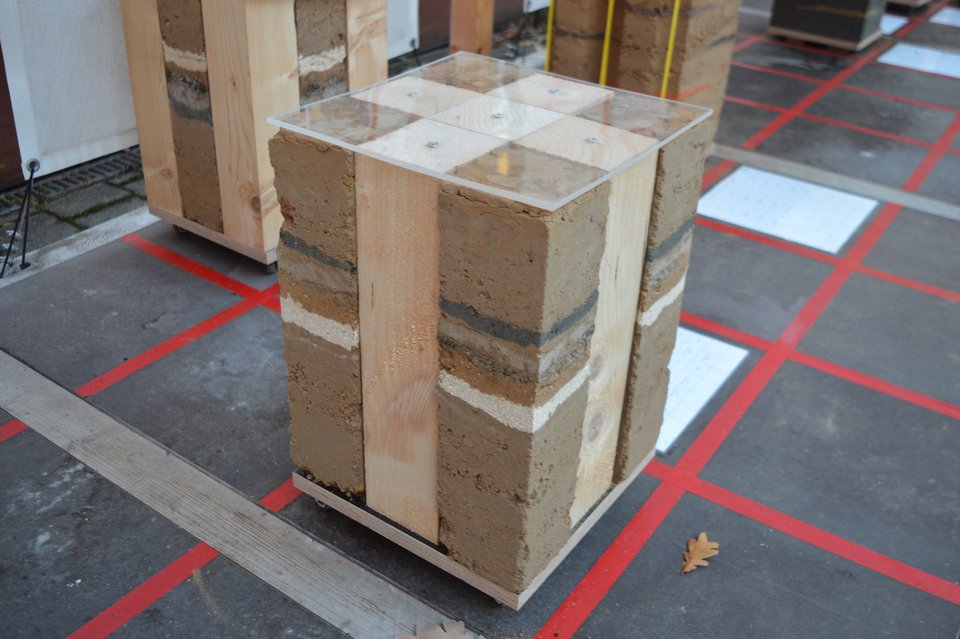
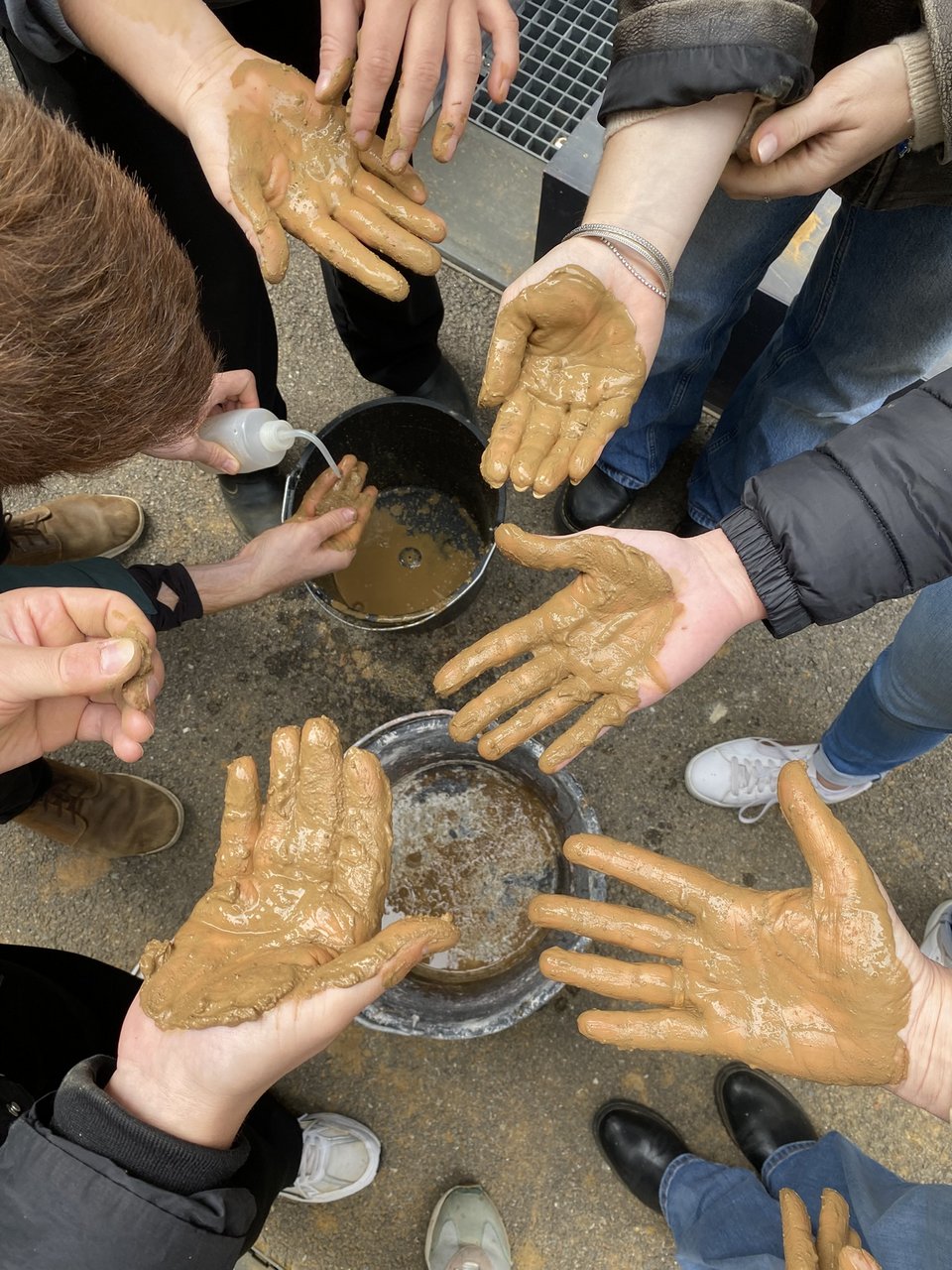
The fundamentals of earth construction were taught through practical exercises such as the ÉlémenTerre experiments by CRAterre. These experiments foster a fundamental understanding of earth/clay and demonstrate its potential as a building material. Additionally, the Carazas test was conducted to systematically analyse the interaction between water content and the degree of compaction (air content). Students performed sensory "field tests" according to established earth building regulations to develop a direct intuition for the material.


From Excavation to Building Material
How can excavation material be transformed into a viable load-bearing clay-based product?
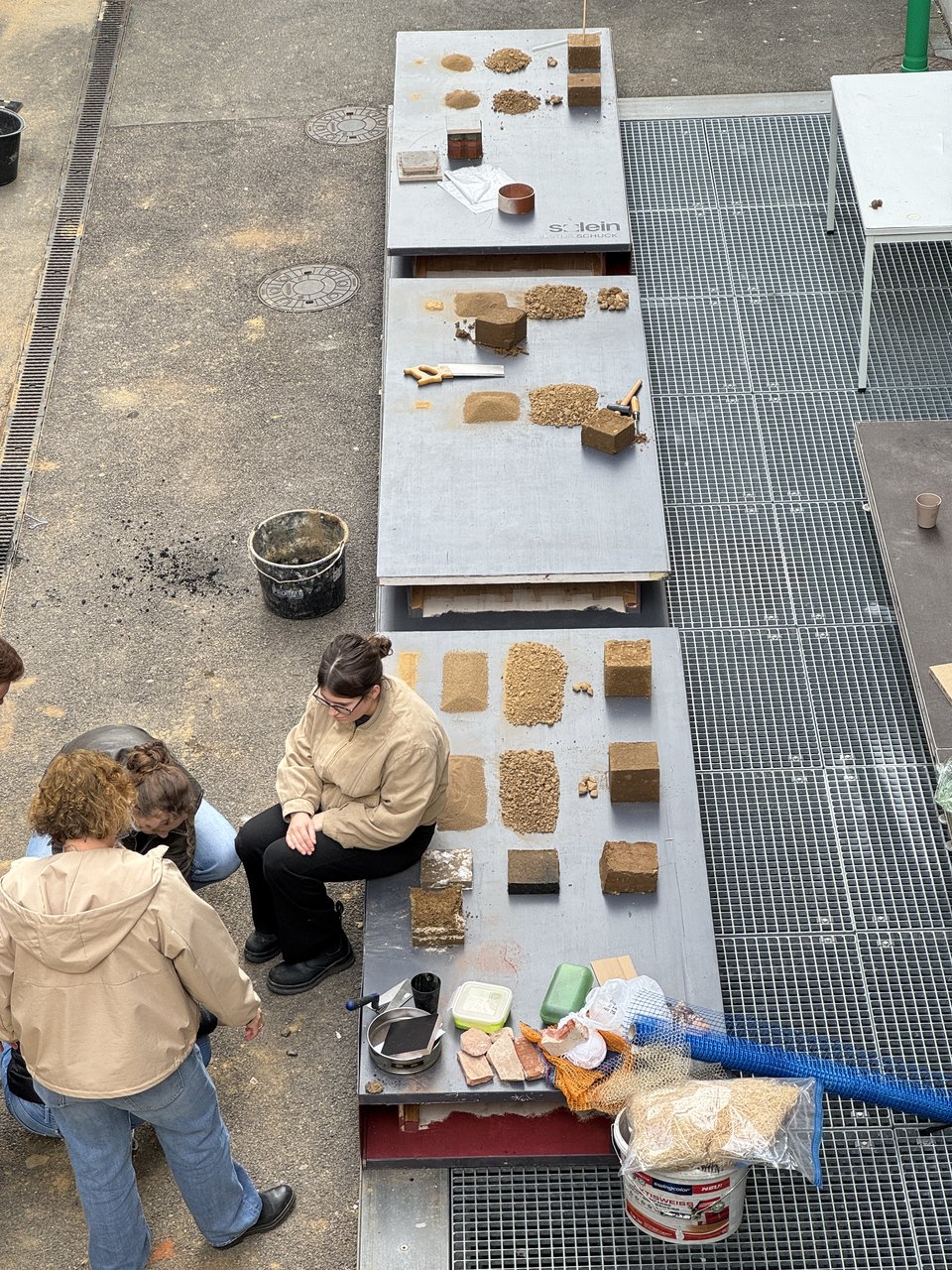
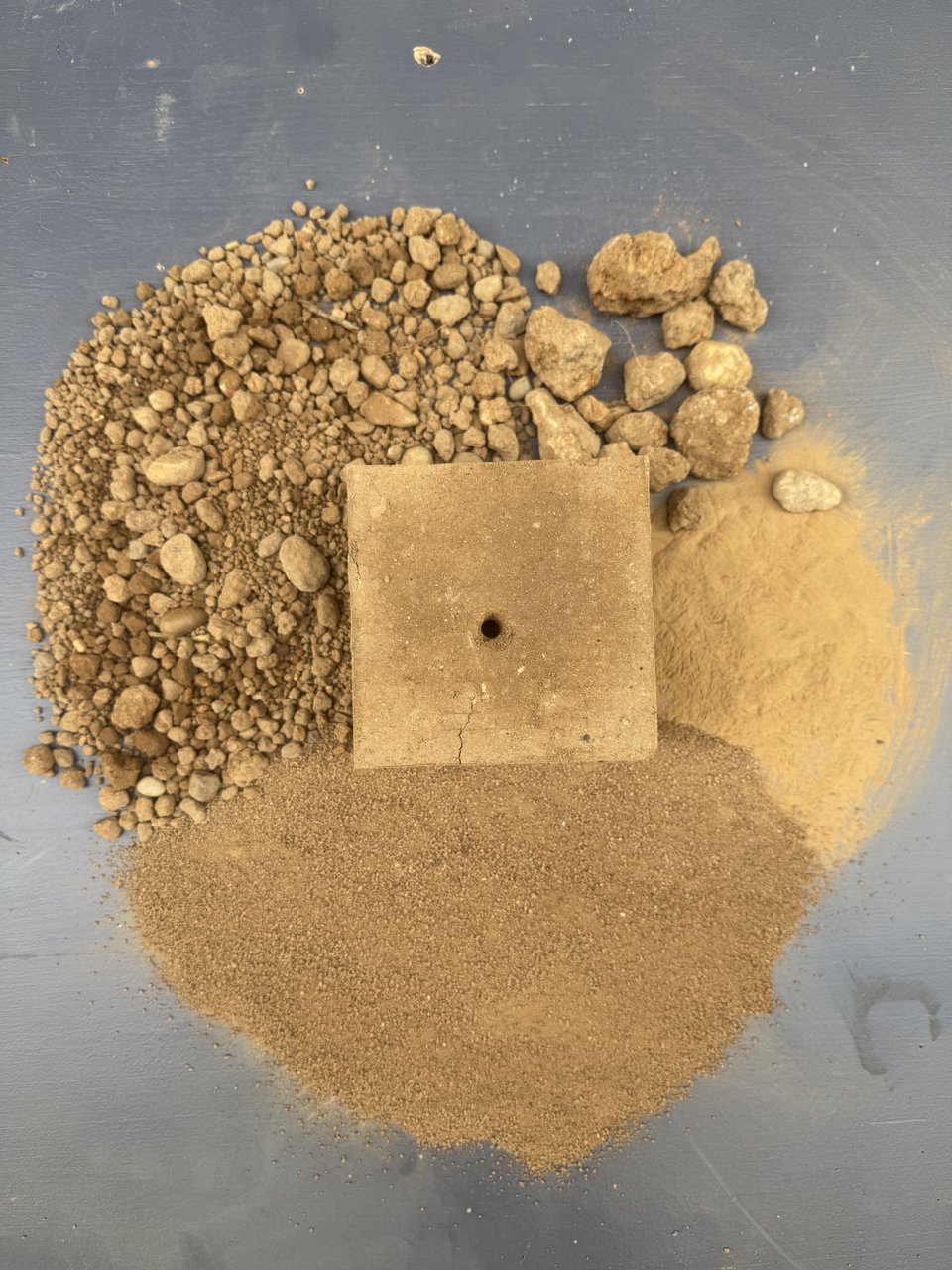
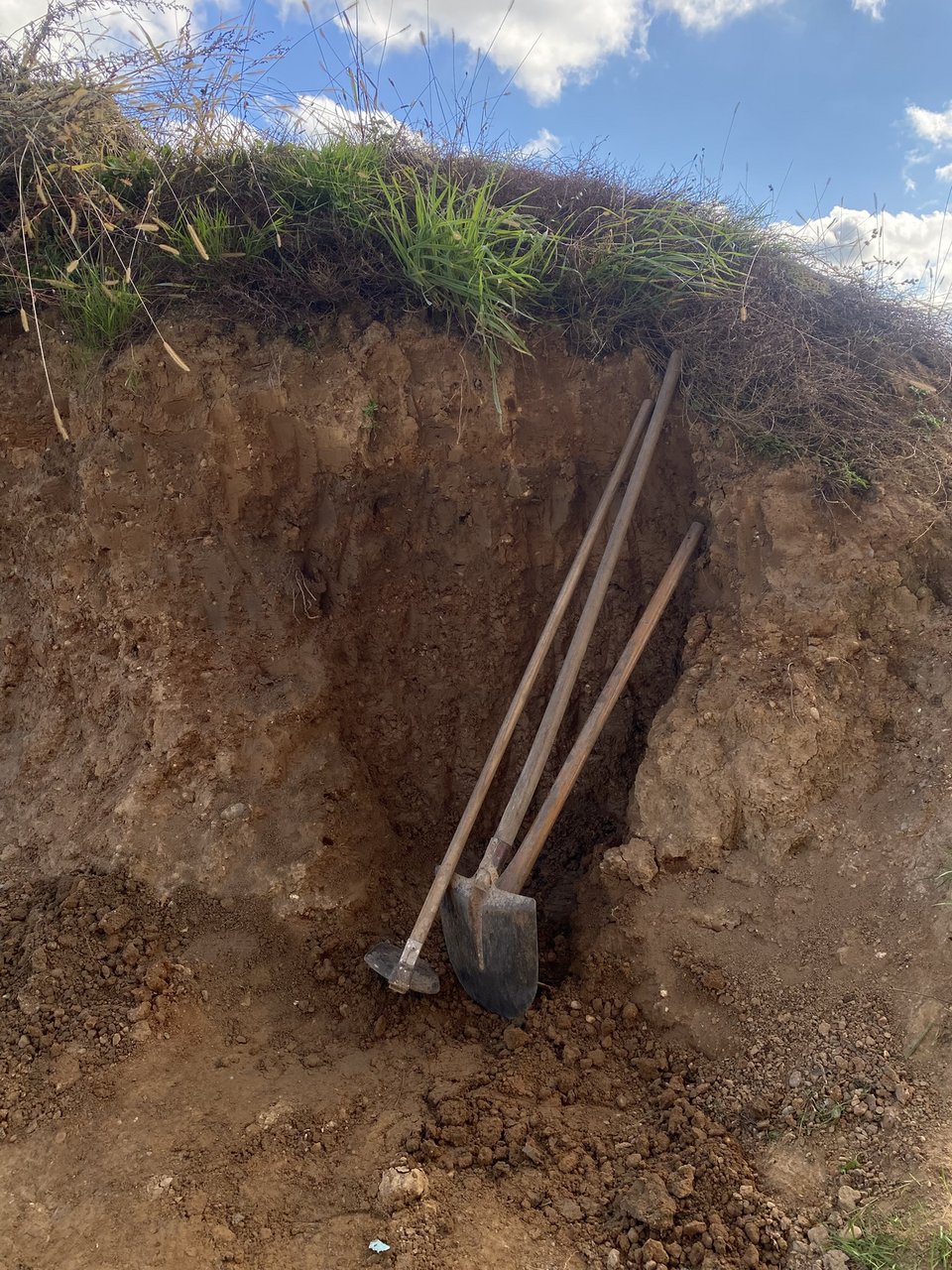
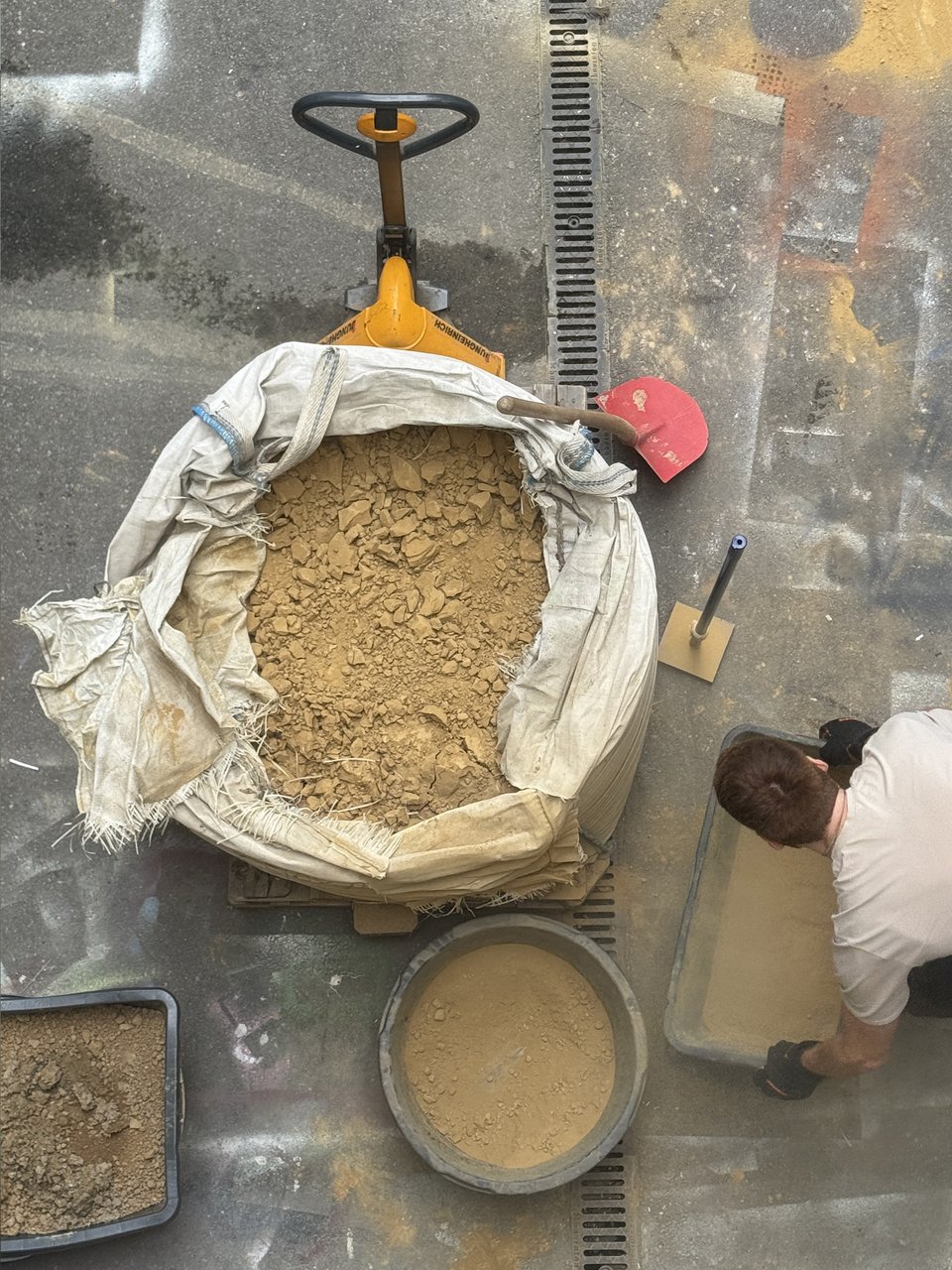
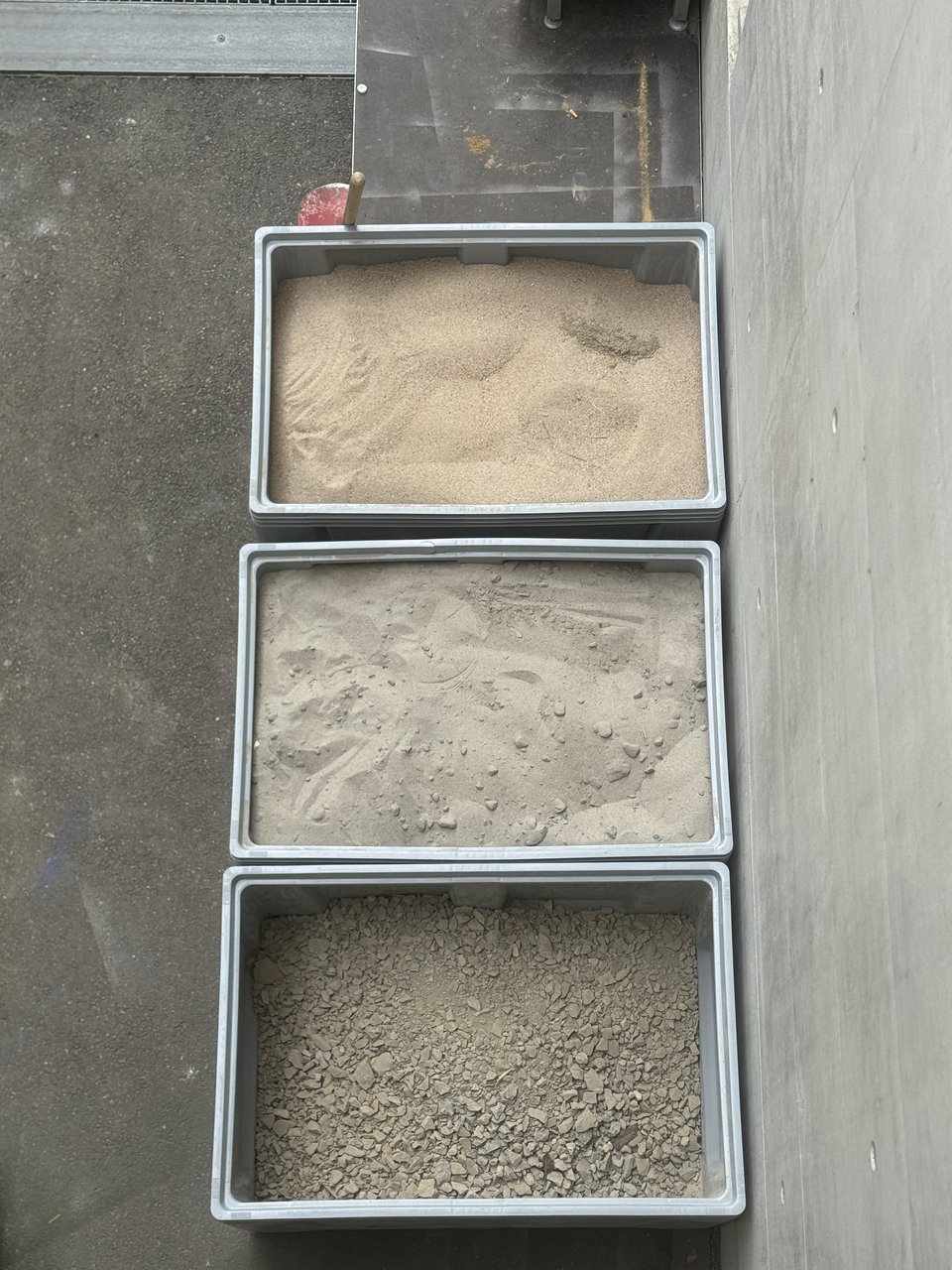
To answer this, the grain size distribution and binding strength of an industrial rammed earth mixture were analyzed and compared with excavation material from Rastatt. Based on this analysis, it was possible to optimize the excavated soil through specific mixing ratios and prepare it for structural use.

Designing the Building Material
Refinement – Additives – Forms
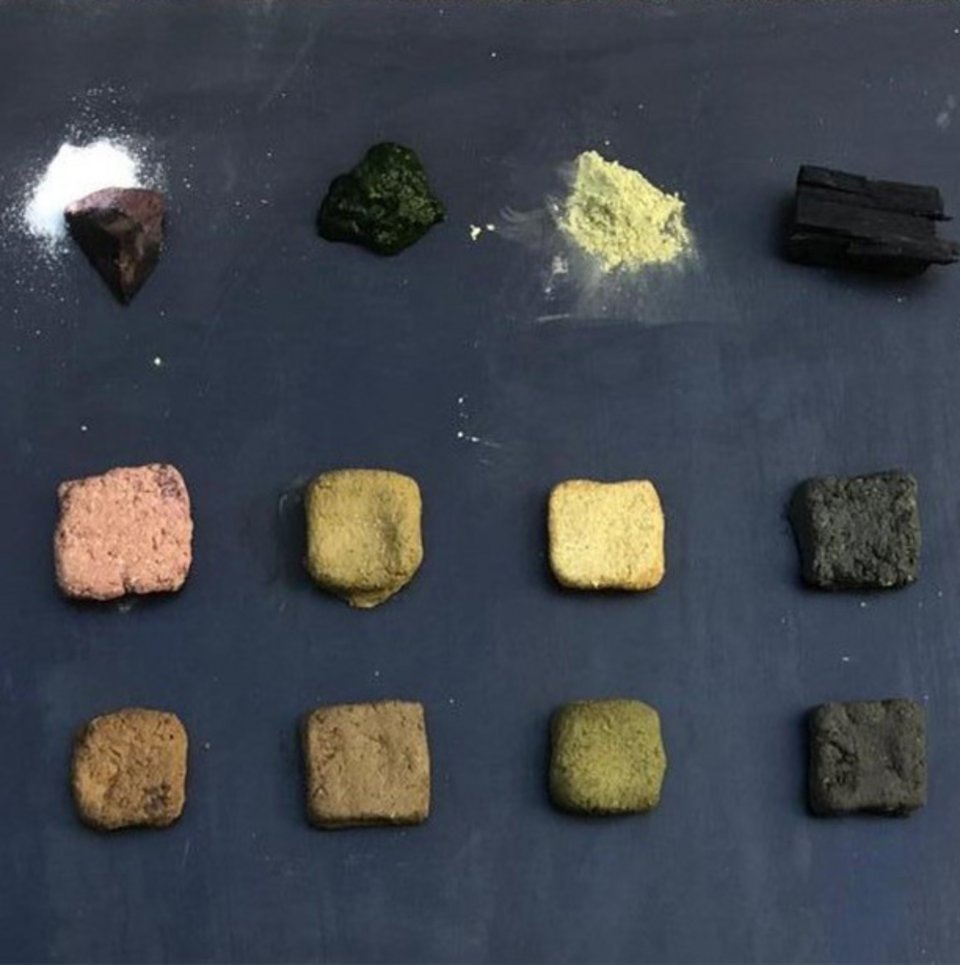
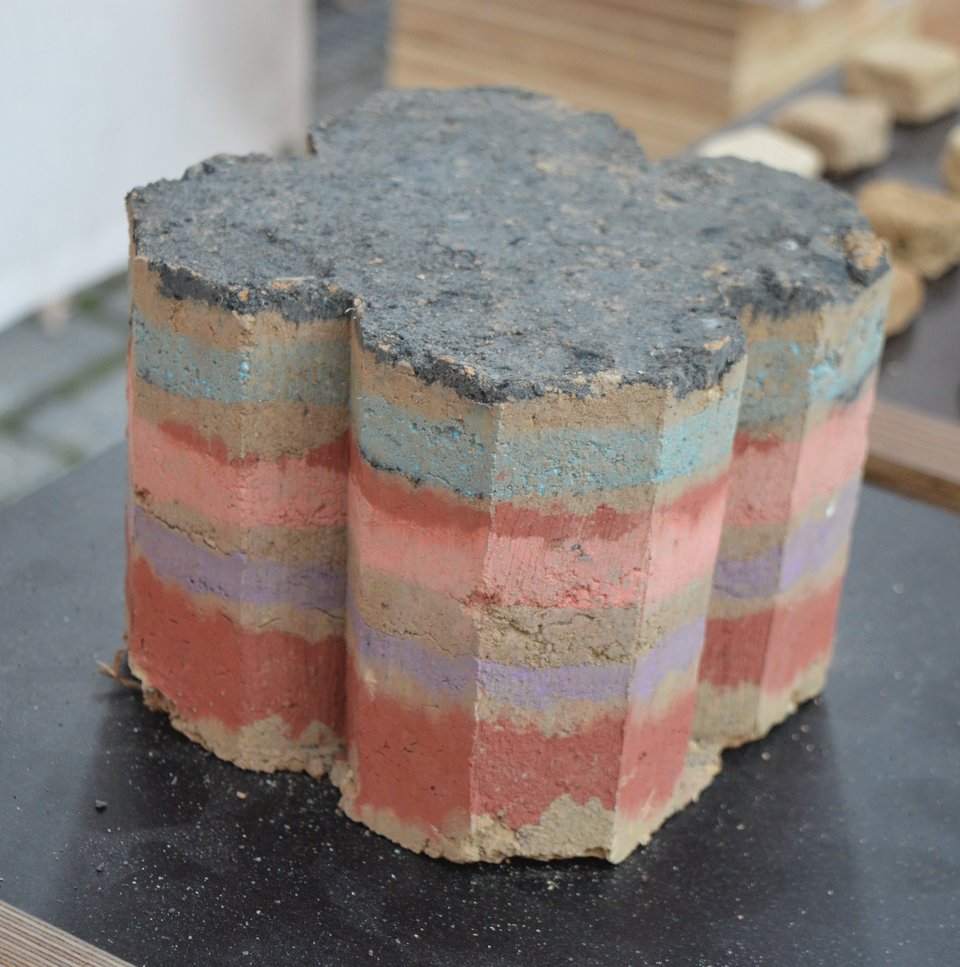
In experimental test series, students investigated the plastic moldability of rammed earth as well as the influence of various additives—such as mineral and organic pigments, paper, and textiles—on color effects and surface texture. The strength of the mixtures was also verified. The process yielded compelling results, demonstrating the versatility of the material and how it can be adapted for specific purposes.