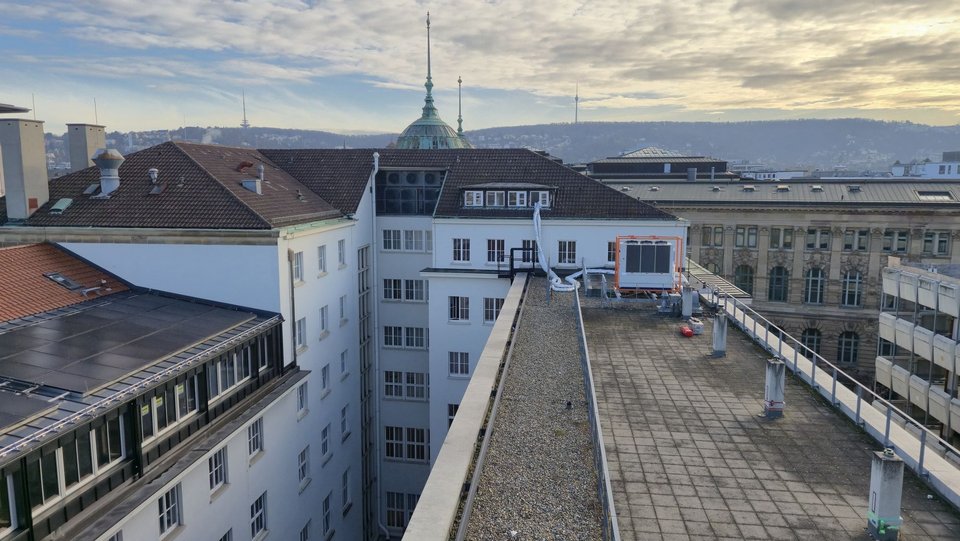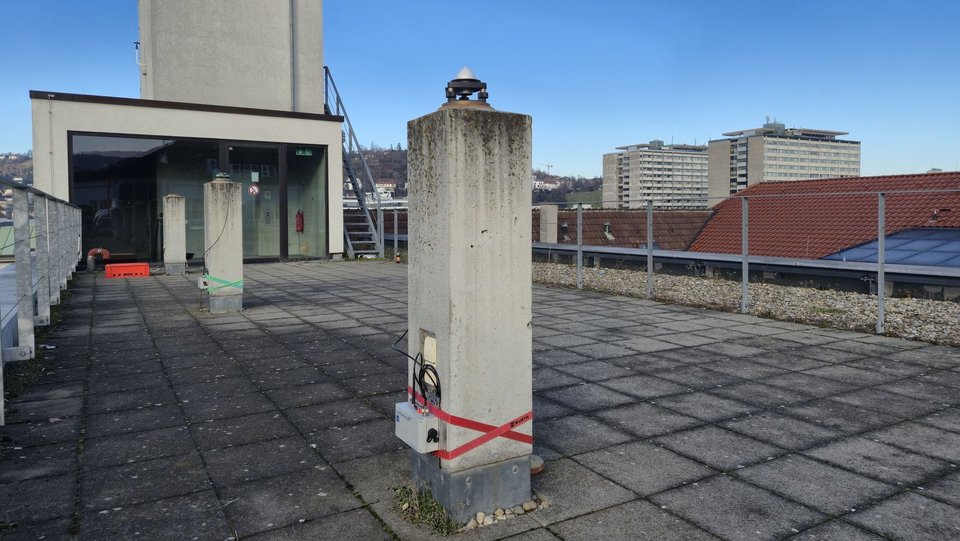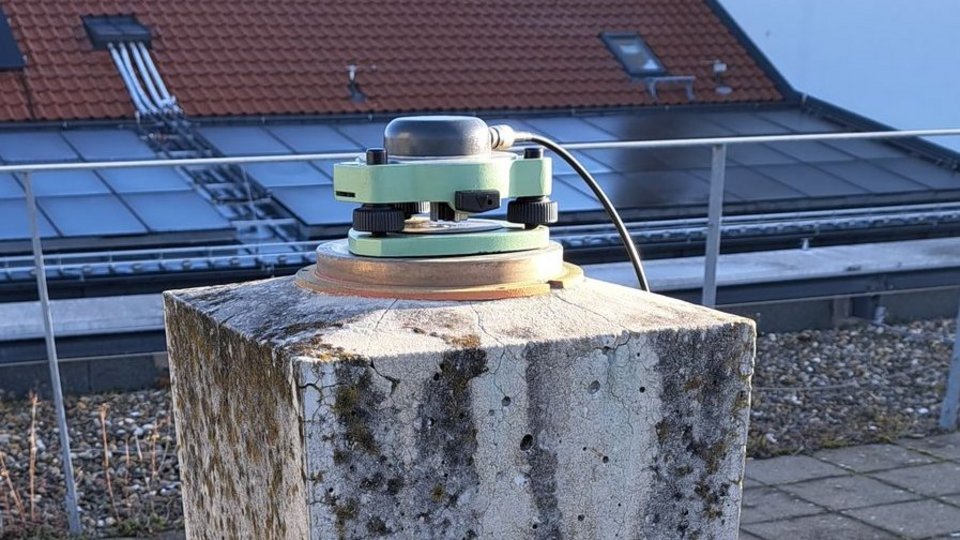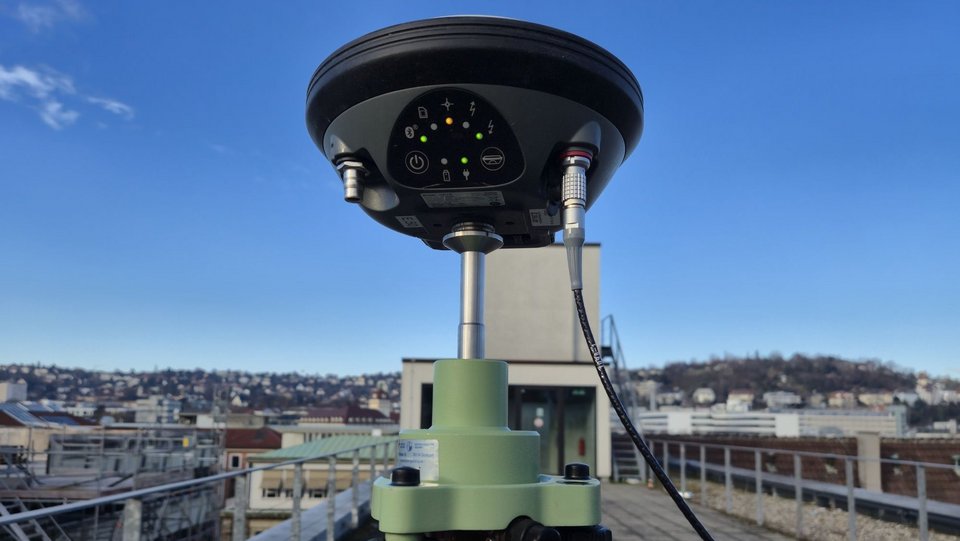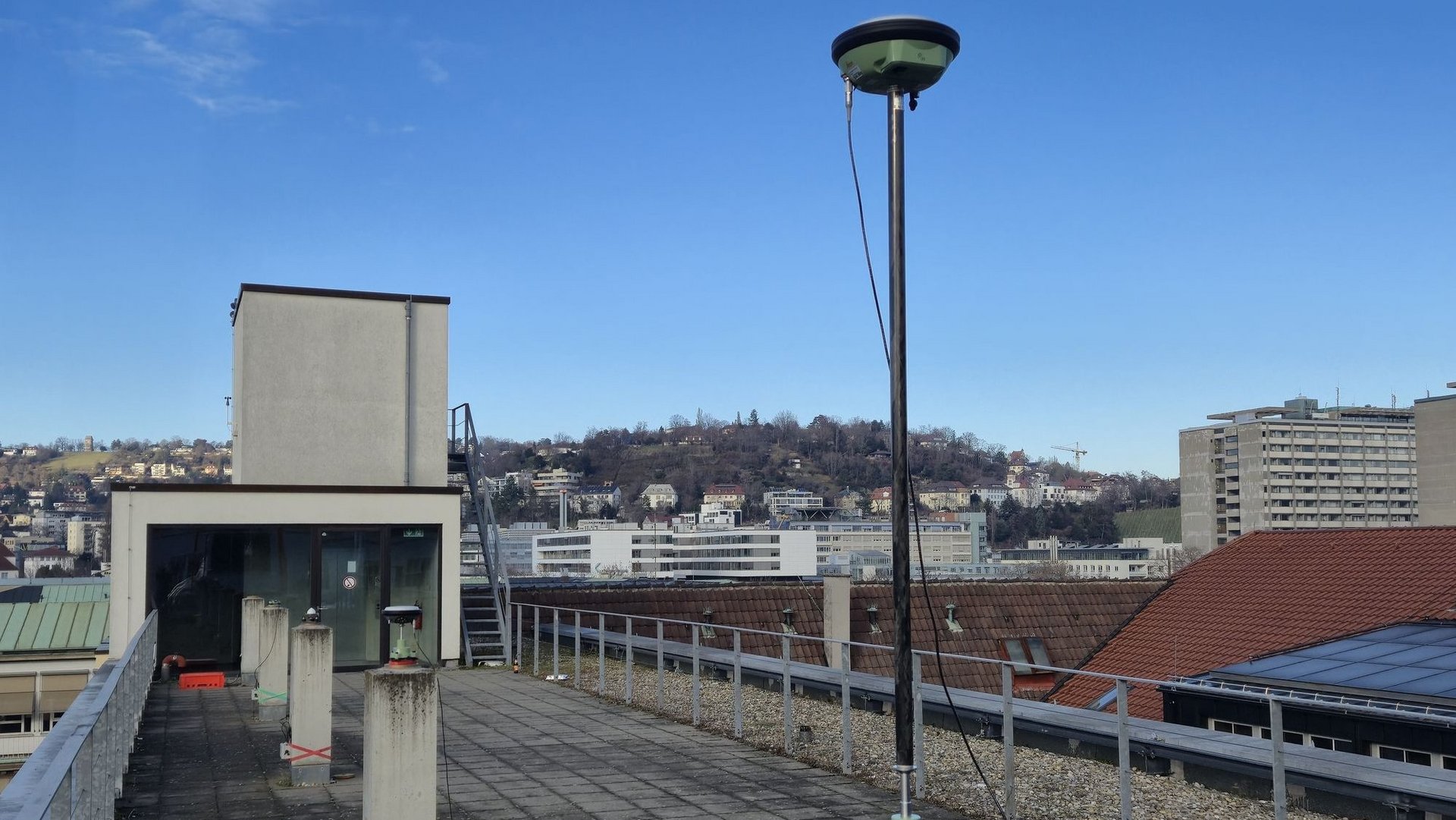
For a planned monitoring system to monitor terrain deformations in the mining area of Kiruna (Sweden), Mablo Collmar is testing low-cost GNSS sensors for accuracy and suitability in his bachelor's thesis. The test measurements are being carried out at HFT Stuttgart on the measuring roof of the GeoMAT laboratory (Laboratory for Geodetic Measurement and Evaluation Technology).
Mining operations in the Kiruna region constantly cause changes and movements in the earth's surface, which must be monitored geometrically to ensure safety. Over 500 observation points must be measured around the clock in an area that extends over several kilometres. GNSS measurements are ideal for this permanent monitoring. Due to the high number of GNSS sensors required, the accuracy and suitability of low-cost GNSS sensors is to be tested.
This is exactly what Mablo Collmar is currently working on in his bachelor's thesis. Alongside his Bachelor's degree in Surveying and Geoinformatics, he is using the STUDY&WORK programme and working at intermetric GmbH. From there, he brought this task with him for his Bachelor's thesis, for which he is being supervised by Prof Dr Gerrit Austen at the HFT. For his investigations and test measurements, he uses the measuring roof of the GeoMAT laboratory, where a special GNSS long-term measurement was recently carried out over 48 hours:
Kiruna (Sweden) and Stuttgart are separated by approx. 2200 km as the crow flies, Stuttgart is located at about 49° north latitude, Kiruna at 68° north latitude is already well above the Arctic Circle. With GNSS measurements, the geographical location of the measurement area has an influence on the satellite availability and accuracy of the measurement results. To ensure that the test measurements in Stuttgart can be transferred to the future deployment area in Kiruna, this long-term measurement was carried out simultaneously in Stuttgart and Kiruna using several GNSS receivers.
The results of the bachelor thesis will be directly incorporated into the implementation and, if necessary, optimisation of the planned monitoring system.